MSCF-LUNet: a lightweight three-stage pine wilt disease segmentation model with multi-scale context fusion mechanism
Dejing Zhou, Junxian Chen, Wenxi Cai, Jie Lin, Tiantian Meng, Yuanhang Li, Baihan Liu, Mengting Luo, Yubin Lan, Tianyi Liu, Jing Zhao

TL;DR
This paper introduces a new lightweight model for detecting and staging pine wilt disease using drone imagery, improving accuracy and efficiency.
Contribution
The novel contribution is a three-stage segmentation model with a multi-scale context fusion mechanism for precise disease staging.
Findings
MSCF-LUNet achieved 89.56% precision and 92.13% recall in complex environments.
The model balances performance and computational cost with 88.92% IoU and 96.54% pixel accuracy.
It effectively segments PWD-infected regions and determines disease stages from remote-sensing imagery.
Abstract
Pine wilt disease (PWD) is a highly destructive infectious disease that severely damages pine forests worldwide. Because symptoms emerge first in the tree crown, detection from unmanned aerial vehicles (UAVs) is efficient. However, most methods perform only binary classification and lack pixel-level staging, which leads to missed initial symptoms and confusion with other species. We propose MSCF-LUNet, a lightweight three-stage semantic segmentation model based on multi-scale context fusion. The model uses an improved multi-scale patch embedding guided by attention with relative position encoding (AWRP) to adapt the sampling field of view and to fuse local details with global context. Under contextual attention, the network learns fine-grained features and location cues. In complex environments, MSCF-LUNet achieves 89.56% precision, 92.13% recall, 88.92% intersection over union (IoU),…
Genes, proteins, chemicals, diseases, species, mutations and cell lines named across the full text — each resolved to its canonical identifier and authoritative record.
Click any figure to enlarge with its caption.
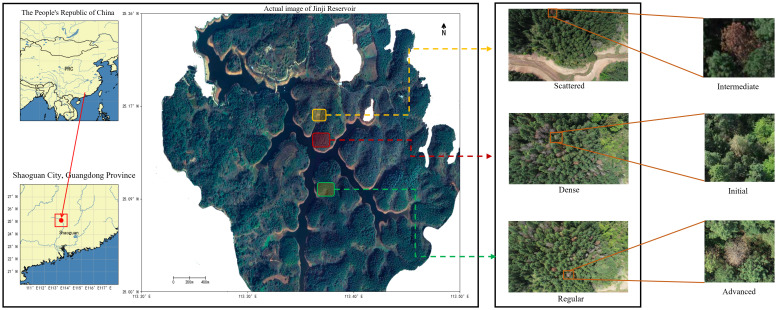 Figure 1
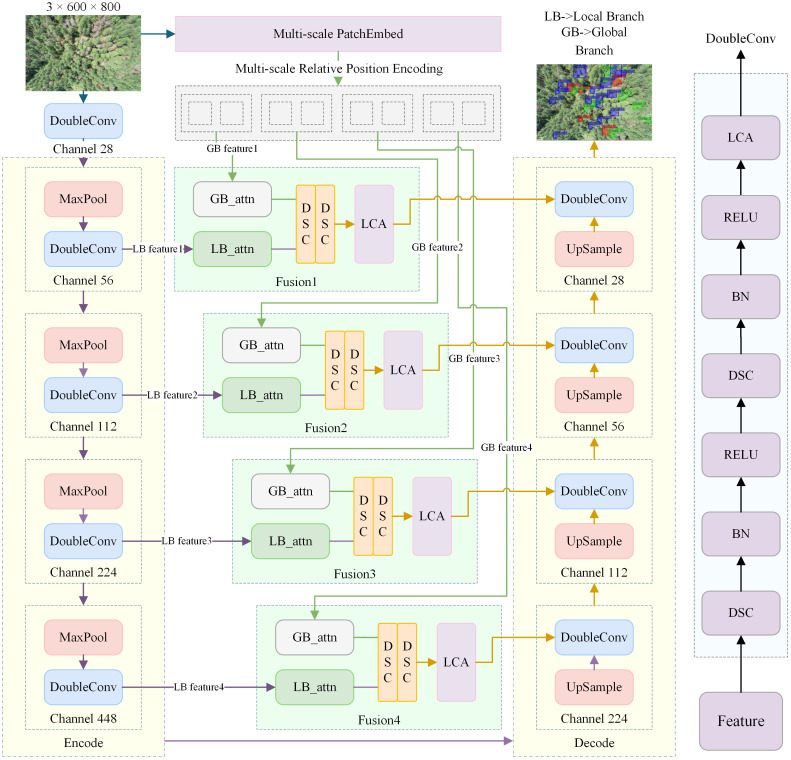 Figure 2
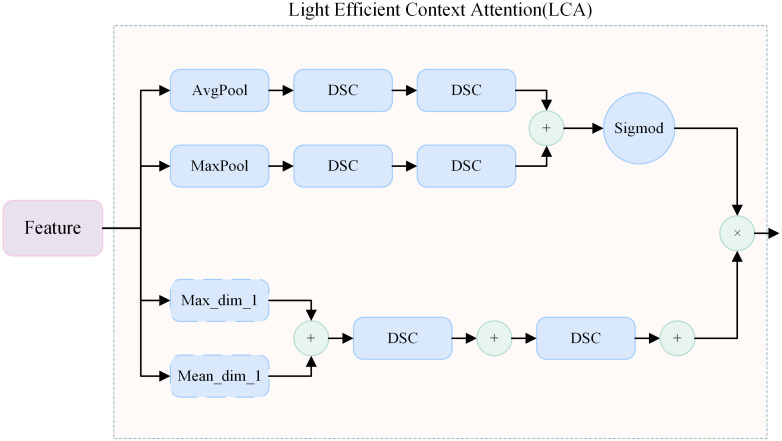 Figure 3
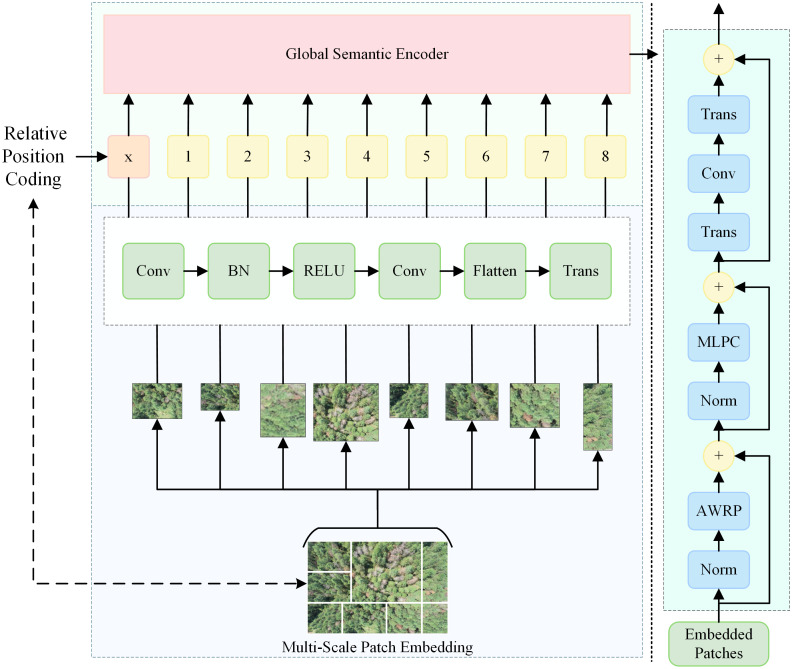 Figure 4
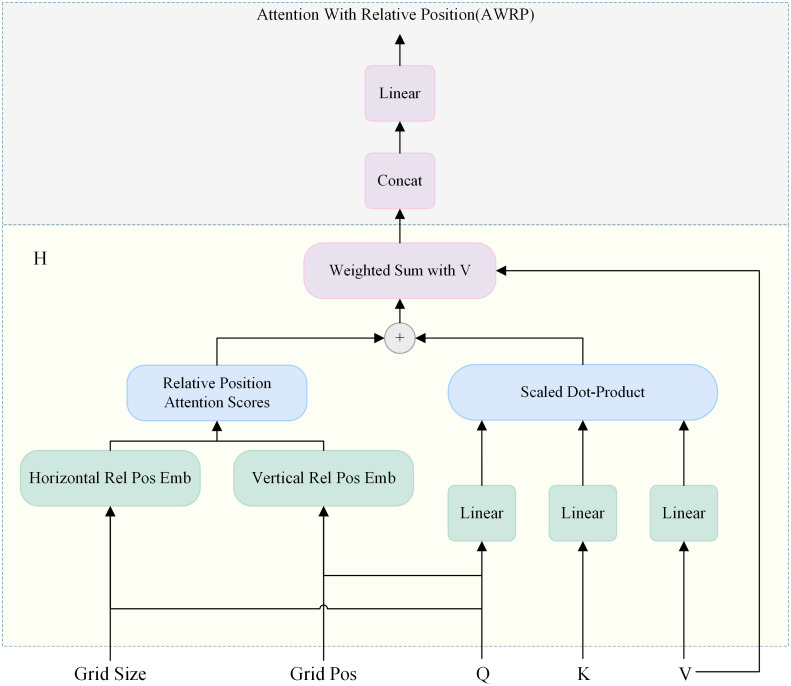 Figure 5
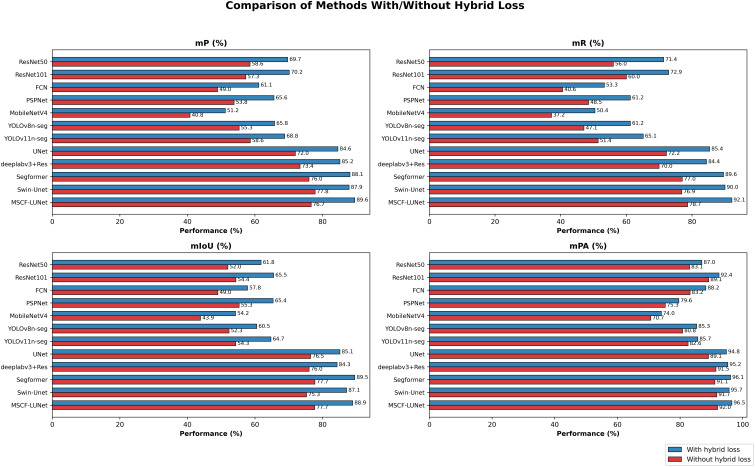 Figure 6
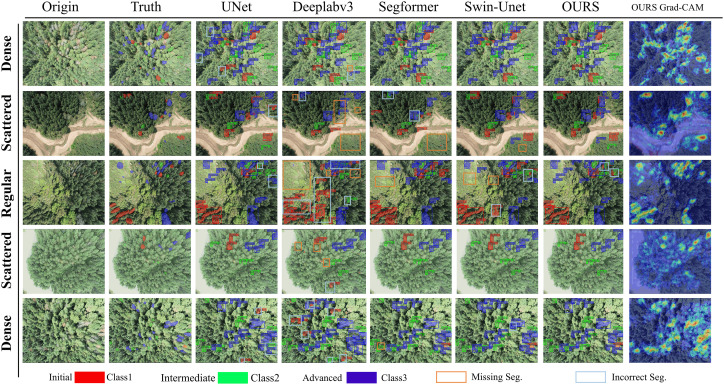 Figure 7
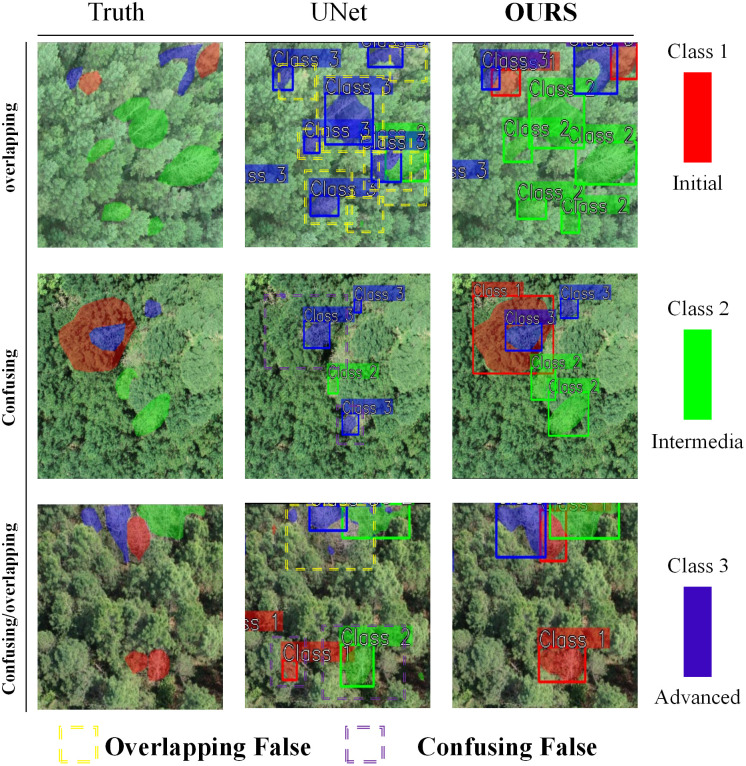 Figure 8
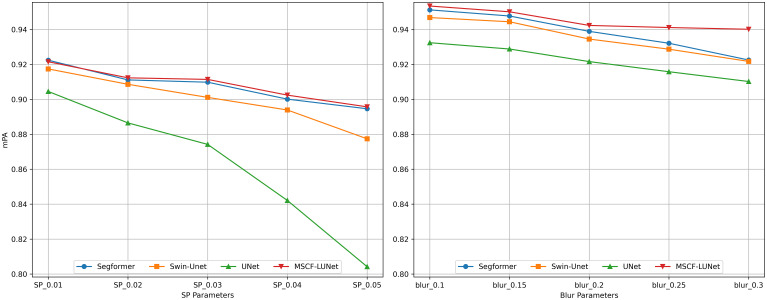 Figure 9
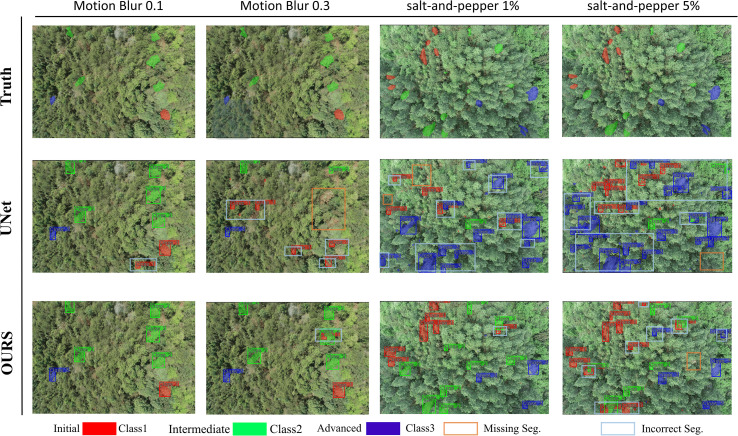 Figure 10
Peer Reviews
No public reviews on file for this paper yet. If you reviewed it on a platform where reviews are public (OpenReview, ICLR, NeurIPS, ICML), you can paste yours below so the community can read it here.
Videos
No videos yet. Explain this paper in a talk, walkthrough, or lecture? Add one.
Taxonomy
TopicsSmart Agriculture and AI · Advanced Neural Network Applications · Remote Sensing in Agriculture