Dynamic effects of sleep deprivation on emotional behavior, circadian rhythm genes, and inflammatory infiltration in the medial prefrontal cortex
Dandan Cao, Xue Geng, Shaoqiong Yi, Haifeng Zhang, Yong Fu

TL;DR
This study shows how sleep deprivation affects emotional behavior and inflammation in mice brains, and how sleep recovery can help reverse some of these effects.
Contribution
The study identifies a link between sleep deprivation, circadian gene disruption, and the Sirt6/Hmgb1 inflammatory pathway in the medial prefrontal cortex.
Findings
Sleep deprivation causes anxiety-like behaviors and inflammation, which partially recover with sleep restoration.
Disruption of circadian genes Bmal1 and Clock occurs with sleep deprivation.
The Sirt6/Hmgb1 axis activates, leading to proinflammatory cytokine release.
Abstract
Sleep, a core circadian rhythm, maintains physiological homeostasis. Its dysfunction links to neuropsychiatric disorders. Clinically, poor sleep impairs positive emotions and enhances negative emotion susceptibility, but the mechanism remains unclear, potentially involving circadian clock genes and neuroinflammatory pathways. Divide the male C57BL/6J mice into the following five groups: Non-sleep deprivation (SD) control (CON), sleep recovery 14-day after SD 7-day (SD7R14), sleep recovery 21-day after SD 7-day (SD7R21), sleep recovery 14-day after SD 14-day (SD14R14), and sleep recovery 21-day after SD 14-day (SD14R21). Behavioral tests evaluated anxiety-like behaviors, fear and andanhedonia. Histological staining observed neuronal morphology in the medial prefrontal cortex (mPFC), and RT-qPCR was employed to measure mRNA levels of circadian clock genes, Silent information regulator 6…
Genes, proteins, chemicals, diseases, species, mutations and cell lines named across the full text — each resolved to its canonical identifier and authoritative record.
Click any figure to enlarge with its caption.
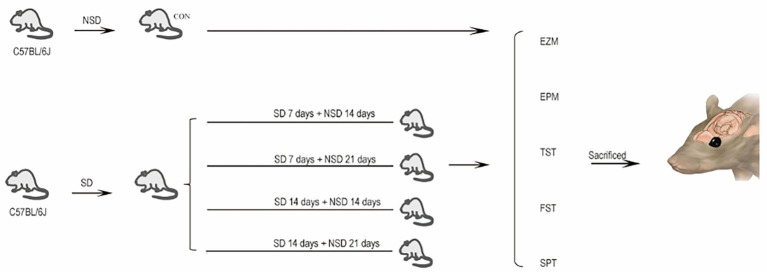 Figure 1
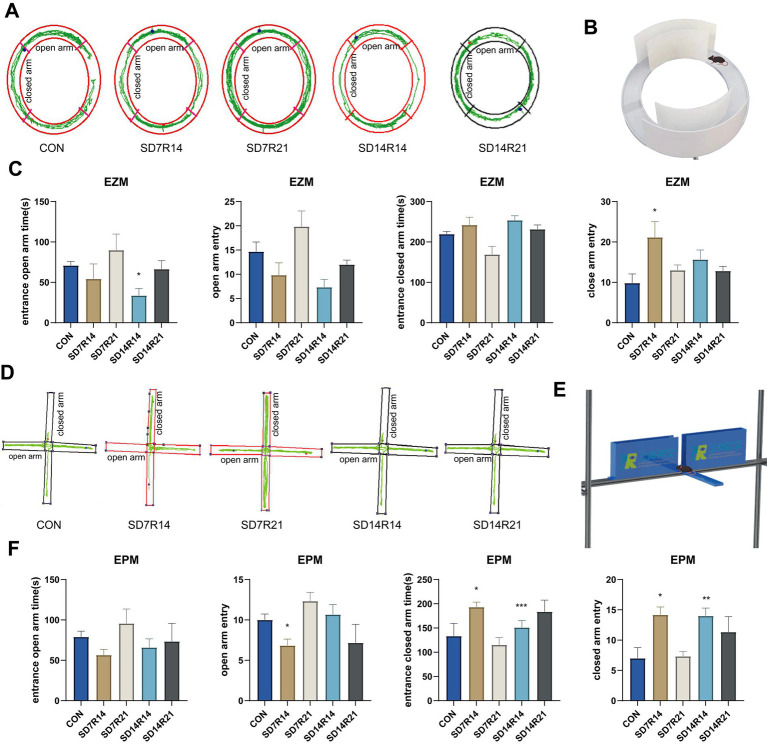 Figure 2
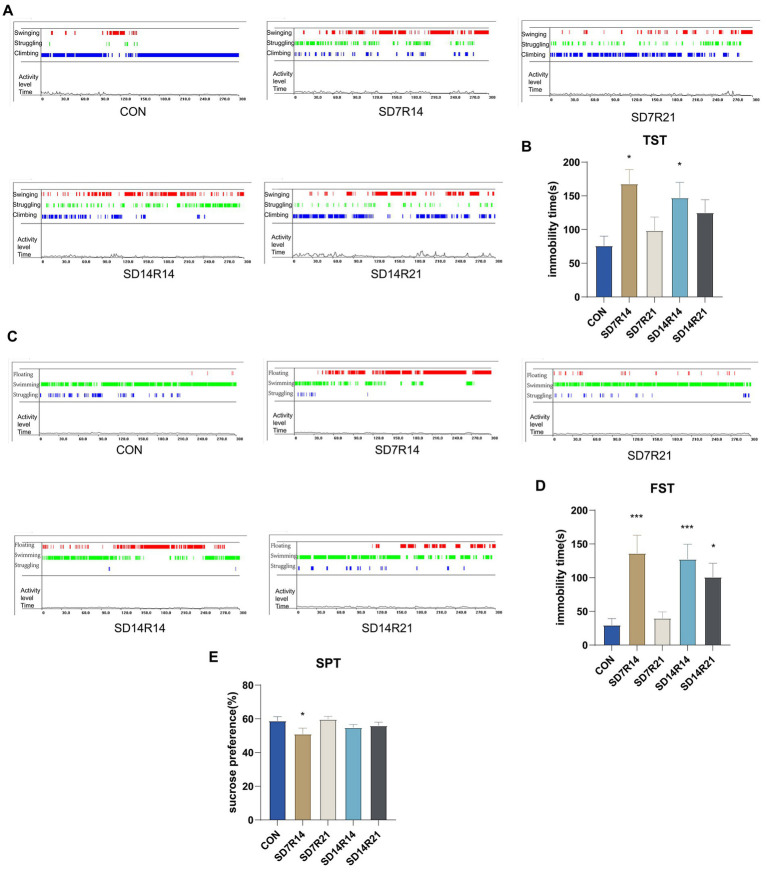 Figure 3
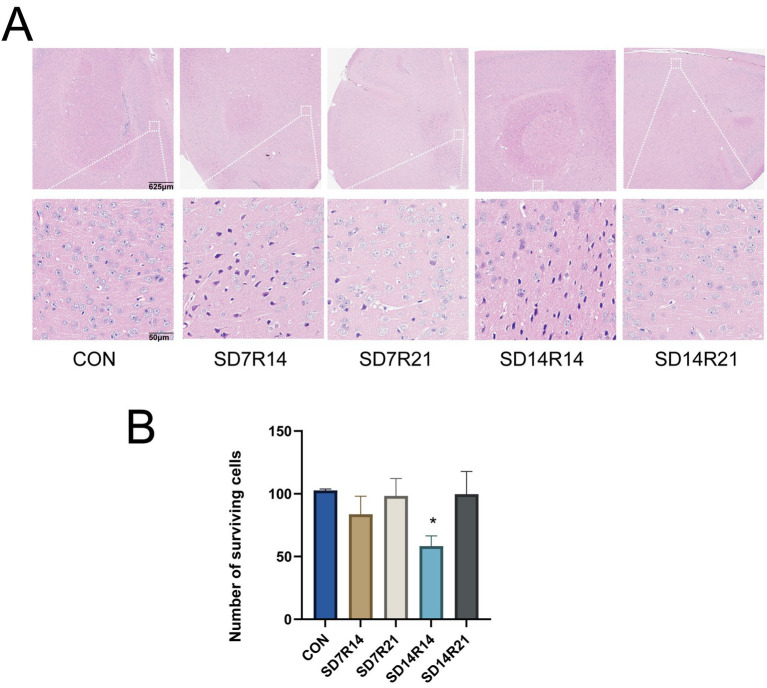 Figure 4
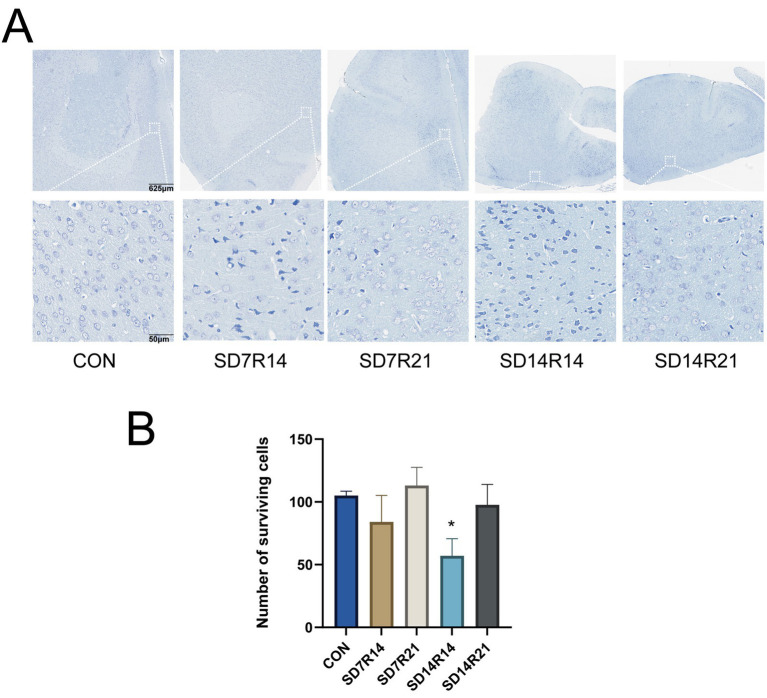 Figure 5
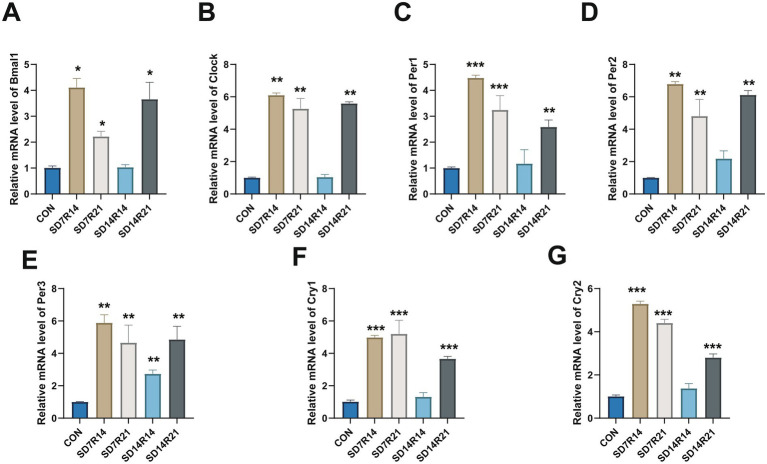 Figure 6
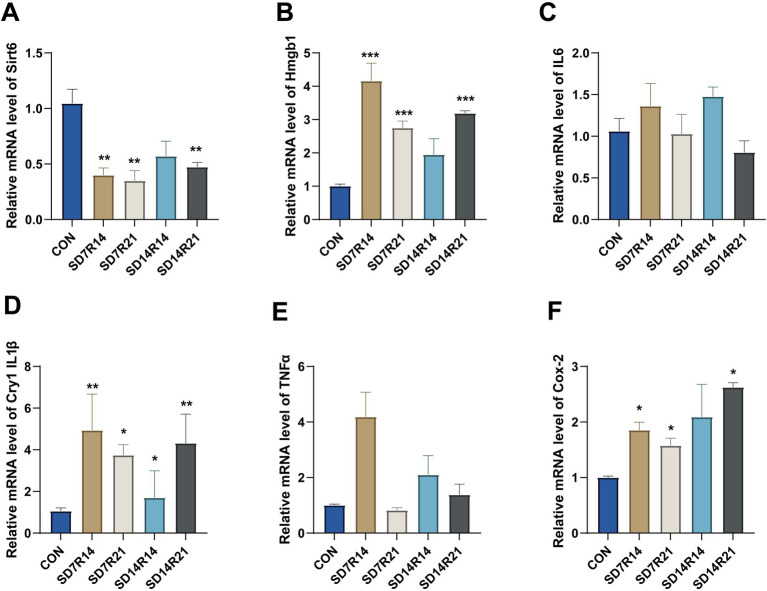 Figure 7
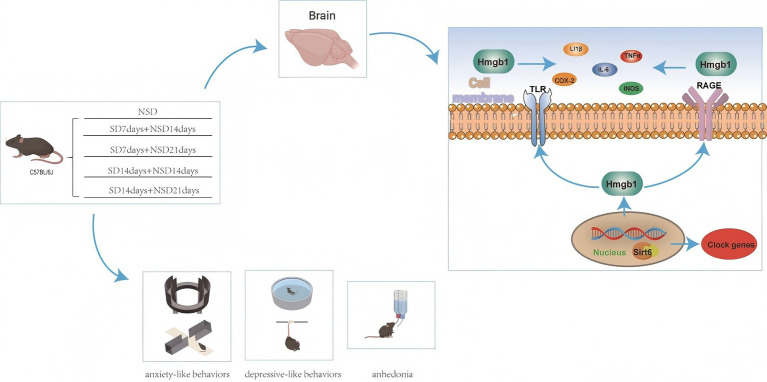 Figure 8
Peer Reviews
No public reviews on file for this paper yet. If you reviewed it on a platform where reviews are public (OpenReview, ICLR, NeurIPS, ICML), you can paste yours below so the community can read it here.
Videos
No videos yet. Explain this paper in a talk, walkthrough, or lecture? Add one.
Taxonomy
TopicsSleep and Wakefulness Research · Sleep and related disorders · Circadian rhythm and melatonin