Development of a nomogram model based on spleen volume change to predict high-risk esophageal varices in patients with liver cirrhosis
Zuo-Jun Li, Jing Chen, Li Li, Yu-Tao Zhan

TL;DR
This study creates a non-invasive tool using spleen volume changes to predict high-risk esophageal varices in liver cirrhosis patients, reducing the need for uncomfortable endoscopies.
Contribution
A novel nomogram model based on spleen volume changes and clinical factors to predict high-risk esophageal varices in liver cirrhosis patients.
Findings
The nomogram model achieved an AUC of 0.793, outperforming existing models like platelet-to-spleen volume ratio.
The model demonstrated good calibration and clinical utility with a C-index of 0.779 after internal validation.
The model's sensitivity and specificity were 0.797 and 0.671, respectively, at a probability cutoff of 0.421.
Abstract
Esophageal variceal (EV) rupture is a life-threatening complication of liver cirrhosis. Although upper gastrointestinal endoscopy is recommended for routine screening and risk assessment of EV bleeding, it is an invasive and often unpleasant procedure. This study aims to develop a non-invasive nomogram model based on spleen volume changes to predict the presence of high-risk esophageal varices (HREVs). A total of 150 patients with liver cirrhosis (mean age 62.3 ± 10.0 years; 95 men and 55 women) who underwent upper gastrointestinal endoscopy were retrospectively included. Spleen volume was measured using abdominal computed tomography. Predictors were identified through multivariate logistic regression and subsequently used to construct a nomogram model. The discriminative ability, calibration ability, and clinical utility were assessed. Internal validation was performed using 1,000…
Genes, proteins, chemicals, diseases, species, mutations and cell lines named across the full text — each resolved to its canonical identifier and authoritative record.
Click any figure to enlarge with its caption.
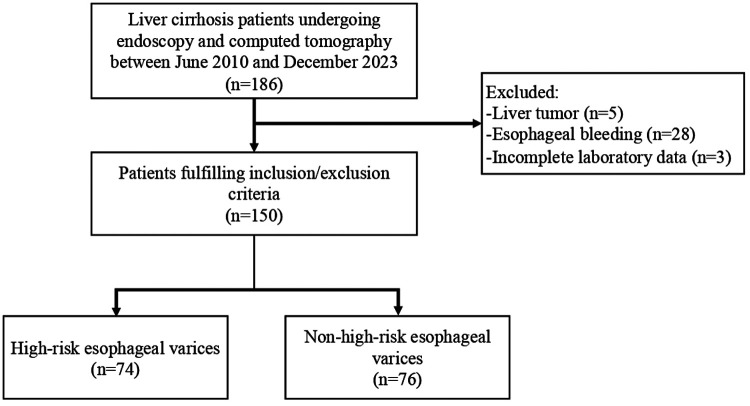 Figure 1
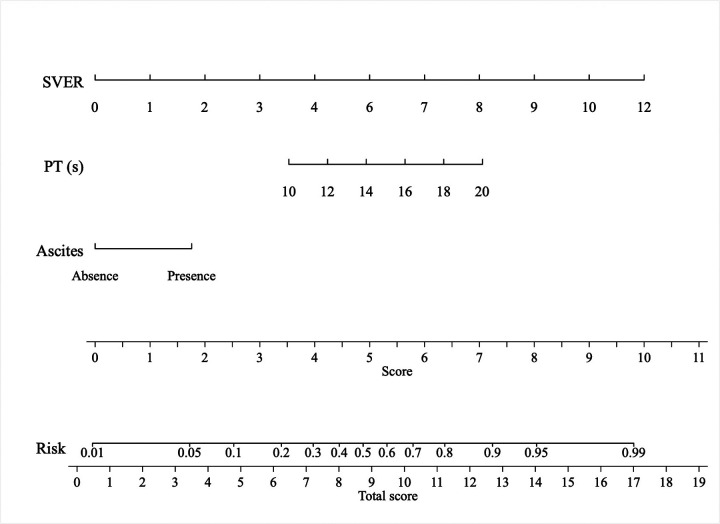 Figure 2
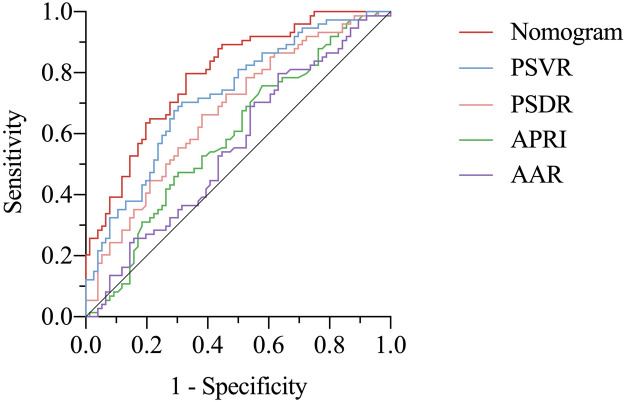 Figure 3
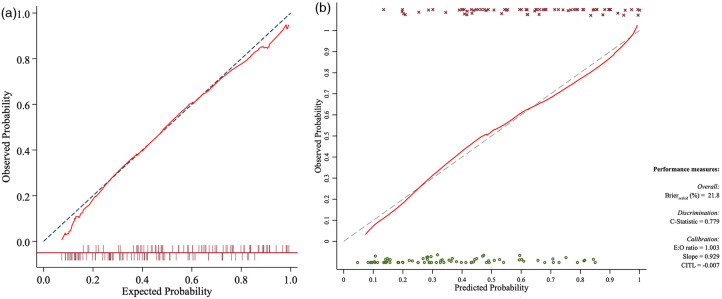 Figure 4
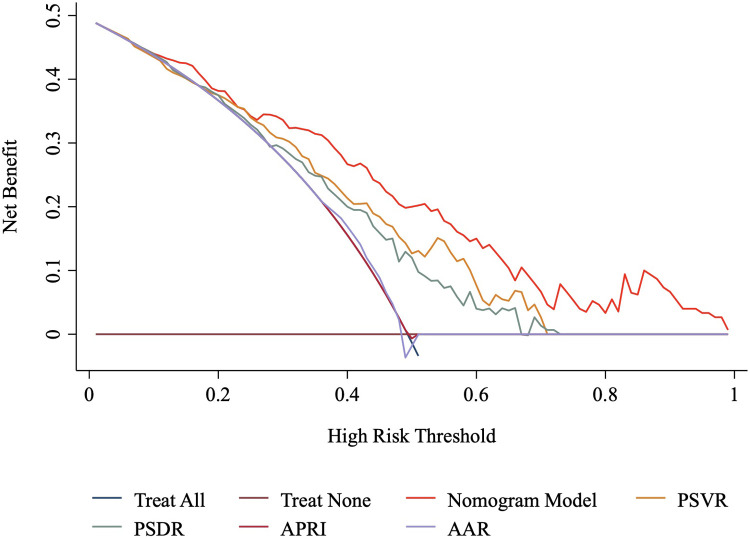 Figure 5
Peer Reviews
No public reviews on file for this paper yet. If you reviewed it on a platform where reviews are public (OpenReview, ICLR, NeurIPS, ICML), you can paste yours below so the community can read it here.
Videos
No videos yet. Explain this paper in a talk, walkthrough, or lecture? Add one.
Taxonomy
TopicsLiver Disease and Transplantation · Organ Transplantation Techniques and Outcomes · Hepatocellular Carcinoma Treatment and Prognosis