AI awareness and the breakdown of daily recovery: a spillover pathway to work–family strain
Xiaoyi Yi, Sameer Kumar

TL;DR
This study shows how awareness of AI at work can cause stress that spills into family life, but personal resilience can help reduce this effect.
Contribution
The study introduces a new pathway linking AI awareness to work–family conflict through impaired psychological detachment.
Findings
AI awareness increases work–family conflict by reducing psychological detachment.
Trait resilience moderates the negative effect of AI awareness on work–family conflict.
Psychological detachment is a key recovery mechanism in the AI awareness–WFC relationship.
Abstract
The growing adoption of AI in the workplace has emerged as a distinct occupational stressor, influencing employees’ psychological states and extending its effects into their family lives—a dimension rarely addressed by prior research. Drawing on data collected from a final valid sample of 119 hotel frontline employees over 10 consecutive workdays via experience sampling (yielding 965 daily observations), this study investigates how AI awareness leads to work–family conflict (WFC). Specifically, we examine the mediating role of psychological detachment and the moderating function of trait resilience. Our findings demonstrate that AI awareness increases WFC by impairing employees’ ability to detach from work. However, high levels of trait resilience reduce this negative pathway, supporting the buffering effect of personal resources. This study advances the literature on AI awareness by…
Click any figure to enlarge with its caption.
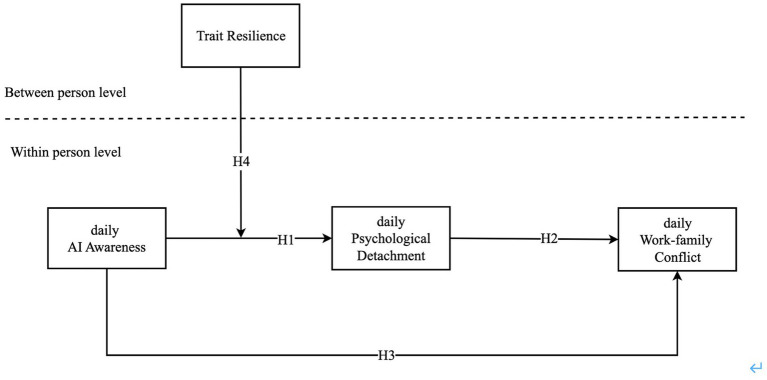 Figure 1
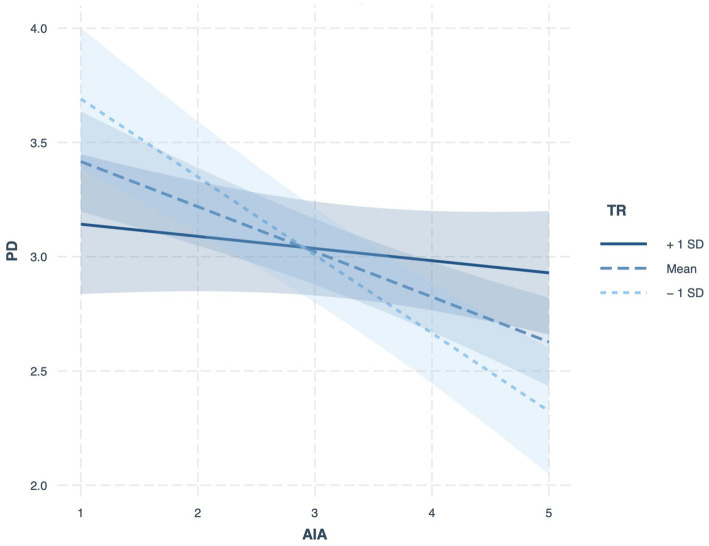 Figure 2
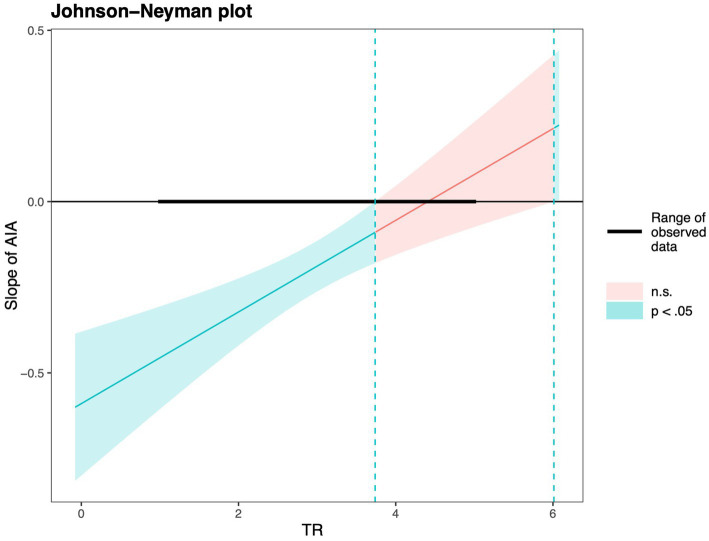 Figure 3
Peer Reviews
No public reviews on file for this paper yet. If you reviewed it on a platform where reviews are public (OpenReview, ICLR, NeurIPS, ICML), you can paste yours below so the community can read it here.
Videos
No videos yet. Explain this paper in a talk, walkthrough, or lecture? Add one.
Taxonomy
TopicsWork-Family Balance Challenges · Attachment and Relationship Dynamics · Resilience and Mental Health