Identification of co-segregating GJA3 and CRYBA1 missense variants in a Chinese family with congenital cataract: a possible digenic etiology
Chenchen Zhou, Kunke Li, Zhenxing Zhou, Shuhui Jian, Ling Jin, Chenghu Wang, Xiaoqian Zhang

TL;DR
A Chinese family with congenital cataract was studied to find genetic causes, revealing two rare gene variants that may work together to cause the condition.
Contribution
The study identifies two co-segregating missense variants in GJA3 and CRYBA1 as possible digenic contributors to congenital cataract in a Chinese family.
Findings
Two rare missense variants in GJA3 and CRYBA1 were found to co-occur in all affected family members.
The variants are predicted to be damaging and are classified as variants of uncertain significance according to ACMG guidelines.
No other rare, protein-altering variants in known cataract genes were found in the affected individuals.
Abstract
Congenital cataract (CC), defined as lens opacity present at birth or in early infancy, is a major cause of reversible childhood blindness and shows marked genetic heterogeneity. This study aimed to investigate the genetic basis of CC in a multigenerational Chinese family. A four-generation family with CC was clinically characterized. Whole-exome sequencing was performed in the proband, followed by stepwise variant filtering based on minor allele frequency, predicted functional impact, known CC-associated genes, and an autosomal dominant inheritance model. Candidate variants were annotated and classified according to ACMG guidelines. Sanger sequencing was used to validate variants in two additional affected relatives. Two heterozygous missense variants were identified in known CC-associated genes: GJA3 c.776C > A (p.Ser259Tyr) and CRYBA1 c.346A > T (p.Ile116Phe). Both were extremely…
Genes, proteins, chemicals, diseases, species, mutations and cell lines named across the full text — each resolved to its canonical identifier and authoritative record.
Click any figure to enlarge with its caption.
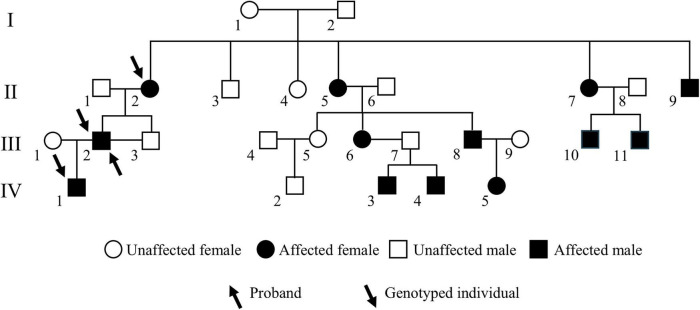 Figure 1
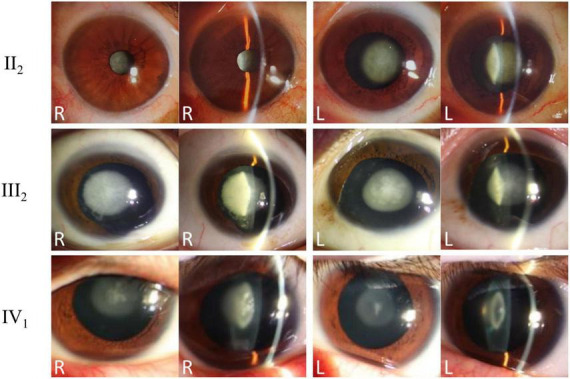 Figure 2
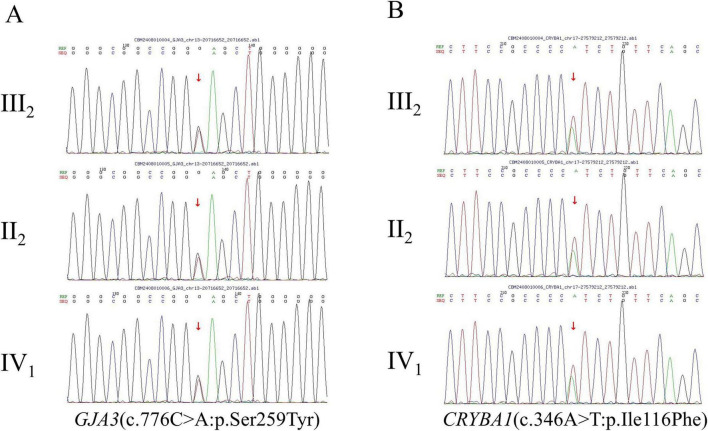 Figure 3
Peer Reviews
No public reviews on file for this paper yet. If you reviewed it on a platform where reviews are public (OpenReview, ICLR, NeurIPS, ICML), you can paste yours below so the community can read it here.
Videos
No videos yet. Explain this paper in a talk, walkthrough, or lecture? Add one.
Taxonomy
TopicsConnexins and lens biology · Intraocular Surgery and Lenses · Ophthalmology and Visual Impairment Studies