Processing effects of L1/L2 from L3 in translation recognition paradigm: an exploratory ERP study
Karlygash Zhaksylykkyzy, Zhanar K. Ibrayeva, Almira M. Kustubayeva, Dietmar Roehm, Manzura Zholdassova

TL;DR
This study explores how trilingual individuals process English words by examining brain activity, revealing insights into how language knowledge interacts.
Contribution
The study provides the first ERP evidence on Kazakh-Russian-English trilinguals' language processing.
Findings
Behavioral results showed accuracy differences between groups.
ERP data revealed N400 amplitude effects for incongruent L1 and L2 words.
The study suggests trilinguals access prior language knowledge during L3 processing.
Abstract
The complex dynamics of multilingual word recognition and the importance of considering language distance in the learning sequence are pivotal for comprehending multilingual language processing mechanisms. This study investigates brain activation during a translation recognition task, wherein trilingual individuals activate translation equivalents from English (L3) in both their first language (L1) and second language (L2) during EEG recording. Participants were categorized into two groups: (1) native speakers of Kazakh (L1K) with Russian as L2 and English as L3, (2) native speakers of Russian (L1R) with Kazakh as L2 and English as L3. Behavioral results revealed differentiation only in the accuracy data. ERP findings demonstrate that upon word presentation, participants distinguish between congruent and incongruent words, particularly evidenced by the modulation of the N400 component.…
Click any figure to enlarge with its caption.
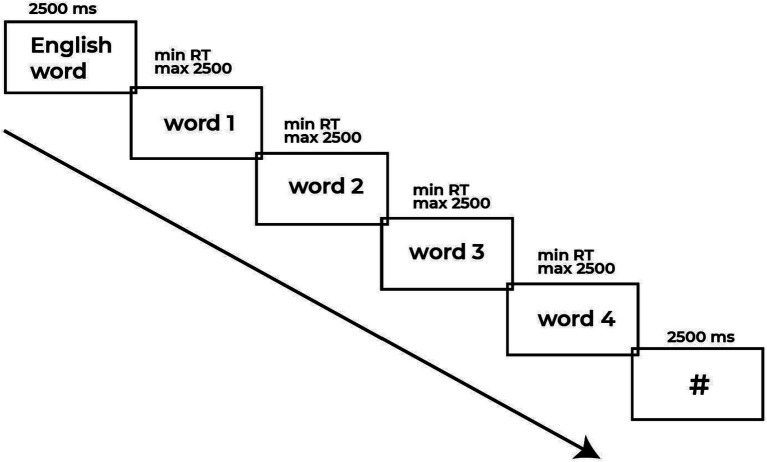 Figure 1
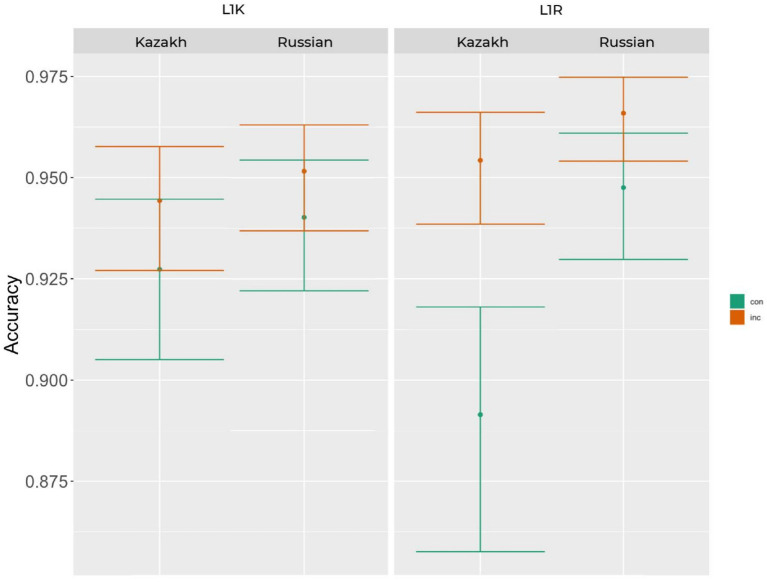 Figure 2
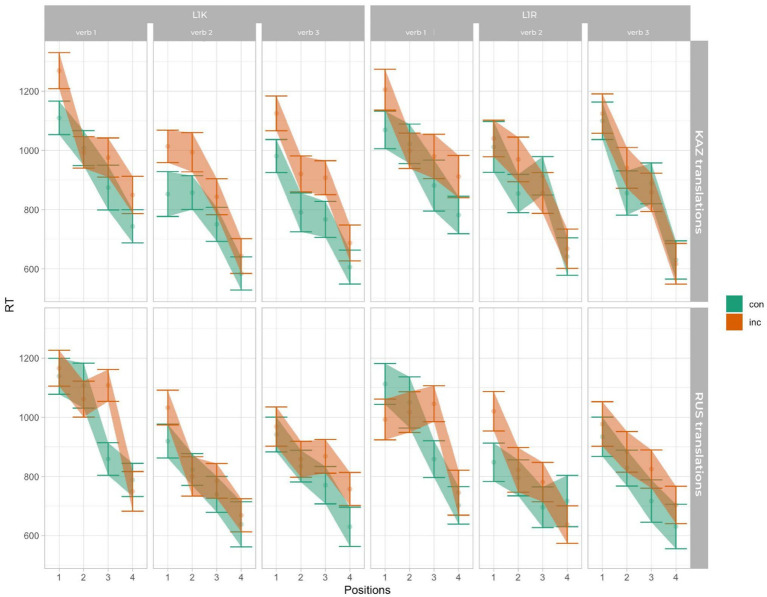 Figure 3
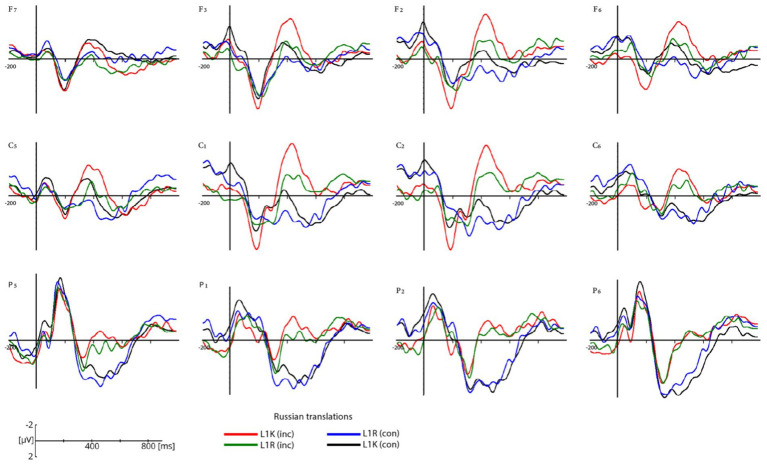 Figure 4
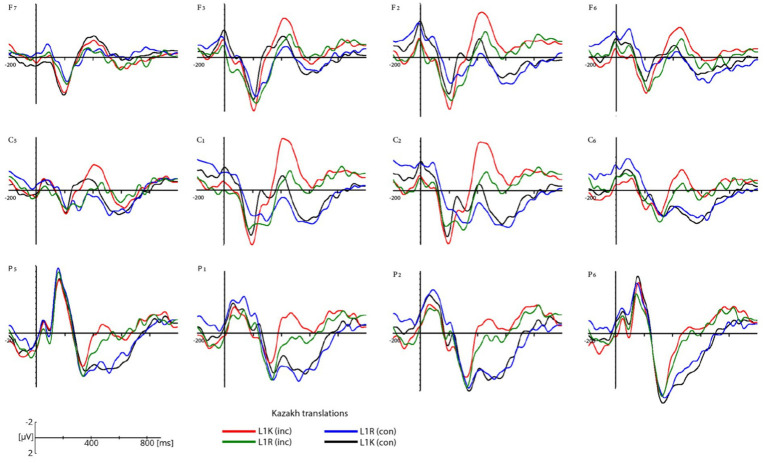 Figure 5
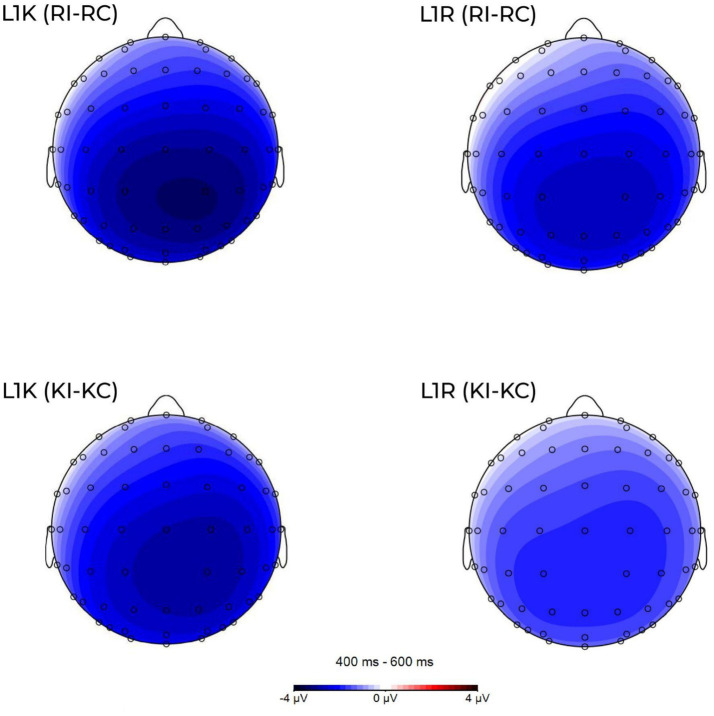 Figure 6
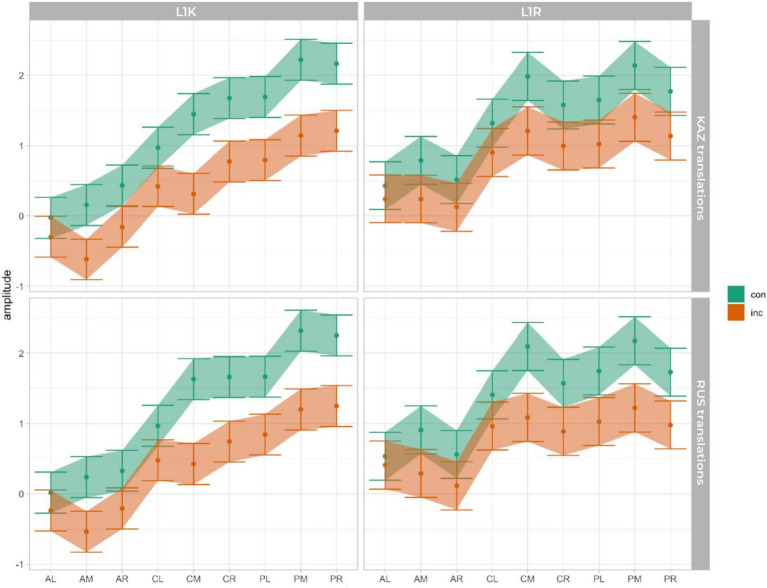 Figure 7
Peer Reviews
No public reviews on file for this paper yet. If you reviewed it on a platform where reviews are public (OpenReview, ICLR, NeurIPS, ICML), you can paste yours below so the community can read it here.
Videos
No videos yet. Explain this paper in a talk, walkthrough, or lecture? Add one.
Taxonomy
TopicsNeurobiology of Language and Bilingualism · Categorization, perception, and language · Second Language Acquisition and Learning