HtrA2/Omi: potential therapeutic targets for neurodegenerative diseases
Liting Xu, Min Zeng

TL;DR
This paper reviews HtrA2/Omi's role in mitochondrial health and its potential as a treatment target for neurodegenerative diseases.
Contribution
The paper provides new insights into HtrA2/Omi's therapeutic potential by reviewing its structure, regulators, and involvement in neurodegeneration.
Findings
HtrA2/Omi dysfunction is linked to neurodegenerative disease pathogenesis.
HtrA2's subcellular localization influences cell fate and disease progression.
Agonists and inhibitors of HtrA2/Omi are identified for potential therapeutic development.
Abstract
High temperature requirement protein A2 (HtrA2/Omi), a key regulator of mitochondrial quality control, plays a pivotal role in determining cell fate through its subcellular localization, whether mitochondrial or cytosolic. Growing evidence links the absence or dysfunction of HtrA2 to the pathogenesis of neurodegenerative diseases. This review examines the structure and function of HtrA2, highlights its transcriptional regulators, explores its involvement in neurodegeneration, and outlines the currently identified agonists and inhibitors, offering new insights for developing HtrA2/Omi as a potential therapeutic target for neurodegenerative disorders.
Genes, proteins, chemicals, diseases, species, mutations and cell lines named across the full text — each resolved to its canonical identifier and authoritative record.
Click any figure to enlarge with its caption.
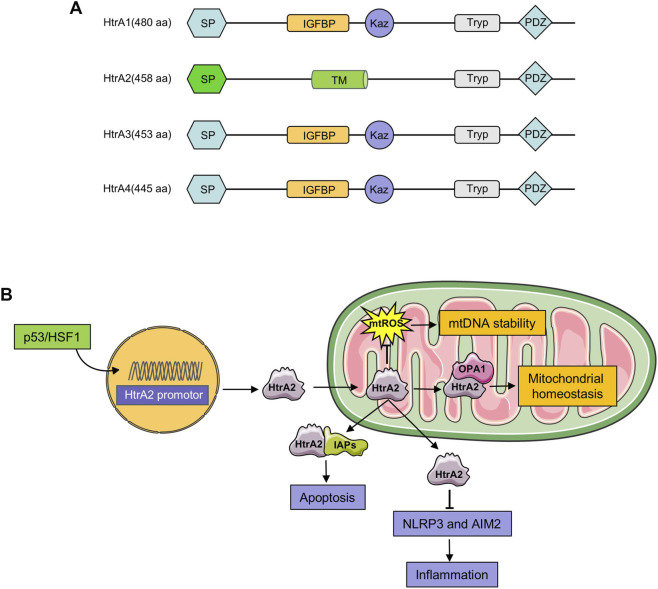 Figure 1
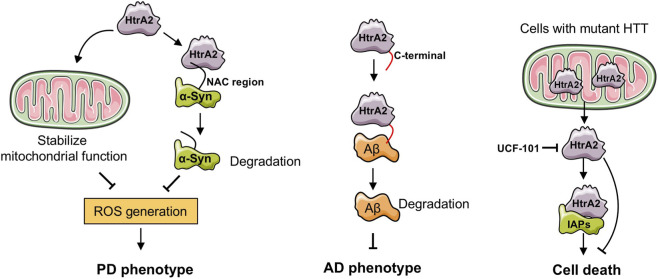 Figure 2
Peer Reviews
No public reviews on file for this paper yet. If you reviewed it on a platform where reviews are public (OpenReview, ICLR, NeurIPS, ICML), you can paste yours below so the community can read it here.
Videos
No videos yet. Explain this paper in a talk, walkthrough, or lecture? Add one.
Taxonomy
TopicsCerebrovascular and genetic disorders · Mitochondrial Function and Pathology · Neurological diseases and metabolism