Longitudinal analysis of neutralizing antibodies against SARS-CoV-1 and different SARS-CoV-2 strains in breakthrough and unvaccinated COVID-19 patients in Thailand (2021-2022)
Prapassorn Poolchanuan, Vichapon Tiacharoen, Adul Dulsuk, Rungnapa Phunpang, Chakkaphan Runcharoen, Thitiya Boonprakob, Onura Hemtong, Suchada Chowplijit, Vachara Chuapaknam, Tanaya Siripoon, Watcharapong Piyaphanee, Le Van Tan, Susanna Dunachie, Chee Wah Tan, Lin-Fa Wang

TL;DR
This study analyzed how neutralizing antibodies in Thai patients changed over time against different SARS-CoV-2 variants and SARS-CoV-1, showing varied immune responses based on vaccination type, age, and health conditions.
Contribution
The study provides new insights into the dynamics of neutralizing antibodies against multiple SARS-CoV-2 strains and SARS-CoV-1 in vaccinated and unvaccinated individuals in Thailand.
Findings
Neutralizing antibody levels increased within two weeks but declined by day 60.
Heterologous vaccination led to higher neutralizing antibody levels in breakthrough cases.
Older breakthrough patients showed faster antibody decline compared to younger individuals.
Abstract
The emergence of SARS-CoV-2 variants that evade immune responses poses challenges to effective prevention. We prospectively enrolled 111 COVID-19 patients in Thailand (2021-2022), who received homologous or heterologous vaccines or were unvaccinated. Plasma neutralizing antibody (nAb) levels against SARS-CoV-1 and 13 SARS-CoV-2 strains were measured using a multiplex surrogate virus neutralization test (sVNT) assay within a year. nAb levels increased in two weeks, showing strong inhibition against ancestral SARS-CoV-2 and non-omicron variants, but not against SAR-CoV-1 and lower responses to omicron variants. nAb levels declined by the day 60. Breakthrough patients with heterologous vaccines had higher nAb levels compared to other groups. nAb levels were lower in breakthrough patients with pneumonia than those with other conditions. Notably, breakthrough patients aged ≥60 showed rapid…
Genes, proteins, chemicals, diseases, species, mutations and cell lines named across the full text — each resolved to its canonical identifier and authoritative record.
Click any figure to enlarge with its caption.
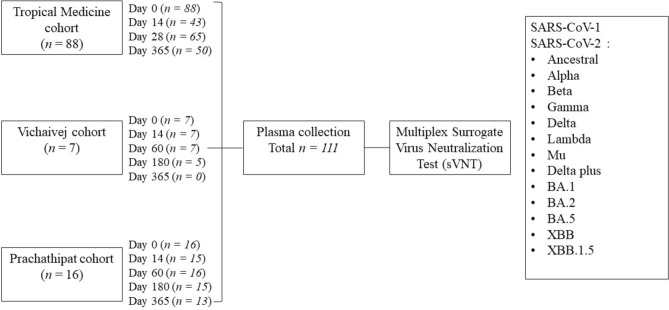 Figure 1
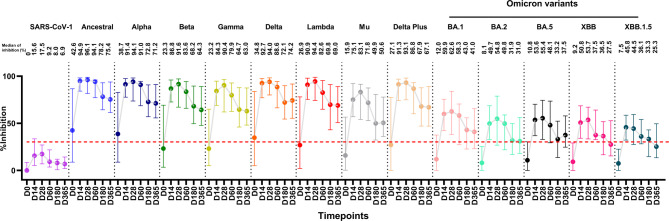 Figure 2
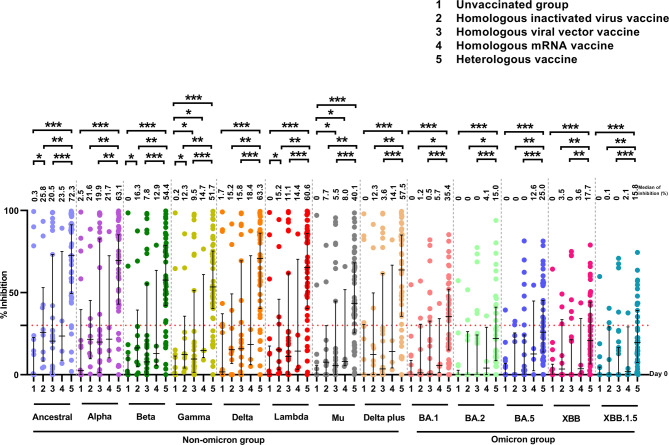 Figure 3
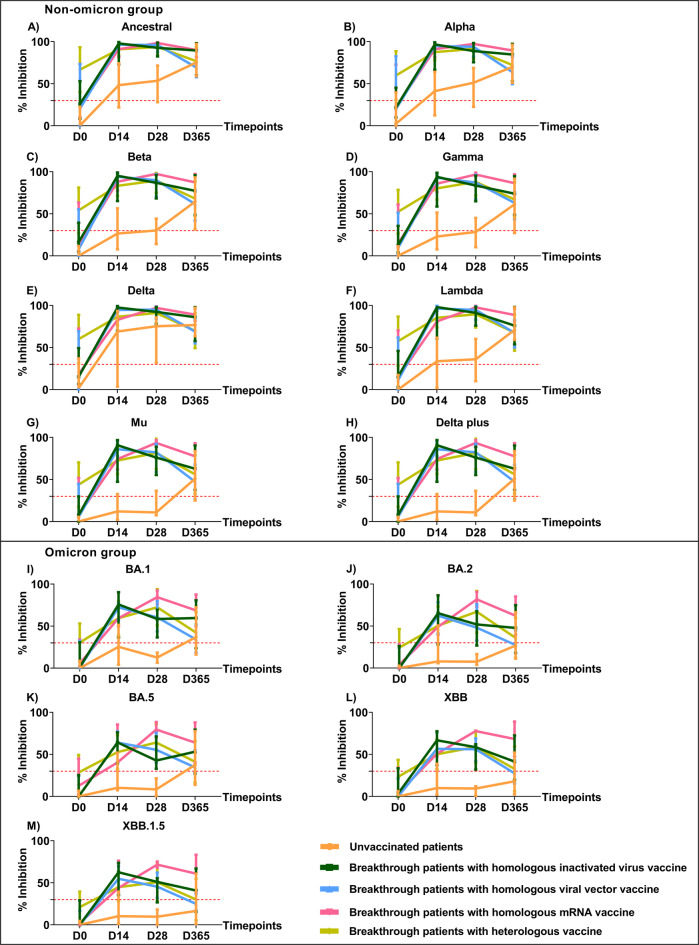 Figure 4
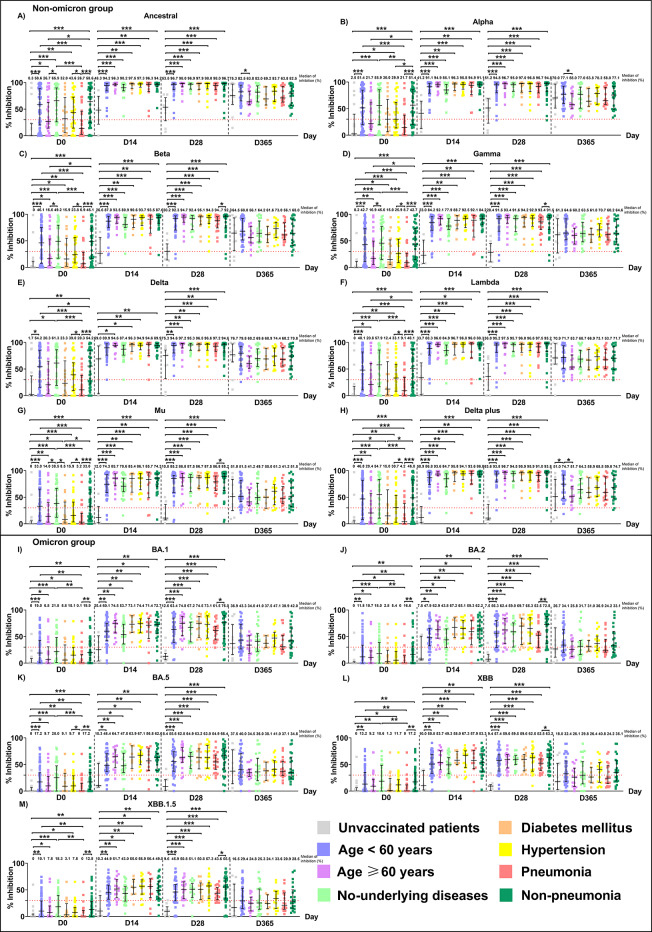 Figure 5
 Figure 6
Peer Reviews
No public reviews on file for this paper yet. If you reviewed it on a platform where reviews are public (OpenReview, ICLR, NeurIPS, ICML), you can paste yours below so the community can read it here.
Videos
No videos yet. Explain this paper in a talk, walkthrough, or lecture? Add one.
Taxonomy
TopicsSARS-CoV-2 and COVID-19 Research · vaccines and immunoinformatics approaches · COVID-19 Clinical Research Studies