Binary classification of signal and background triggers of a transition edge sensor using convolutional neural networks
Elmeri Rivasto, Katharina-Sophie Isleif, Friederike Januschek, Axel Lindner, Manuel Meyer, Gulden Othman, José Alejandro Rubiera Gimeno, Christina Schwemmbauer

TL;DR
This paper explores using CNNs to classify photon signals in a physics experiment but finds traditional methods perform better due to background noise.
Contribution
The study identifies training confusion from black-body radiation as a key limitation for CNN performance in this context.
Findings
CNNs did not outperform cut-based analysis in detection significance.
Black-body radiation from the fiber is the main background source limiting CNN performance.
Regression-based CNNs and structured training data are recommended for future work.
Abstract
The Any Light Particle Search II (ALPS II) is a light shining through a wall experiment probing the existence of axions and axion-like particles using a 1064 nm laser source. While ALPS II is already taking data using a heterodyne based detection scheme, cryogenic transition edge sensor (TES) based single-photon detectors are planned to expand the detection system for cross-checking the potential signals, for which a sensitivity on the order of 10-24 W is required. In order to reach this goal, we have investigated the use of convolutional neural networks (CNN) as binary classifiers to distinguish the experimentally measured 1064 nm photon triggered (light) pulses from background (dark) pulses. Despite rigorous hyperparameter optimization, the CNN based binary classifier did not outperform our previously optimized cut-based analysis in terms of detection significance. Our findings…
Genes, proteins, chemicals, diseases, species, mutations and cell lines named across the full text — each resolved to its canonical identifier and authoritative record.
Click any figure to enlarge with its caption.
 Figure 10
 Figure 1
 Figure 2
 Figure 3
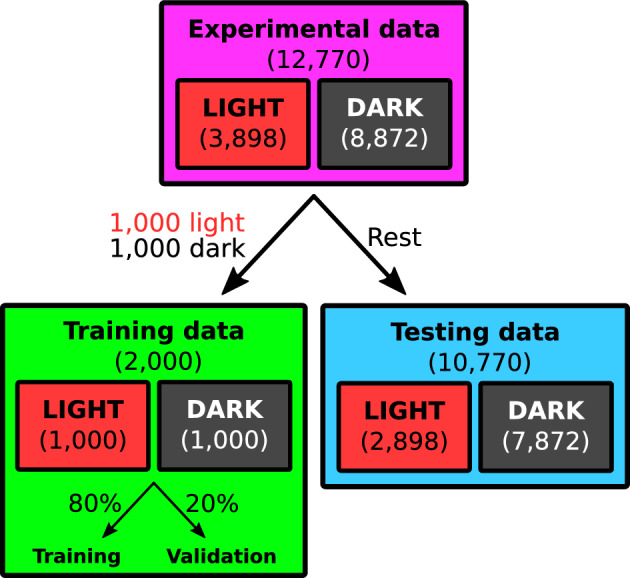 Figure 4
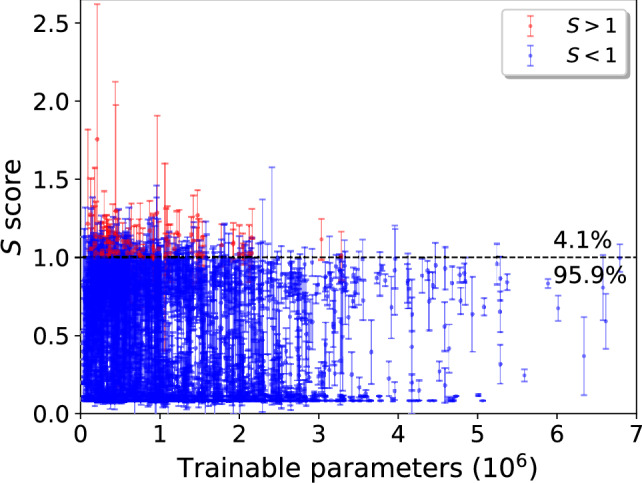 Figure 5
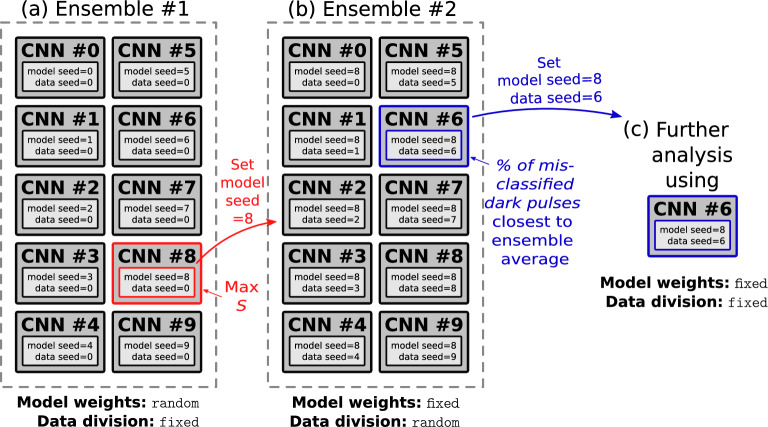 Figure 6
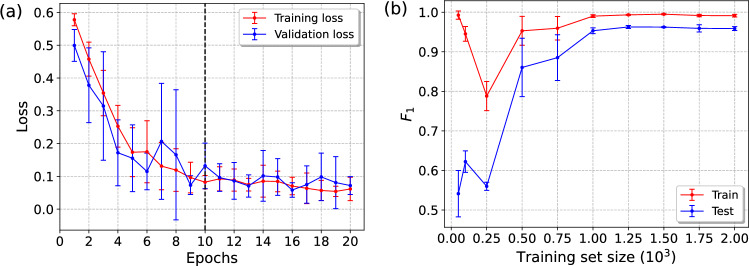 Figure 7
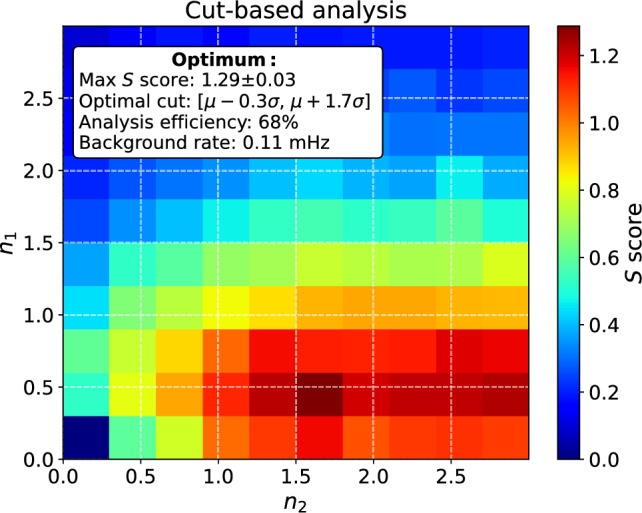 Figure 8
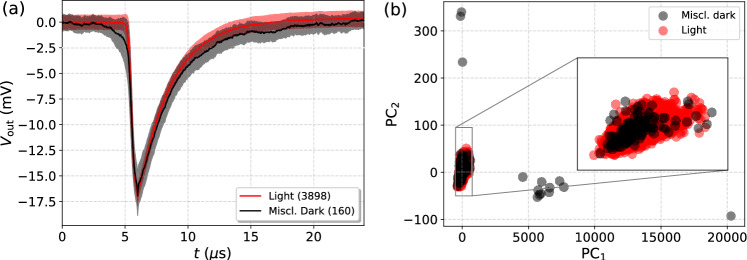 Figure 9
Peer Reviews
No public reviews on file for this paper yet. If you reviewed it on a platform where reviews are public (OpenReview, ICLR, NeurIPS, ICML), you can paste yours below so the community can read it here.
Videos
No videos yet. Explain this paper in a talk, walkthrough, or lecture? Add one.
Taxonomy
TopicsAstronomical Observations and Instrumentation · Adaptive optics and wavefront sensing · Optical Systems and Laser Technology