Genetic diversity and dynamics of plum pox virus populations in the alternative host American plum
Tamara D. Collum, Andrew L. Stone, Elizabeth E. Rogers

TL;DR
This study explores how the plum pox virus changes genetically in American plum and peach plants, especially after cold-induced dormancy.
Contribution
The study reveals unique genetic changes in PPV populations in American plum not observed in peach.
Findings
PPV genetic diversity decreased significantly in American plum after cold-induced dormancy.
Seventeen genetic variations were unique to American plum, while eight were unique to peach.
The findings highlight American plum as a potential reservoir for PPV genetic diversity.
Abstract
Plum pox virus (PPV) is a serious viral threat to stone fruit trees worldwide. Wild Prunus species including American plum (Prunus americana) can serve as sources of inoculum. High-throughput sequencing was used to characterize PPV populations in American plum and peach after aphid inoculation and after two cycles of cold-induced dormancy (CID). A significant decrease in the number of sequence variations in the PPV genome was observed after CID in American plum, but not in peach. Seventeen were identified as unique to American plum, while eight were unique to peach. These findings provide insight into the genetic diversity of PPV in a potential reservoir host. The online version contains supplementary material available at 10.1007/s00705-025-06502-3.
Genes, proteins, chemicals, diseases, species, mutations and cell lines named across the full text — each resolved to its canonical identifier and authoritative record.
Click any figure to enlarge with its caption.
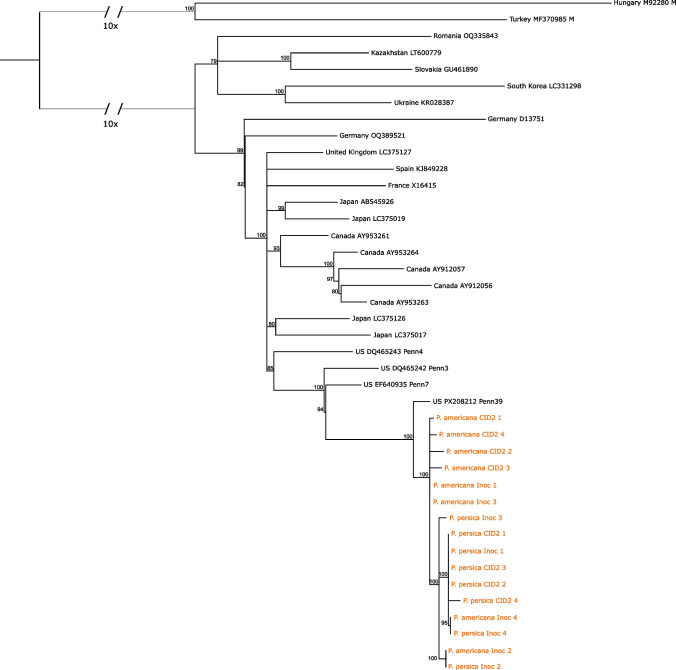 Figure 1
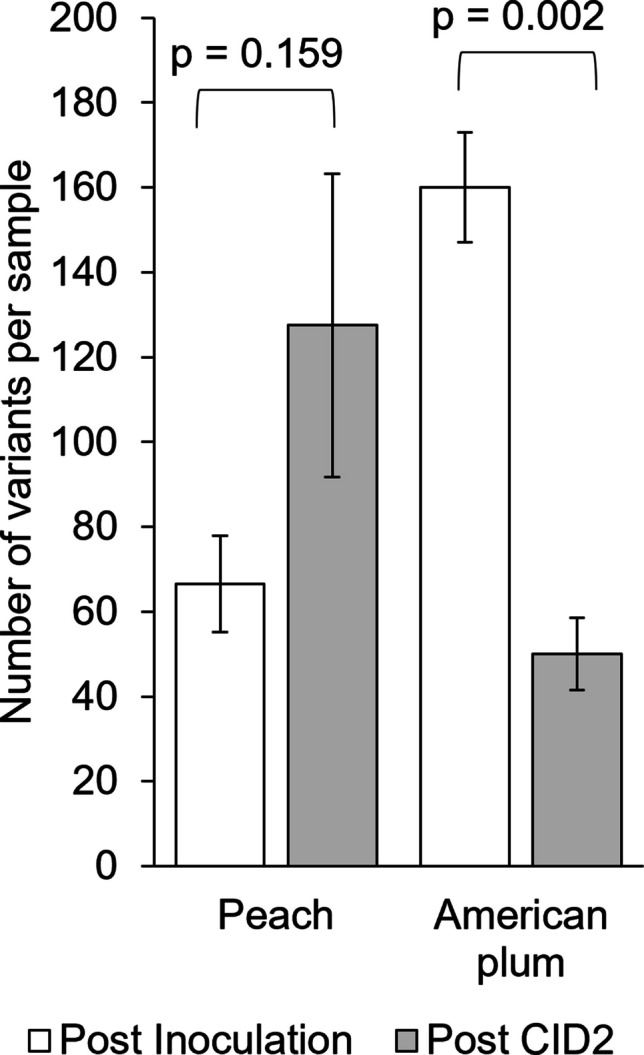 Figure 2
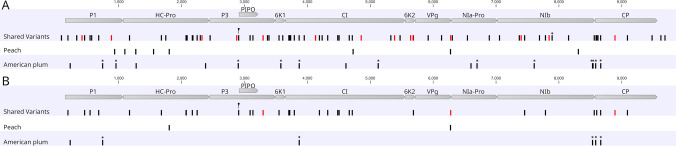 Figure 3
Peer Reviews
No public reviews on file for this paper yet. If you reviewed it on a platform where reviews are public (OpenReview, ICLR, NeurIPS, ICML), you can paste yours below so the community can read it here.
Videos
No videos yet. Explain this paper in a talk, walkthrough, or lecture? Add one.
Taxonomy
TopicsPlant Virus Research Studies · Plant and Fungal Interactions Research · Phytoplasmas and Hemiptera pathogens