Spatially resolved molecular signatures of Lewy body dementia
Yunjung Jin, Kai Chen, Alexander Q. Wixom, Zonghua Li, Shunsuke Koga, Hiroaki Sekiya, Gisela Xhafkollari, Monica Castanedes-Casey, Hannah Santhakumar, Axel D. Meneses, Abigail J. Neff, Guojun Bu, Michael G. Heckman, Yuanhang Liu, Owen A. Ross, Dennis W. Dickson, Na Zhao

TL;DR
This study uses spatial transcriptomics to uncover how genetic factors like SNCA triplication and APOE4 influence brain regions and cell types in Lewy body dementia.
Contribution
The study reveals spatially and cell-type-specific mechanisms of LBD pathology linked to SNCA and APOE4.
Findings
Layer 5 of the gray matter shows elevated SNCA expression and synaptic/metabolic dysregulation in LBD.
APOE4 carriers exhibit worsened alterations and increased myelin debris in white matter.
Reelin signaling is a core disrupted pathway in LBD, validated in multiple models.
Abstract
Lewy body dementia (LBD), encompassing dementia with Lewy bodies and Parkinson’s disease dementia, is neuropathologically defined by neuronal accumulation of α-synuclein encoded by the SNCA gene. Genetic risk factors strongly influence LBD susceptibility, including SNCA multiplication, particularly triplication, and the apolipoprotein E ε4 allele (APOE4), the strongest common genetic risk factor for LBD. While SNCA is predominantly expressed in neurons and APOE primarily in glial cells, how these genetic factors converge to impact neuronal vulnerability and regional pathology in the human brain remains poorly understood. Here, we applied spatial transcriptomics to postmortem temporal cortex tissue from LBD cases with SNCA triplication or different APOE genotypes, alongside age- and sex-matched controls, to map gene expression within intact cortical architecture. We identified layer 5 of…
Genes, proteins, chemicals, diseases, species, mutations and cell lines named across the full text — each resolved to its canonical identifier and authoritative record.
Click any figure to enlarge with its caption.
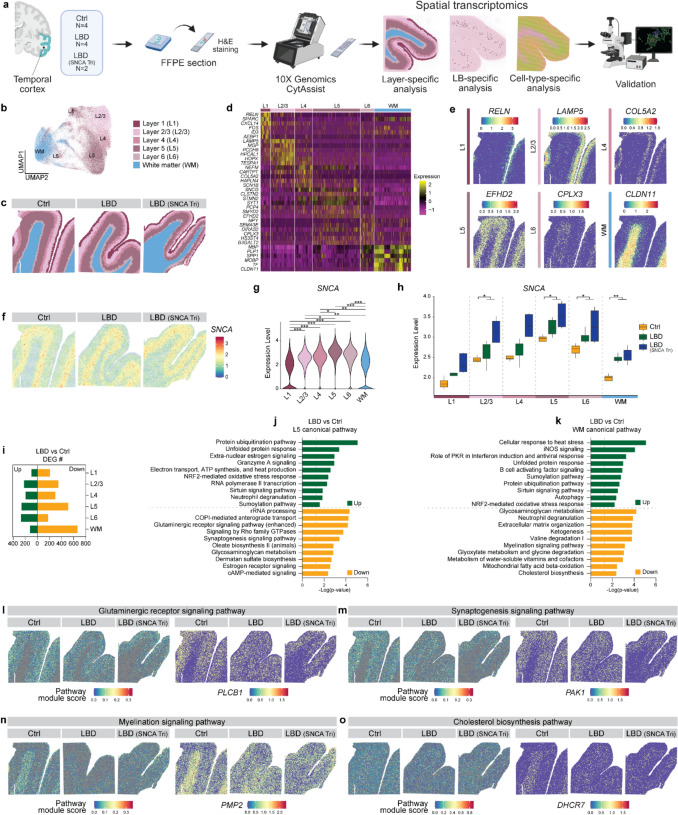 Figure 1
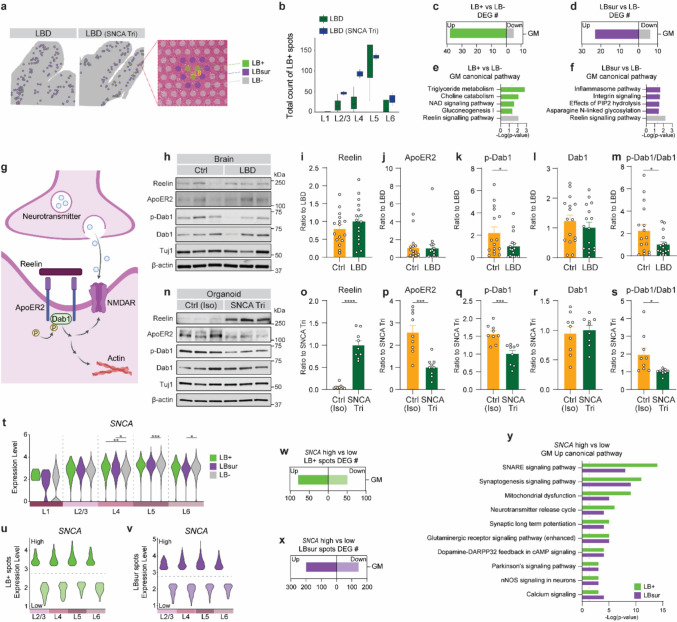 Figure 2
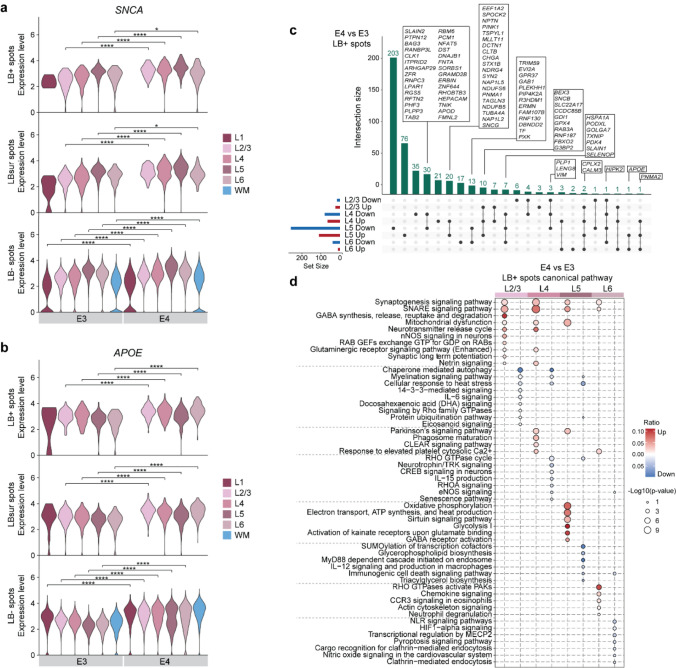 Figure 3
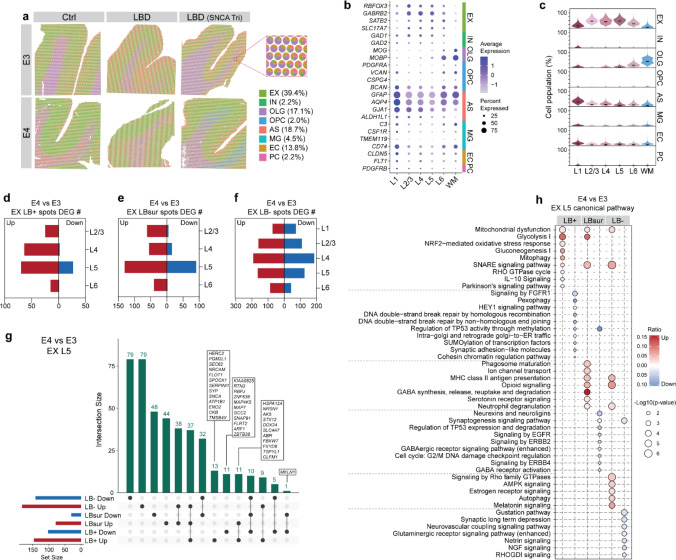 Figure 4
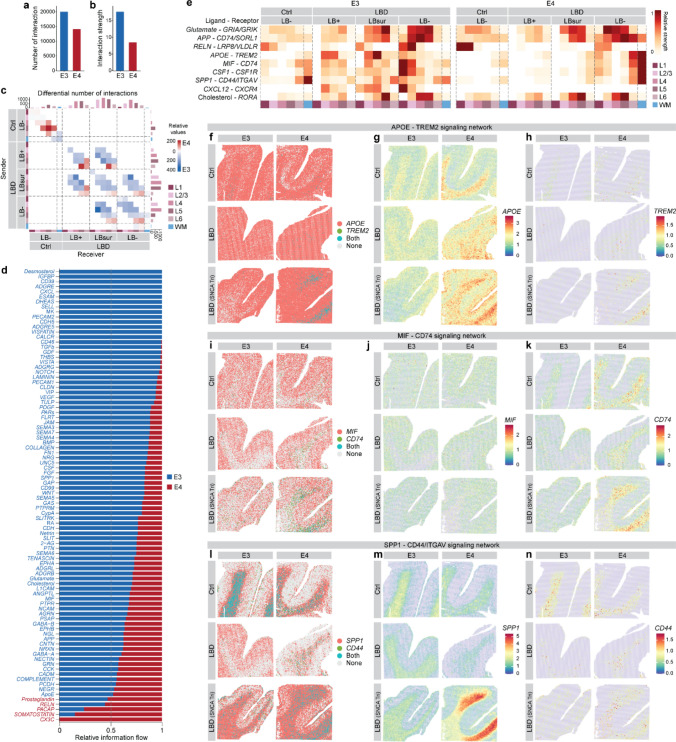 Figure 5
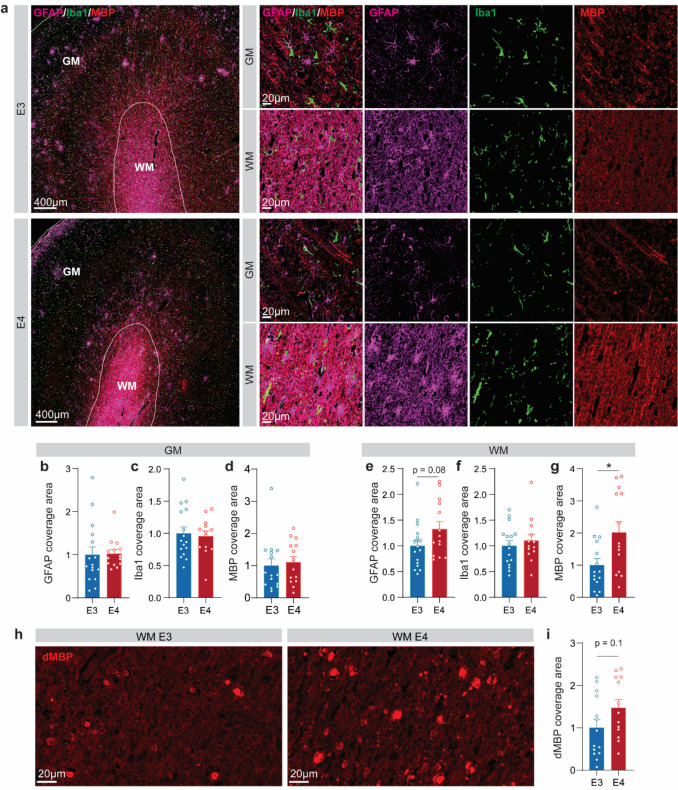 Figure 6
Peer Reviews
No public reviews on file for this paper yet. If you reviewed it on a platform where reviews are public (OpenReview, ICLR, NeurIPS, ICML), you can paste yours below so the community can read it here.
Videos
No videos yet. Explain this paper in a talk, walkthrough, or lecture? Add one.
Taxonomy
TopicsParkinson's Disease Mechanisms and Treatments · Nuclear Receptors and Signaling · Dementia and Cognitive Impairment Research