Oocyte and embryo developmental competence following small multiple cyclophosphamide dose administrations in prepubertal female mice are comparable to adolescents
Sujith Raj Salian, Dhakshanya Predheepan, Akshatha Daddangadi, Vani R Lakshmi, Sindhura Lakshmi Koulmane Laxminarayana, Guruprasad Kalthur, Shubhashree Uppangala, Satish Kumar Adiga

TL;DR
A small multiple-dose regimen of cyclophosphamide in young mice reduces follicle loss and preserves oocyte and embryo quality over time.
Contribution
The study shows that oocyte and embryo quality in prepubertal mice treated with small cyclophosphamide doses is comparable to adolescents.
Findings
Prepubertal mice had a three-fold reduction in follicle count compared to untreated controls.
Oocyte yield was significantly lower in prepubertal mice compared to adolescents.
Embryo quality, blastulation, and cell count were comparable between prepubertal and adolescent groups.
Abstract
A small multiple-dose regimen of cyclophosphamide (CY) compared to a large single dose in prepubertal mice has shown reduced follicle loss and improved fertility outcomes at early reproductive age. However, the long-term effects on the competency of oocytes from such surviving follicles, compared to those at post-pubertal age, remain unknown. Small multiple CY (75 mg/Kg, four weekly doses) injections were administered to prepubertal (PP75X4) and adolescent (AD75X4) Swiss albino female mice. At 22 weeks of age, surviving females were assessed for follicular pool and oocyte functional competency. The resulting embryos were assessed for blastulation, total cell number (TCN) quality, and in vitro inner cell mass (ICM) progression. At 22 weeks of life, PP75X4 females had a three-fold reduction (p < 0.001) in the total number of follicles compared to the untreated control. However, the…
Genes, proteins, chemicals, diseases, species, mutations and cell lines named across the full text — each resolved to its canonical identifier and authoritative record.
Click any figure to enlarge with its caption.
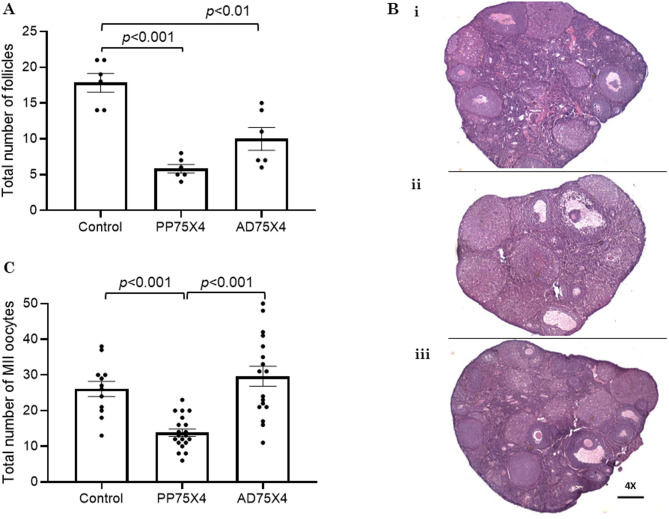 Figure 1
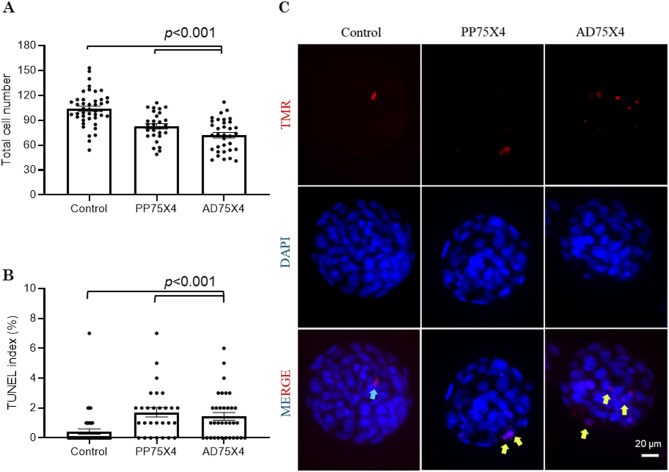 Figure 2
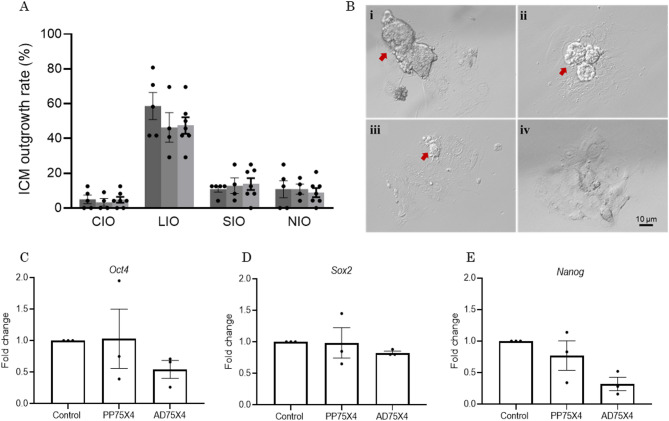 Figure 3
Peer Reviews
No public reviews on file for this paper yet. If you reviewed it on a platform where reviews are public (OpenReview, ICLR, NeurIPS, ICML), you can paste yours below so the community can read it here.
Videos
No videos yet. Explain this paper in a talk, walkthrough, or lecture? Add one.
Taxonomy
TopicsReproductive Biology and Fertility · Ovarian function and disorders · Reproductive System and Pregnancy