Light-induced analgesia provides a drug-free optical method for pain relief via activation of TRAAK k+ channels
Marion Bied, Arnaud Landra-Willm, Anne Amandine Chassot, Edward Francisco Mendez-Otalvaro, Benjamin Sueur, Kilian Roßmann, Elvira de la Peña, Pascal Fossat, Stephen J. Tucker, Jacques Noël, Wojciech Kopec, Felix Viana, Johannes Broichhagen, Eric Boué-Grabot, Guillaume Sandoz

TL;DR
A new drug-free method for pain relief in animals uses light to activate potassium channels, offering a non-invasive alternative to traditional pain management.
Contribution
The study introduces light-induced analgesia, a novel, non-invasive, and drug-free approach to pain relief via TRAAK channel activation.
Findings
365 nm light activates TRAAK potassium channels by oxidizing a methionine residue, inducing a conformational change.
Light-induced analgesia silences nociceptors and provides potent, long-lasting pain relief in rodents.
The mechanism can be transferred to other K2P channels via a single-point mutation, making them light-sensitive.
Abstract
Pain management in animal experimentation is crucial for both ethical and scientific reasons, as unmanaged pain can distort physiological responses compromising data reliability. Current strategies are often invasive and pharmacology-based, introducing variability and confounding effects. Here, we present Light-Induced Analgesia, a drug-free, non-invasive method for pain relief in animals. We show that 365 nm illumination activates the pain-inhibitory TRAAK two-pore domain potassium (K2P) channel. This activation is driven by the oxidation of a native methionine at TRAAK’s regulatory fenestration site, triggering a conformational switch from its inactive (down) to active (up) state. We further demonstrate that this mechanism can be transferred to other related K2Ps via a single-point mutation, rendering them light-sensitive. In rodents, gentle skin exposure to 365 nm is sufficient to…
Genes, proteins, chemicals, diseases, species, mutations and cell lines named across the full text — each resolved to its canonical identifier and authoritative record.
Click any figure to enlarge with its caption.
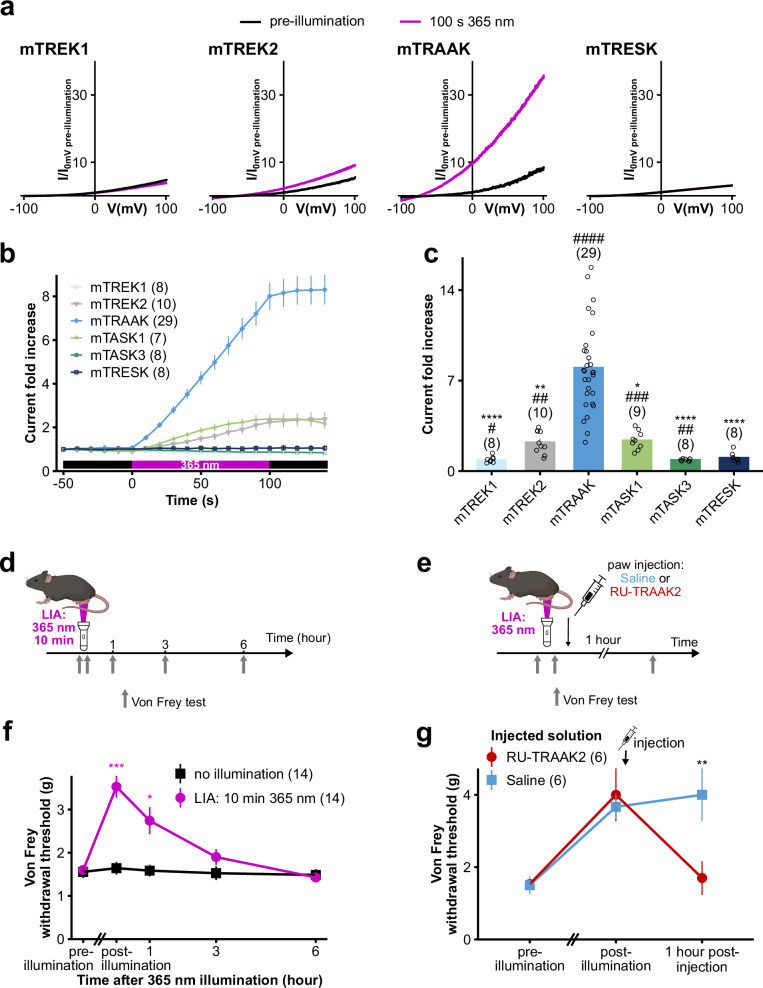 Figure 1
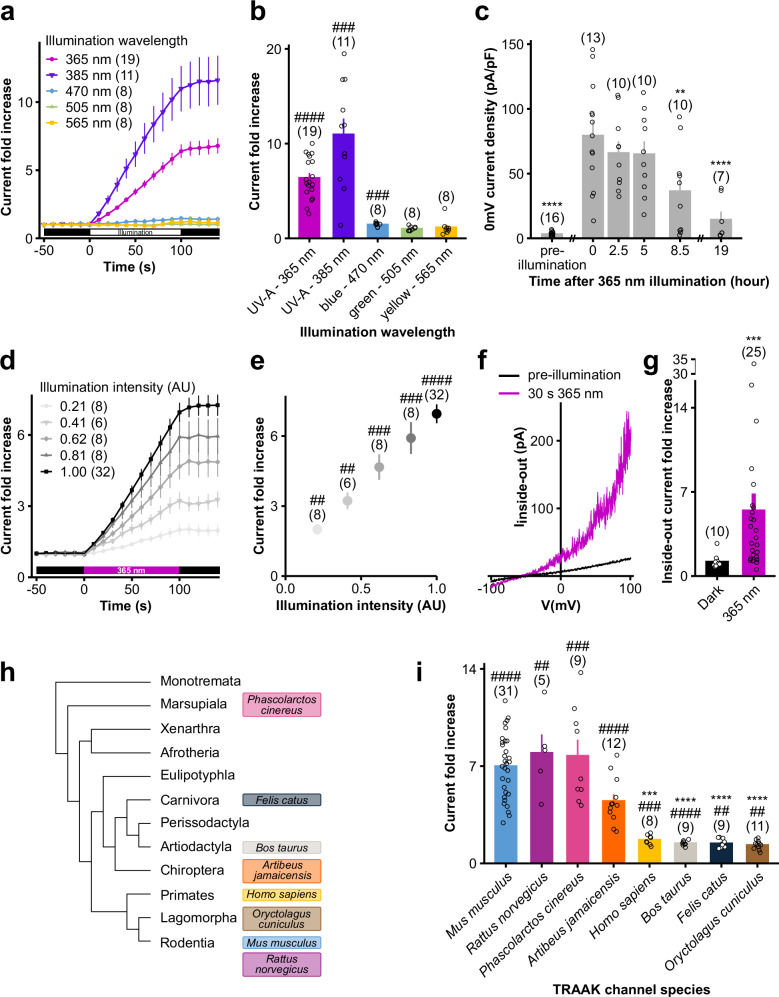 Figure 2
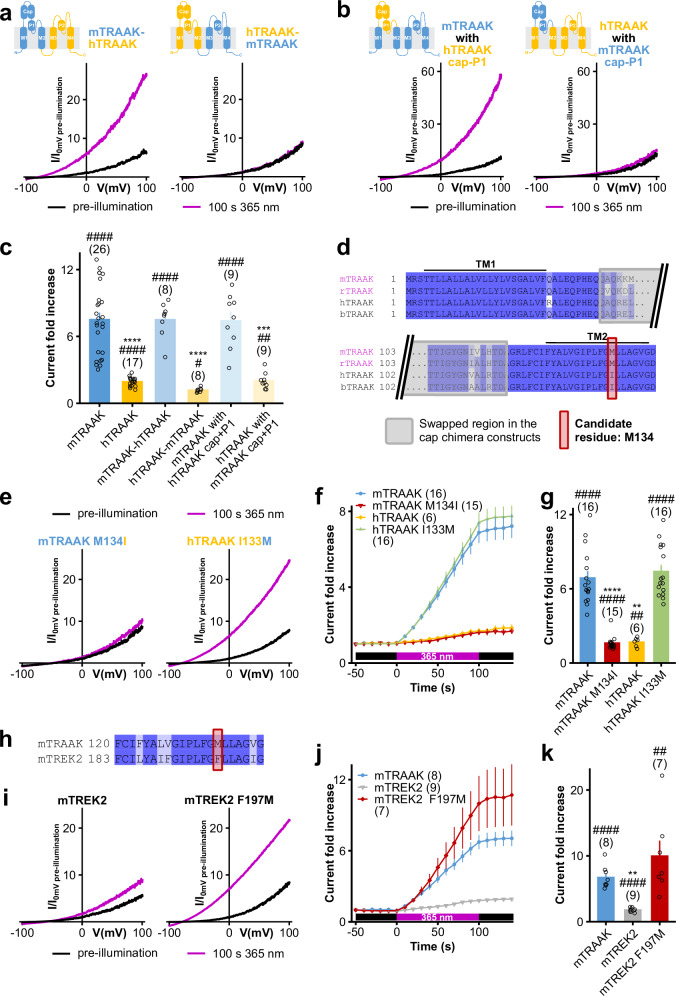 Figure 3
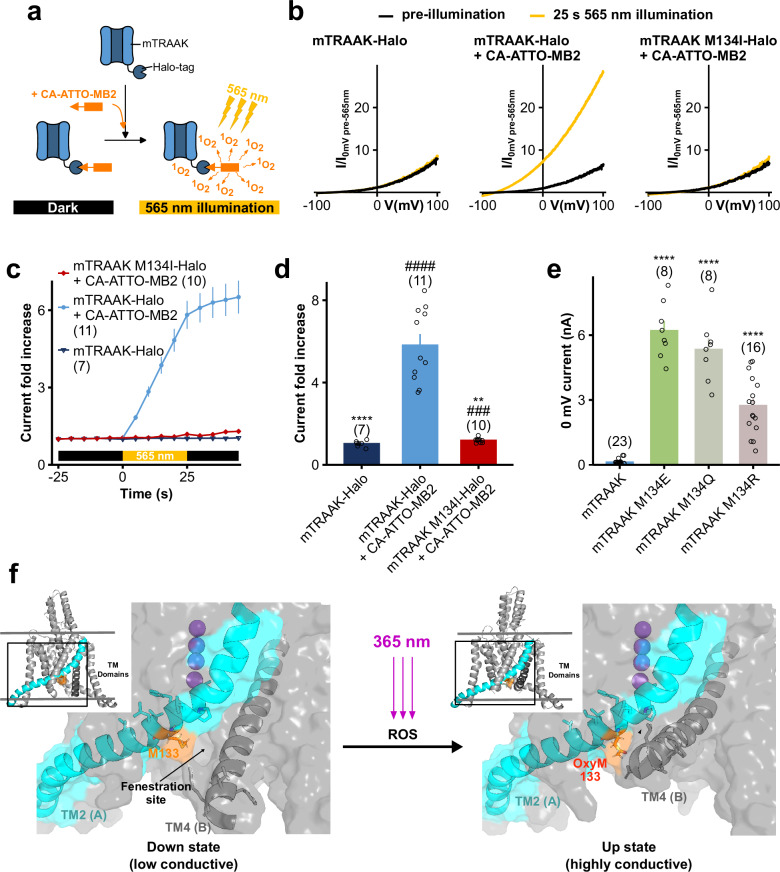 Figure 4
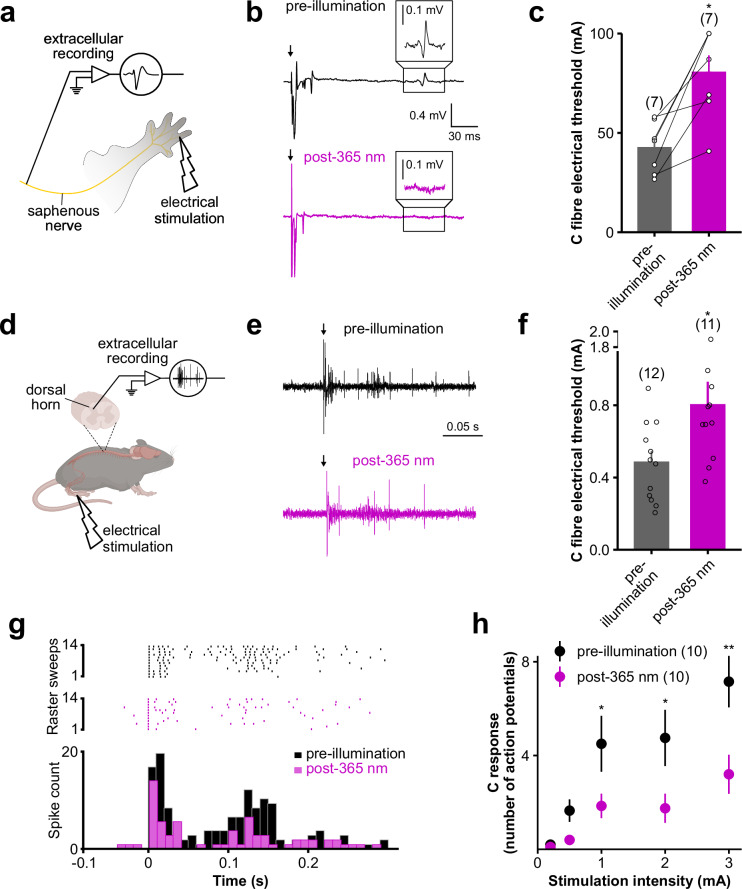 Figure 5
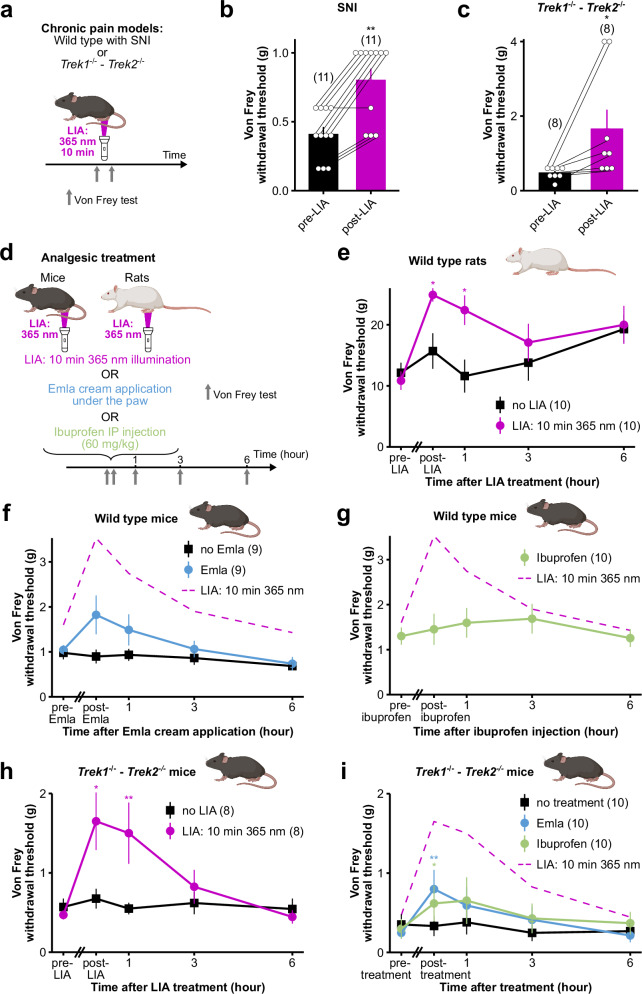 Figure 6
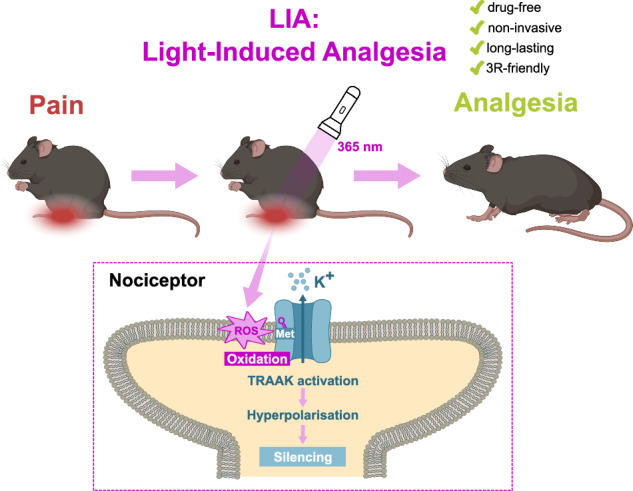 Figure 7
Peer Reviews
No public reviews on file for this paper yet. If you reviewed it on a platform where reviews are public (OpenReview, ICLR, NeurIPS, ICML), you can paste yours below so the community can read it here.
Videos
No videos yet. Explain this paper in a talk, walkthrough, or lecture? Add one.
Taxonomy
TopicsPhotoreceptor and optogenetics research · Photochromic and Fluorescence Chemistry · Neuroscience and Neuropharmacology Research