Bidirectional reinforcement learning neural network for constrained molecular design
Junan Lin, Jiří Hostaš, Anguang Hu, Hang Hu, Hsu Kiang Ooi, Mohammad Sajjad Ghaemi

TL;DR
BiRLNN is a new framework that uses bidirectional reinforcement learning to design drug-like molecules while ensuring syntactic validity and exploring chemical space effectively.
Contribution
The novel use of bidirectional generation and multi-objective reinforcement learning for constrained molecular design.
Findings
BiRLNN generates fully syntactically valid molecules using Self-Referencing Embedded Strings.
The bidirectional approach explores more balanced and diverse regions of chemical space compared to unidirectional models.
Reinforcement learning successfully guides molecule generation toward desirable drug properties with improved metrics.
Abstract
We present BiRLNN, a bidirectional molecular design framework that combines recurrent neural networks with reinforcement learning to optimize drug-like properties of generated compounds. We examined the use of Self-Referencing Embedded Strings representations, which ensures 100% syntactic validity of generated molecules. By generating molecular sequences in both forward and backward directions, we enabled more balanced exploration of chemical space while maintaining constraint requirements during molecular design. To guide generation towards desirable pharmacological targets, we implement a multi-objective reward function based on quantitative estimate of drug-likeness and synthetic accessibility, and apply policy gradient-based reinforcement learning for fine-tuning. We demonstrate that our bidirectional model covers the full constrained chemical space compared to unidirectional ones…
Genes, proteins, chemicals, diseases, species, mutations and cell lines named across the full text — each resolved to its canonical identifier and authoritative record.
Click any figure to enlarge with its caption.
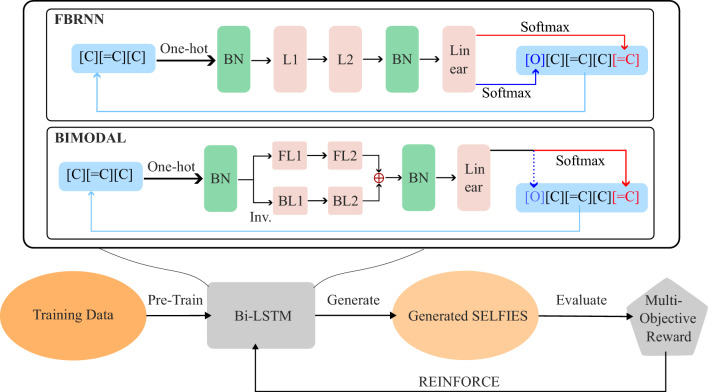 Figure 1
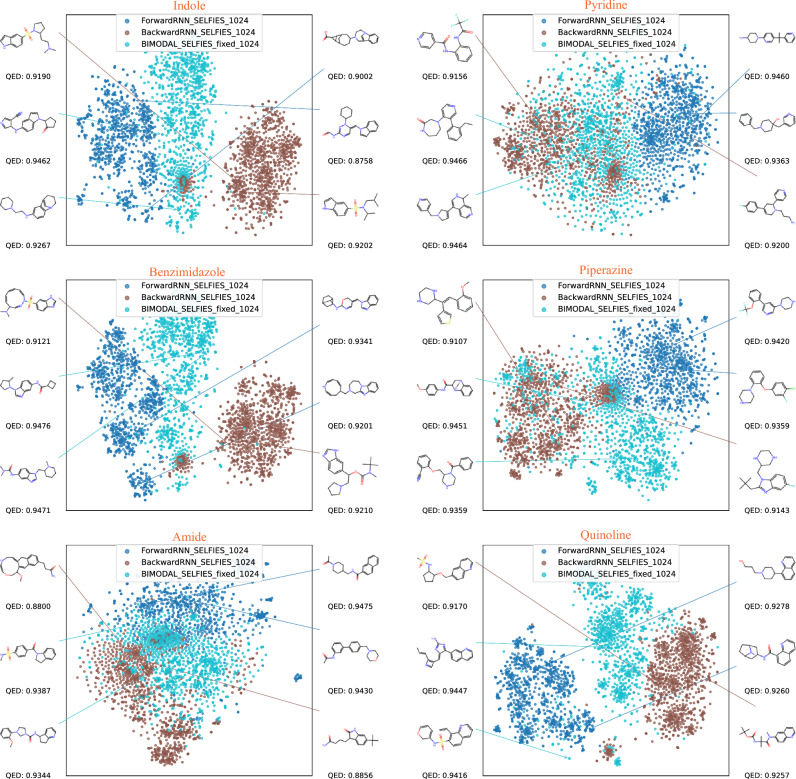 Figure 2
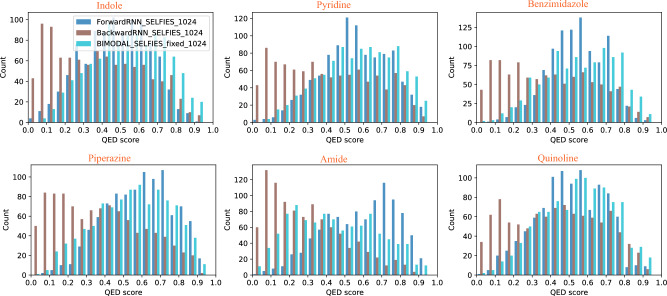 Figure 3
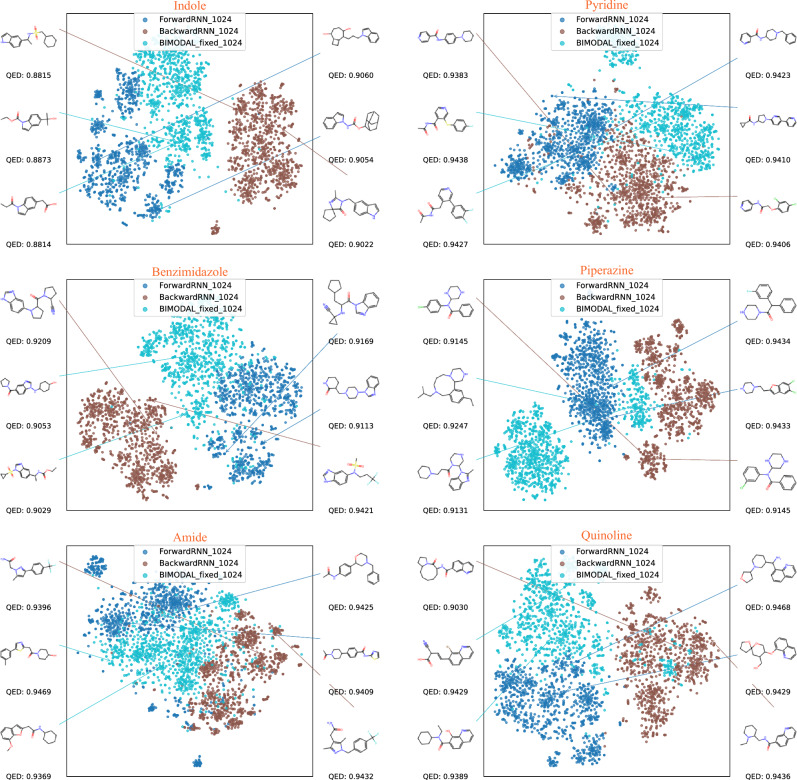 Figure 4
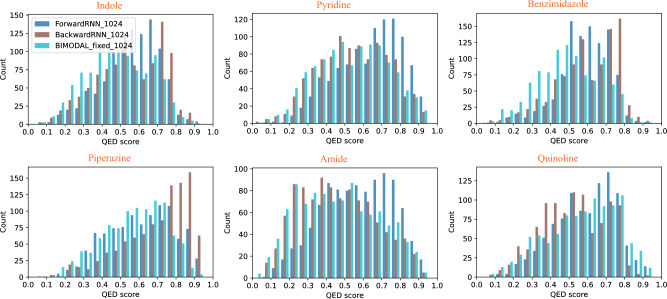 Figure 5
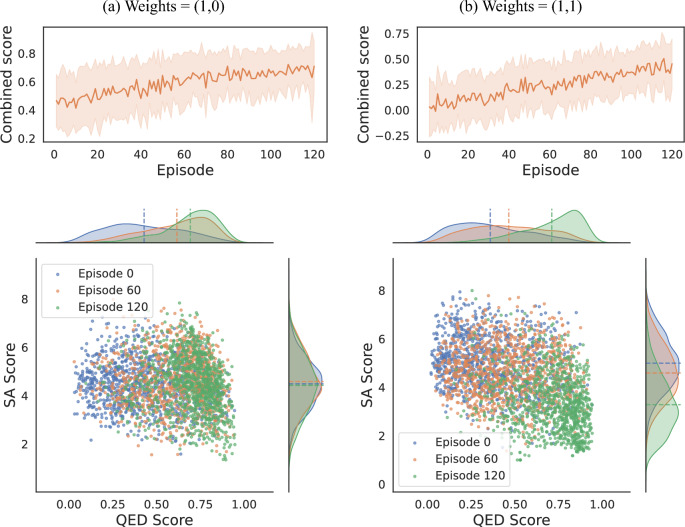 Figure 6
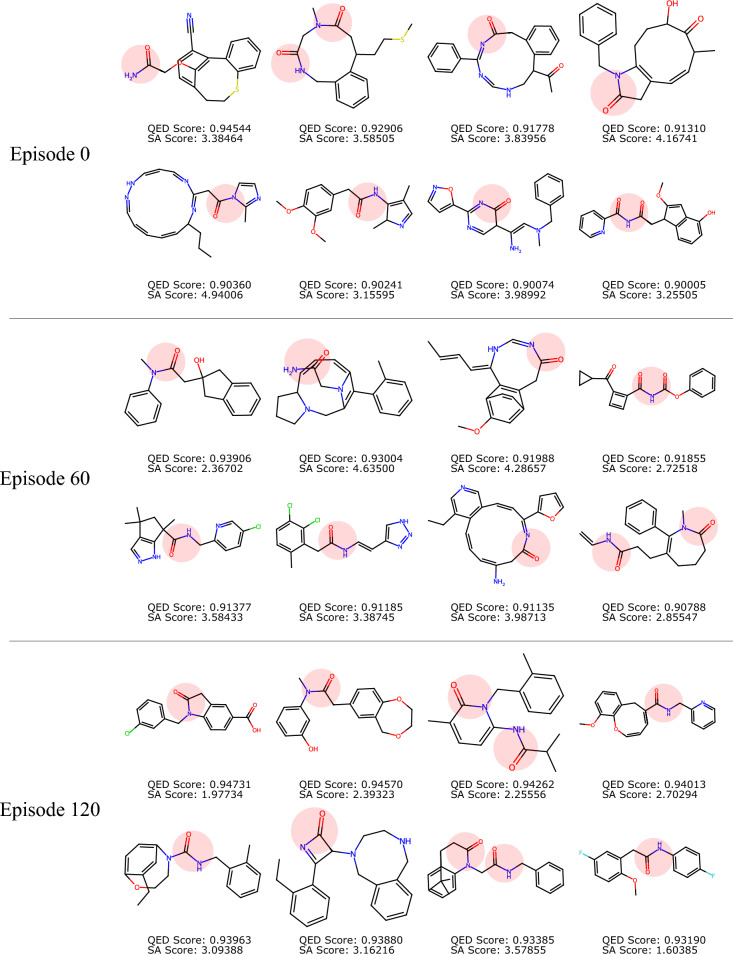 Figure 7
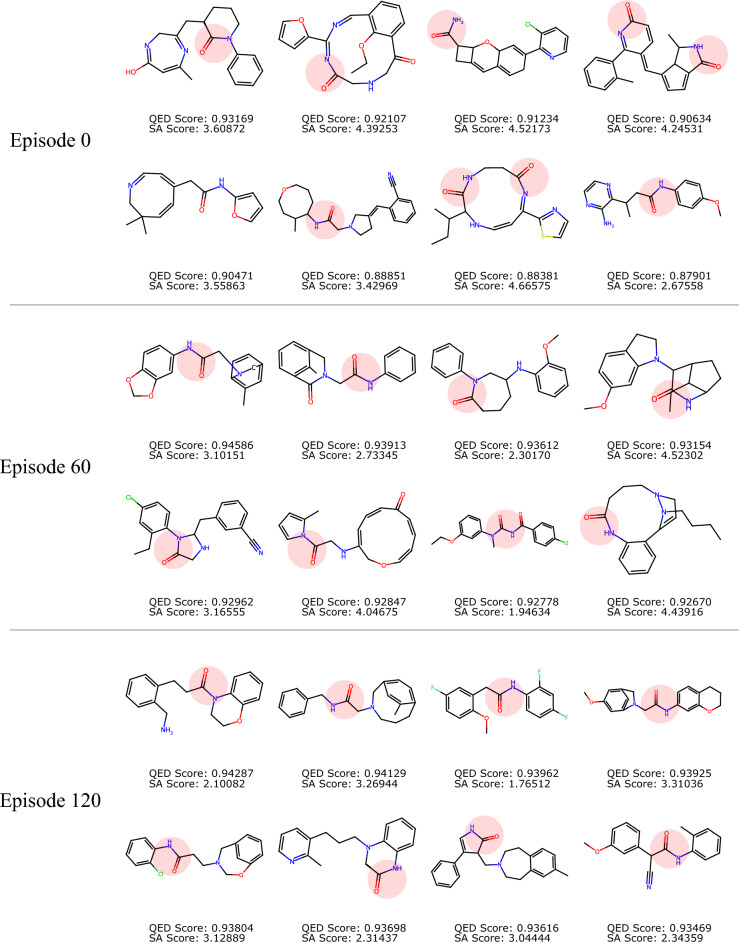 Figure 8
Peer Reviews
No public reviews on file for this paper yet. If you reviewed it on a platform where reviews are public (OpenReview, ICLR, NeurIPS, ICML), you can paste yours below so the community can read it here.
Videos
No videos yet. Explain this paper in a talk, walkthrough, or lecture? Add one.
Taxonomy
TopicsComputational Drug Discovery Methods · Machine Learning in Materials Science · Chemical Synthesis and Analysis