Development of a novel HDAC6 PET imaging agent uncovers associations between HDAC6 overexpression and neuroinflammation in depression
Yanting Zhou, Yuheng Zou, Xiao Zhong, Hongyan Li, Jingyi Yang, Hui Meng, Weiyao Xie, Pan Yao, Xiaoai Wu, Huawei Cai, Lin Li, Changning Wang, Wei Zhang, Ping Bai

TL;DR
A new PET imaging agent for HDAC6 reveals a link between HDAC6 overexpression and neuroinflammation in depression.
Contribution
Development of [18F]PB200, a novel HDAC6-specific PET radiotracer, enabling in vivo investigation of HDAC6 in depression.
Findings
[18F]PB200 demonstrated nanomolar affinity, high HDAC6 selectivity, and good blood-brain barrier permeability.
HDAC6 upregulation was found to coincide with increased neuroinflammatory markers in a depression mouse model.
The study provides first in vivo evidence linking HDAC6 to depressive pathophysiology and neuroinflammation.
Abstract
Histone deacetylase 6 (HDAC6) represents a compelling target in major depressive disorder (MDD) pathophysiology, yet in vivo investigation has been constrained by inadequate imaging capabilities. Here, we report the development and validation of [18F]PB200, a novel positron emission tomography (PET) radiotracer specifically targeting brain HDAC6. PB200 was engineered with nanomolar affinity, high HDAC6 selectivity, and excellent blood-brain barrier permeability. [18F]PB200 was successfully synthesized in a radiochemical yield of 13 ± 4 % and validated through in vitro autoradiography and in vivo PET imaging across rodent and non-human primate models. We subsequently employed [18F]PB200 alongside TSPO-targeted [18F]FEPPA PET imaging in a chronic unpredictable mild stress (CUMS) mouse model of depression. This dual-tracer approach, complemented by in vitro experiments, revealed…
Genes, proteins, chemicals, diseases, species, mutations and cell lines named across the full text — each resolved to its canonical identifier and authoritative record.
Click any figure to enlarge with its caption.
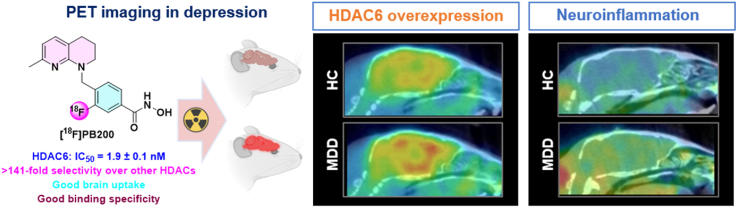 Figure 1
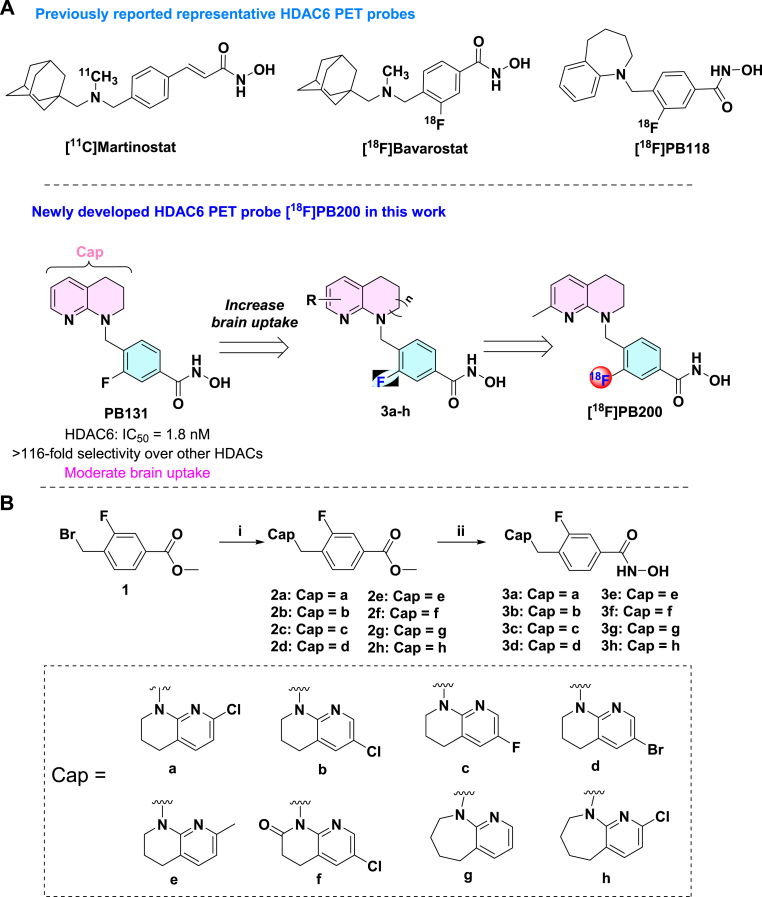 Figure 2
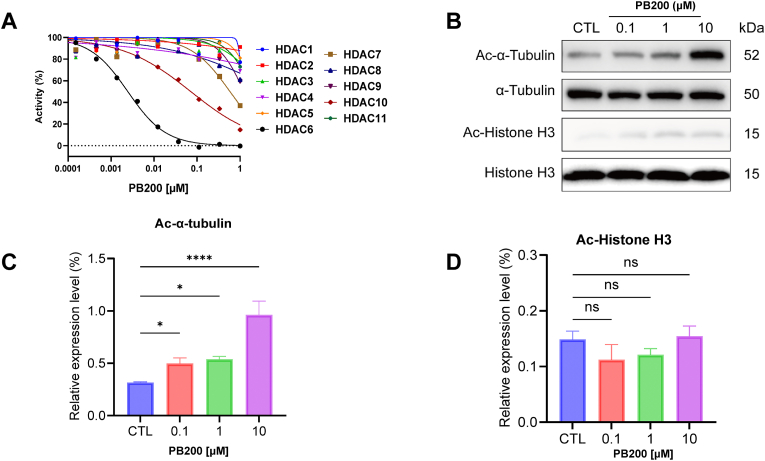 Figure 3
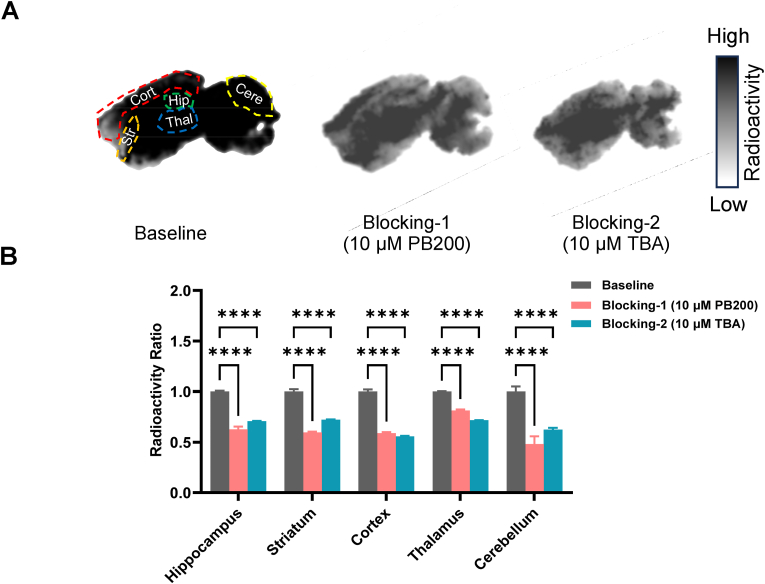 Figure 4
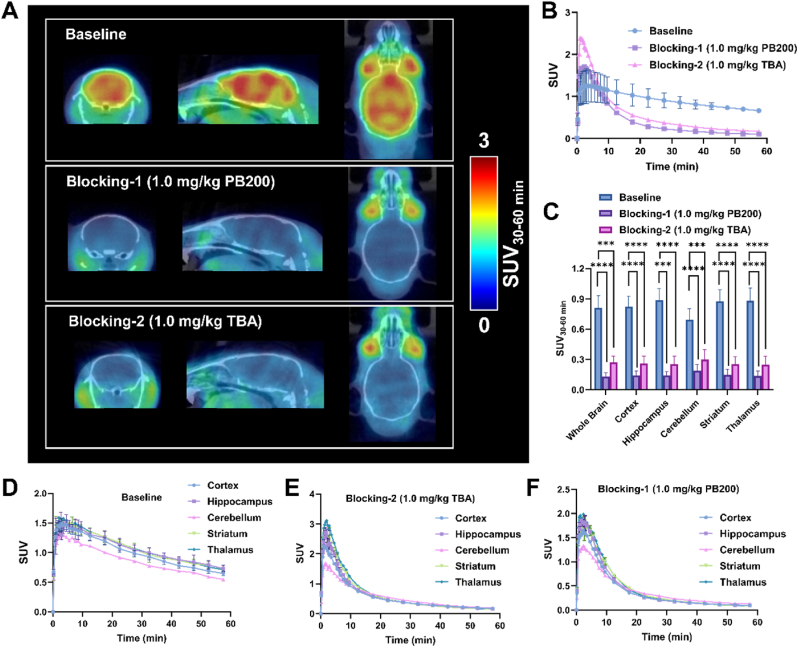 Figure 5
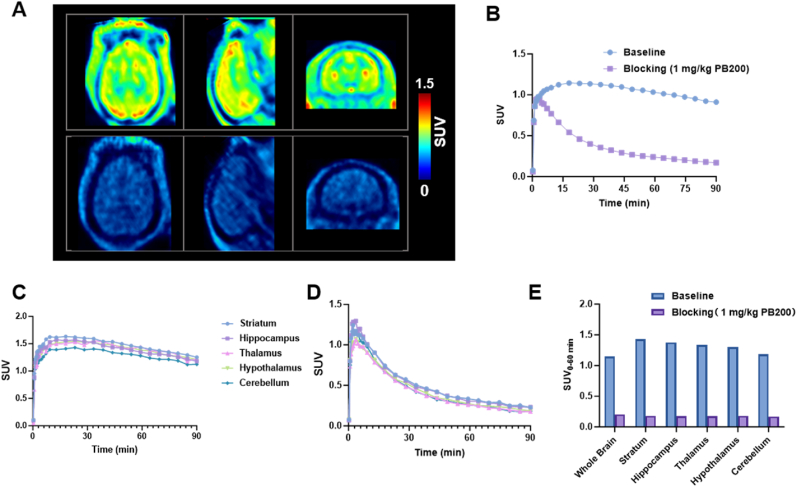 Figure 6
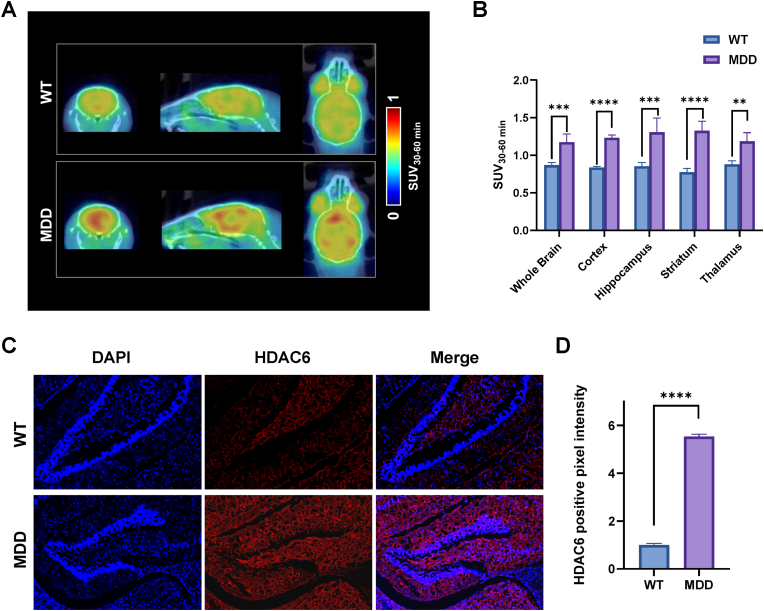 Figure 7
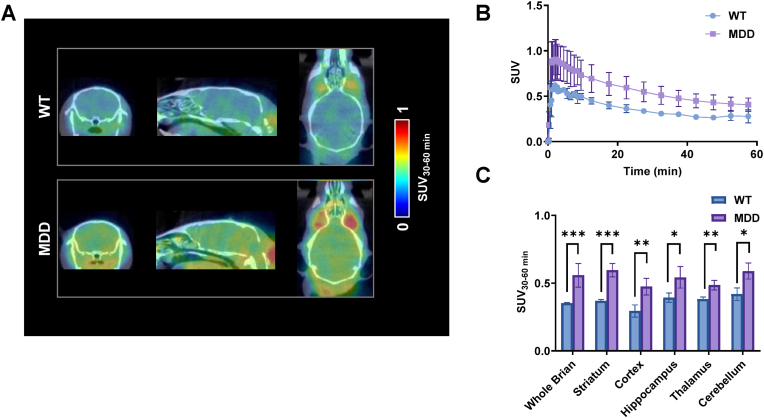 Figure 8
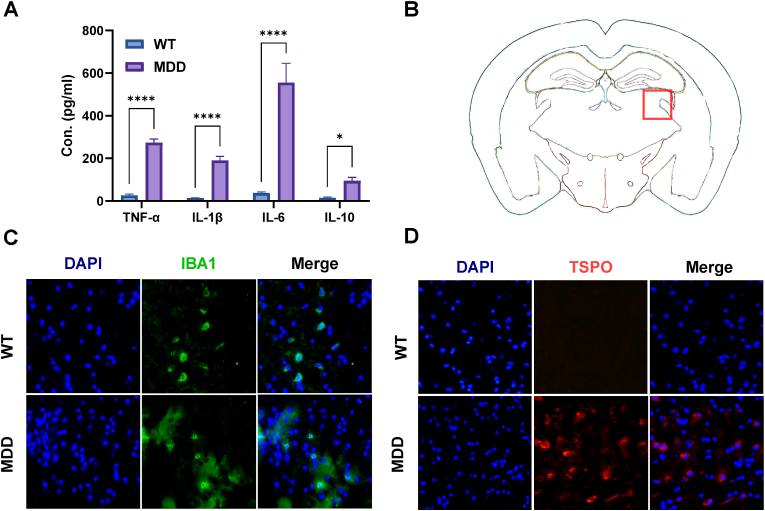 Figure 9
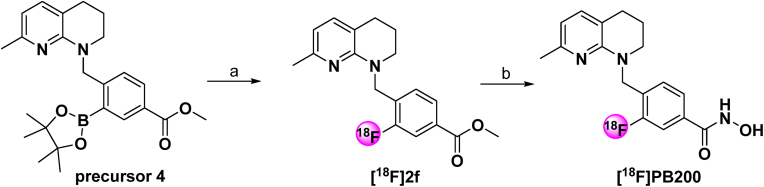 Figure 10
Peer Reviews
No public reviews on file for this paper yet. If you reviewed it on a platform where reviews are public (OpenReview, ICLR, NeurIPS, ICML), you can paste yours below so the community can read it here.
Videos
No videos yet. Explain this paper in a talk, walkthrough, or lecture? Add one.
Taxonomy
TopicsTryptophan and brain disorders · Histone Deacetylase Inhibitors Research · Treatment of Major Depression