The neural basis of habit formation measured in goal-directed response switching
Mario Michiels, Vincent Man, David Luque, Ignacio Obeso

TL;DR
This study explores how the brain switches from habitual actions to goal-directed behaviors, identifying key brain regions and mechanisms involved in habit formation and control.
Contribution
The study identifies specific cortical-striatal networks and the causal role of the premotor cortex in habit control using fMRI and TMS.
Findings
Overtraining increases RT switch costs, indicating stronger habitual behavior.
fMRI shows distinct brain regions for habit expression and overriding.
TMS of the left premotor cortex enhances habit control performance.
Abstract
Replacing a habitual action with goal-directed control involves a cost whose neural mechanisms in humans are not well established. Our study quantifies this cost and uncovers its neural correlates using fMRI and neurostimulation. Training S-R links in overtrained stimuli (compared to less trained ones, termed standard-trained stimuli) increased RT switch costs, explained by drift diffusion modeling. Training engaged sensorimotor areas and the posterior putamen, whereas standard-trained behaviors recruited the posterior caudate, insula, and prefrontal regions. A cortical network orchestrated habit expression (right S1 with the left anterior insula/prefrontal areas) while also implicating the basal ganglia when overriding habits (left premotor with the putamen). Importantly, stimulation of the left premotor cortex played a causal role in habit control, enhancing performance across both…
Genes, proteins, chemicals, diseases, species, mutations and cell lines named across the full text — each resolved to its canonical identifier and authoritative record.
Click any figure to enlarge with its caption.
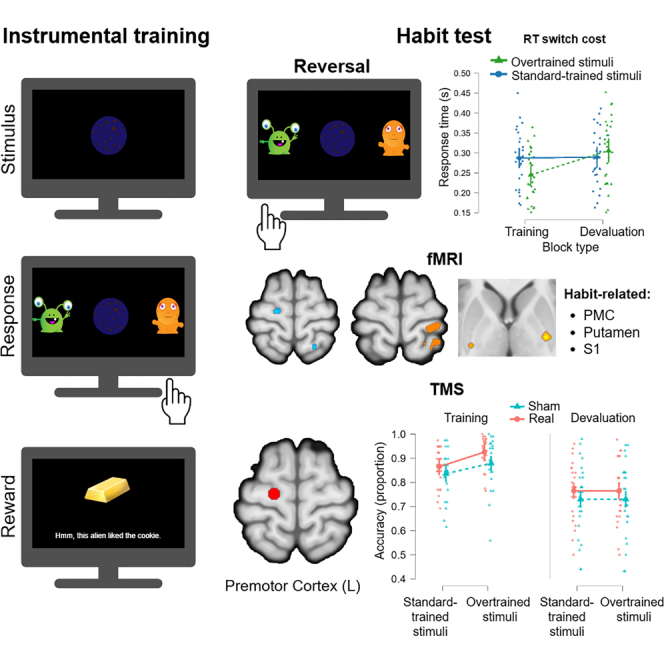 Figure 1
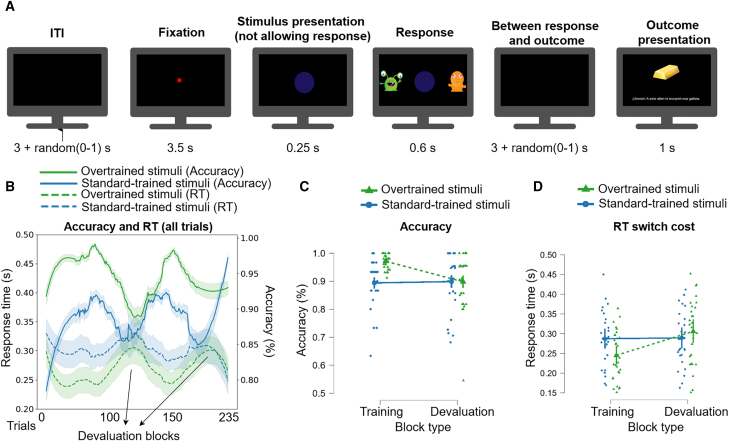 Figure 2
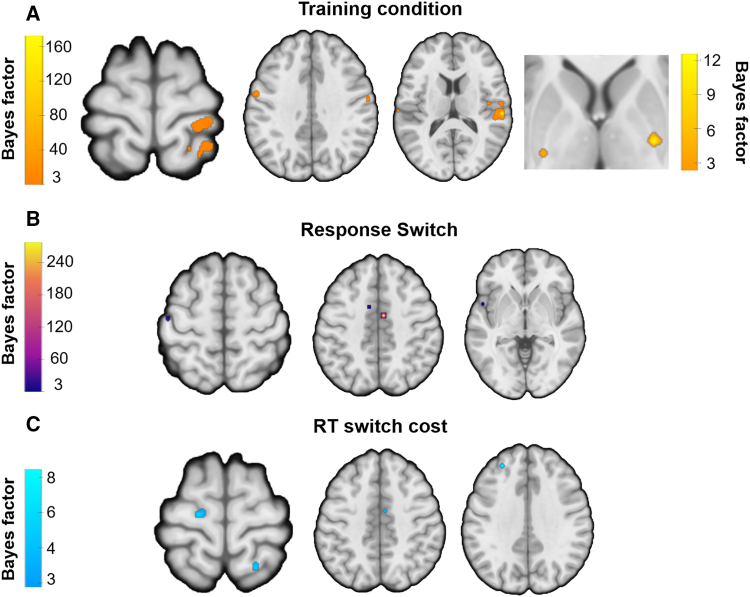 Figure 3
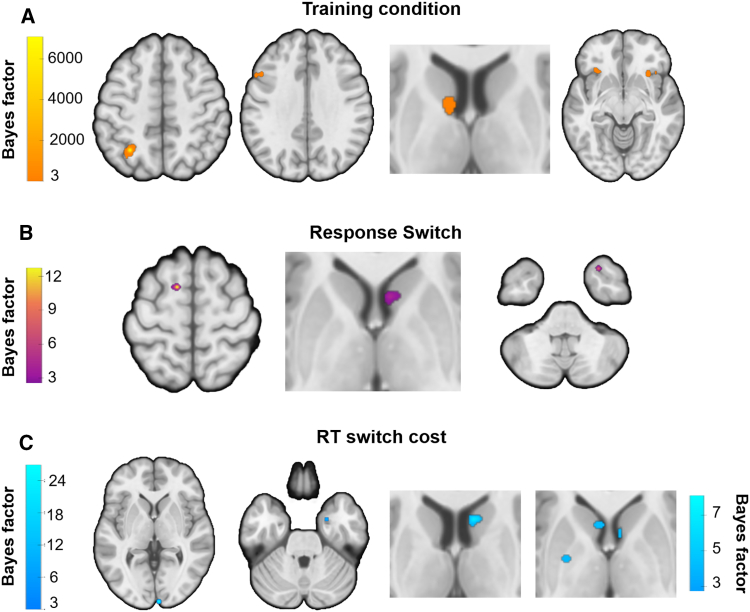 Figure 4
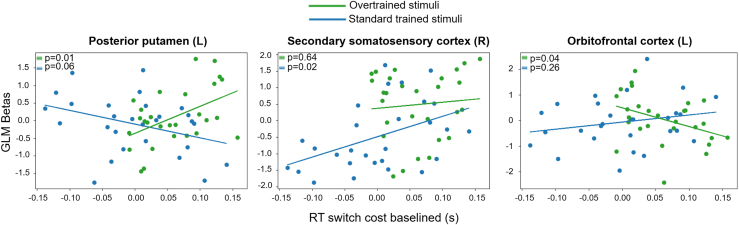 Figure 5
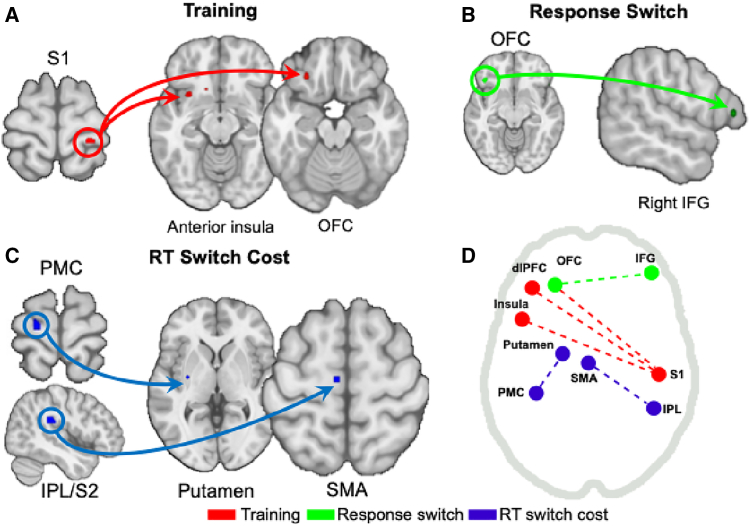 Figure 6
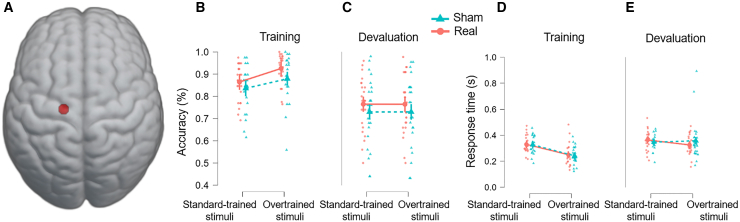 Figure 7
Peer Reviews
No public reviews on file for this paper yet. If you reviewed it on a platform where reviews are public (OpenReview, ICLR, NeurIPS, ICML), you can paste yours below so the community can read it here.
Videos
No videos yet. Explain this paper in a talk, walkthrough, or lecture? Add one.
Taxonomy
TopicsNeural and Behavioral Psychology Studies · Functional Brain Connectivity Studies · Hemispheric Asymmetry in Neuroscience