The biochemical dynamics of the glycogen phosphatase laforin directly impact brain metabolism
M.Kathryn Brewer, Katherine J. Donohue, Pankaj K. Singh, Madushi Raththagala, Zoe R. Simmons, Jeremiah L. Wayne, Sheng Li, Rosa Viana, Dyann M. Segvich, Christopher J. Contreras, Alex R. Cantrell, Pascual Sanz, Ramon C. Sun, Craig W. Vander Kooi, Peter J. Roach

TL;DR
This study explores how the glycogen phosphatase laforin affects brain metabolism and its role in a fatal childhood disease.
Contribution
The study reveals that laforin's phosphatase activity is crucial for normal brain metabolism and disease prevention.
Findings
LCS protein shows higher phosphate and glucan binding compared to wild-type laforin.
LCS mice exhibit distinct and significant global metabolic perturbations in the brain.
Altered laforin dynamics lead to aberrant protein retention in the brain of LCS knock-in mice.
Abstract
Laforin is the only known glycogen phosphatase. Mutations in the laforin gene lead to the fatal childhood dementia and progressive myoclonic epilepsy known as Lafora disease (LD). A hallmark of LD is aberrant, cytoplasmic, glycogen-like aggregates known as Lafora bodies. Surprisingly, recent reports indicate that overexpression of a phosphatase-deficient laforin mutant, with the catalytic cysteine mutated to serine (LCS), prevented the formation of Lafora bodies in a laforin KO mouse model. This finding led to questions regarding the biological relevance of laforin phosphatase activity and its role in LD etiology. In this study, we defined the in vitro and in vivo effects of the LCS mutation. LCS protein lacks catalytic activity but exhibits significantly higher binding to phosphate and long glucan chains compared with WT laforin. In addition, LCS exhibits altered dynamics via…
Genes, proteins, chemicals, diseases, species, mutations and cell lines named across the full text — each resolved to its canonical identifier and authoritative record.
Click any figure to enlarge with its caption.
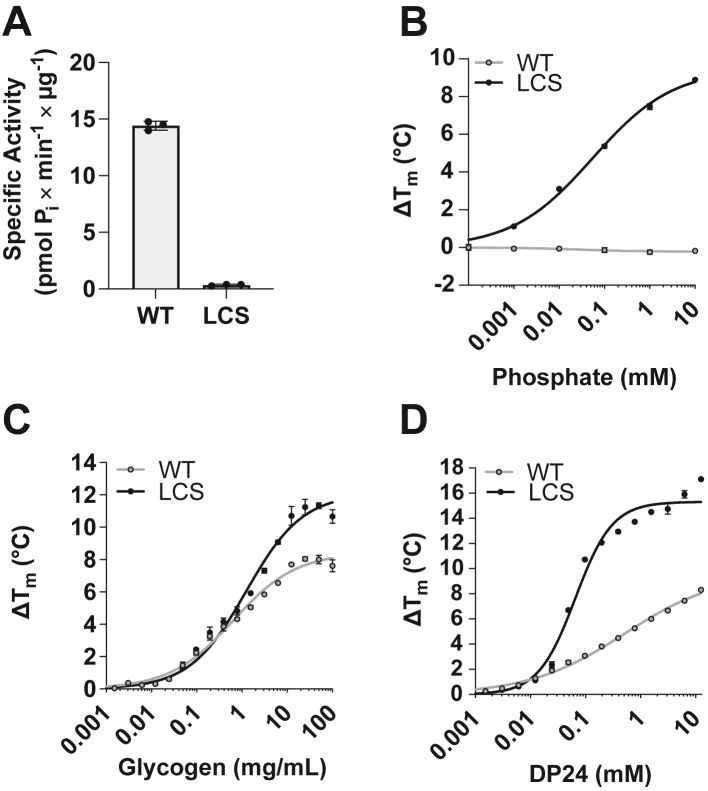 Figure 1
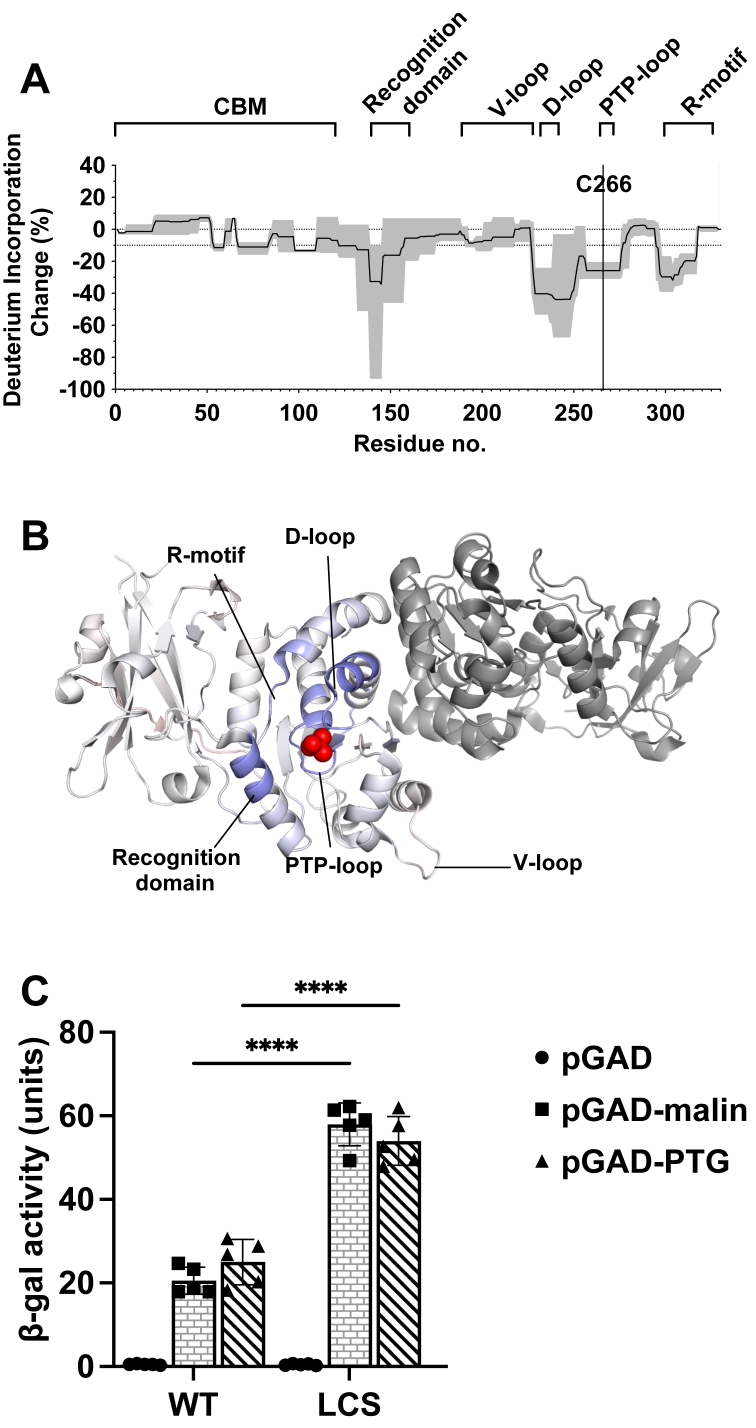 Figure 2
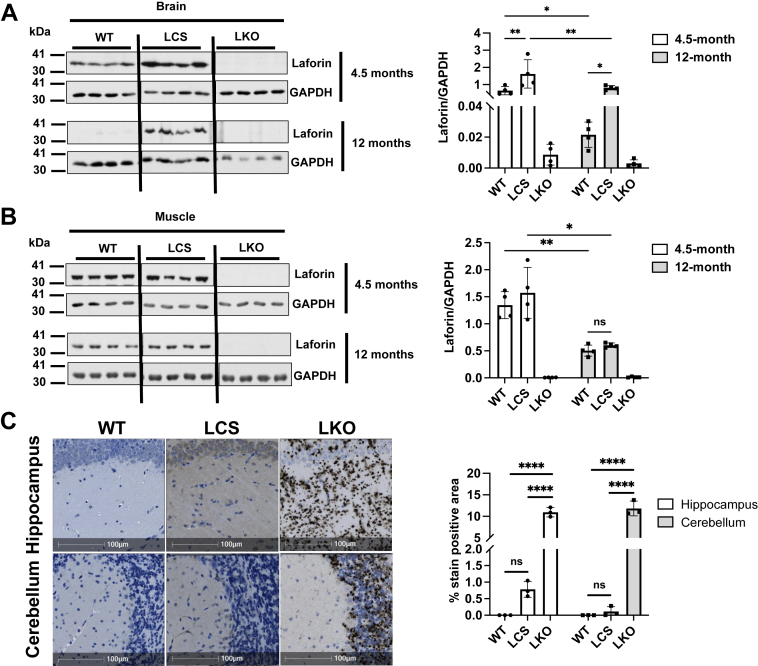 Figure 3
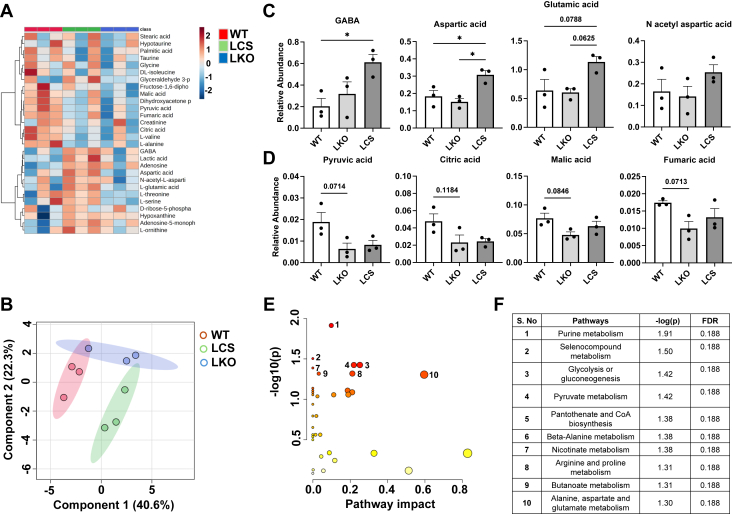 Figure 4
Peer Reviews
No public reviews on file for this paper yet. If you reviewed it on a platform where reviews are public (OpenReview, ICLR, NeurIPS, ICML), you can paste yours below so the community can read it here.
Videos
No videos yet. Explain this paper in a talk, walkthrough, or lecture? Add one.
Taxonomy
TopicsGlycogen Storage Diseases and Myoclonus · Lysosomal Storage Disorders Research · Coagulation, Bradykinin, Polyphosphates, and Angioedema