Temperature downshifts induce biofilm formation in Pseudomonas aeruginosa through the SiaABCD signal and functional module
Yanran Li, Zhe Chen, Tingying Xia, Yiqing Ding, Yingpeng Xie, Lu Miao, Zhaochao Xu, Xin Deng, Luyan Z. Ma, Aixin Yan

TL;DR
A drop in temperature helps Pseudomonas aeruginosa form biofilms by activating a specific signaling module that increases sticky substance production.
Contribution
The study identifies the SiaABCD module as a novel temperature-sensing pathway that promotes biofilm formation through c-di-GMP elevation.
Findings
Temperature downshift from 37°C to 21°C promotes biofilm formation in 63% of P. aeruginosa strains.
The SiaABCD module, especially SiaD and SiaA, drives c-di-GMP elevation and biofilm promotion at lower temperatures.
Membrane perturbations triggered by temperature changes activate the SiaABCD module to increase Psl production.
Abstract
Pseudomonas aeruginosa is a highly adaptable Gram-negative pathogen known for its remarkable ability of forming biofilms. Understanding the environmental cues and regulatory mechanisms that drive biofilm formation is essential for developing effective control strategies. In this study, we screened 57 clinical and environmental P. aeruginosa isolates and discovered that a universal environmental cue, temperature downshift from host-associated 37 °C to room temperature (21 °C), significantly promotes biofilm formation in 63% of the strains. Using the ATCC 27853 strain as a model, we demonstrate that this enhancement results from increased production of the Psl exopolysaccharides at lower temperature. LC-MS/MS analysis revealed elevated levels of the secondary messenger c-di-GMP, a key regulator of the motile-to-sessile transition, at room temperature. Through screening a mutant library…
Genes, proteins, chemicals, diseases, species, mutations and cell lines named across the full text — each resolved to its canonical identifier and authoritative record.
Click any figure to enlarge with its caption.
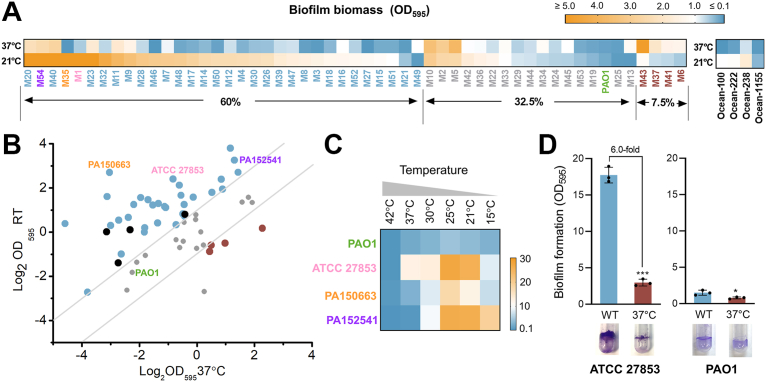 Figure 1
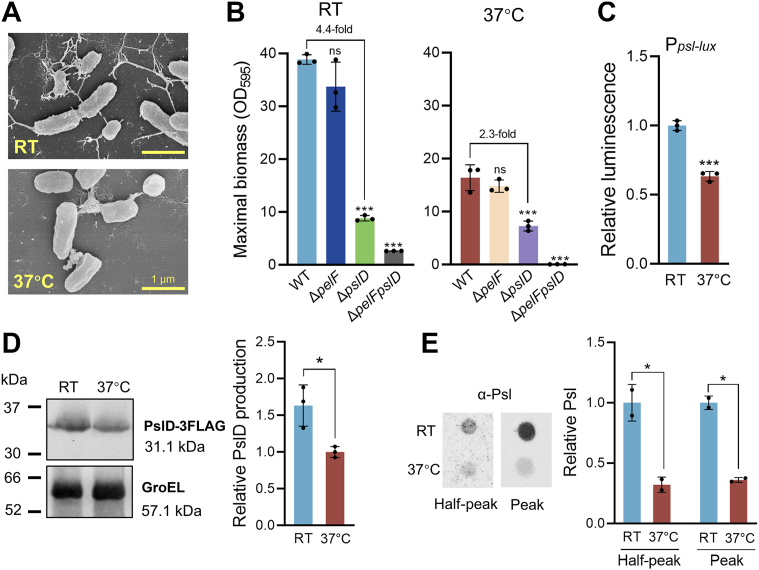 Figure 2
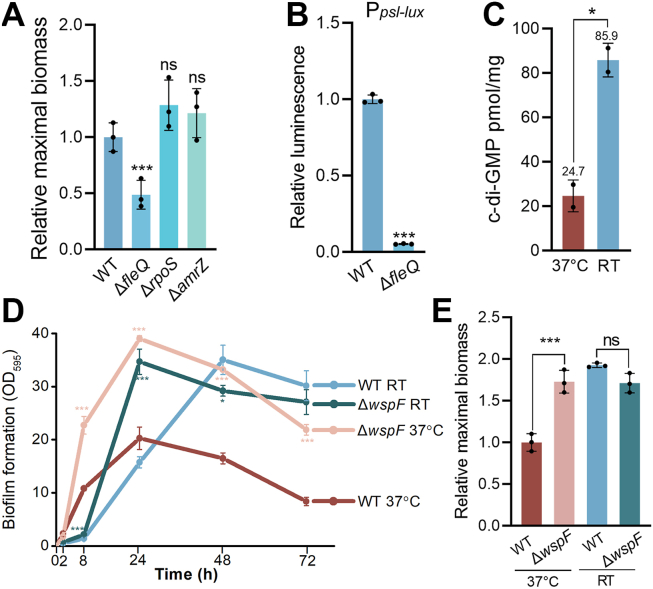 Figure 3
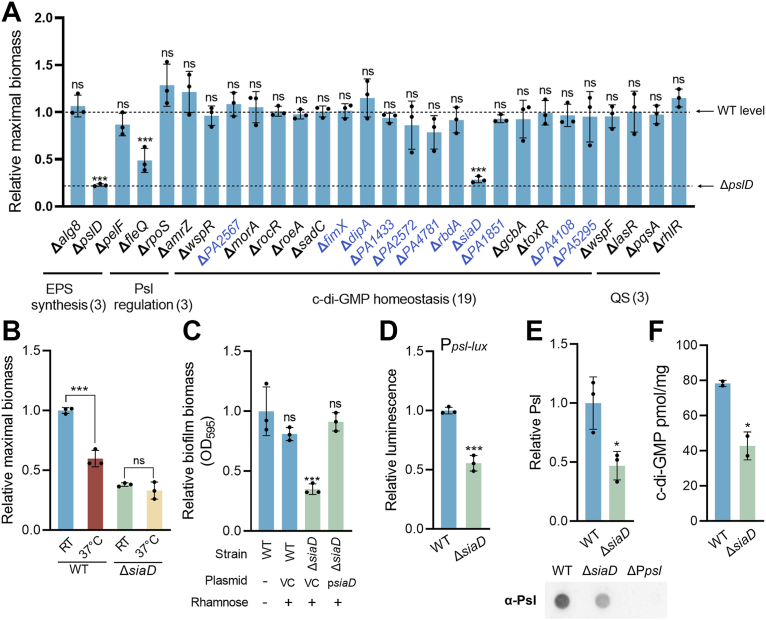 Figure 4
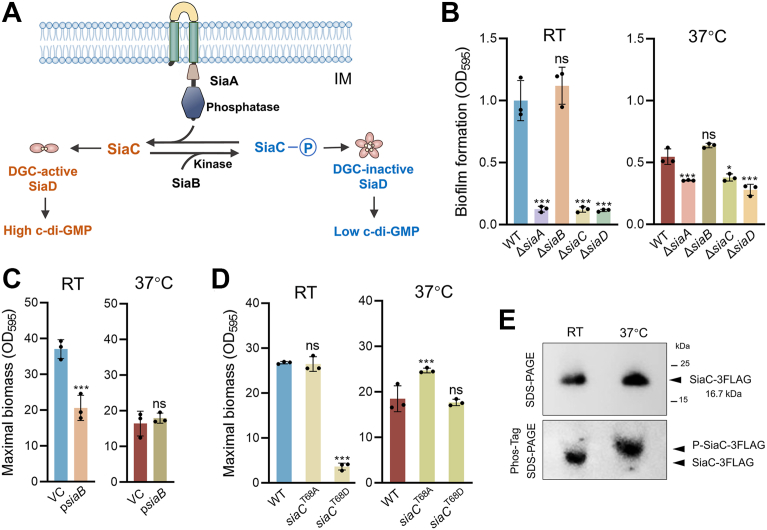 Figure 5
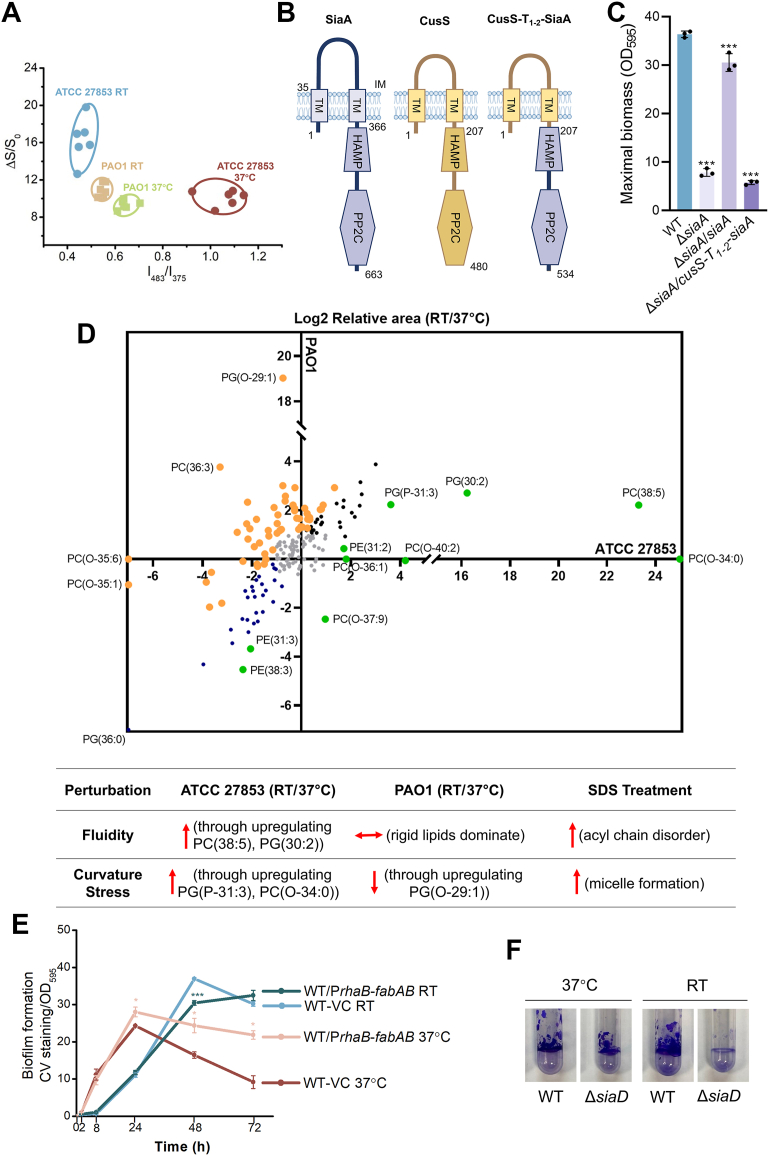 Figure 6
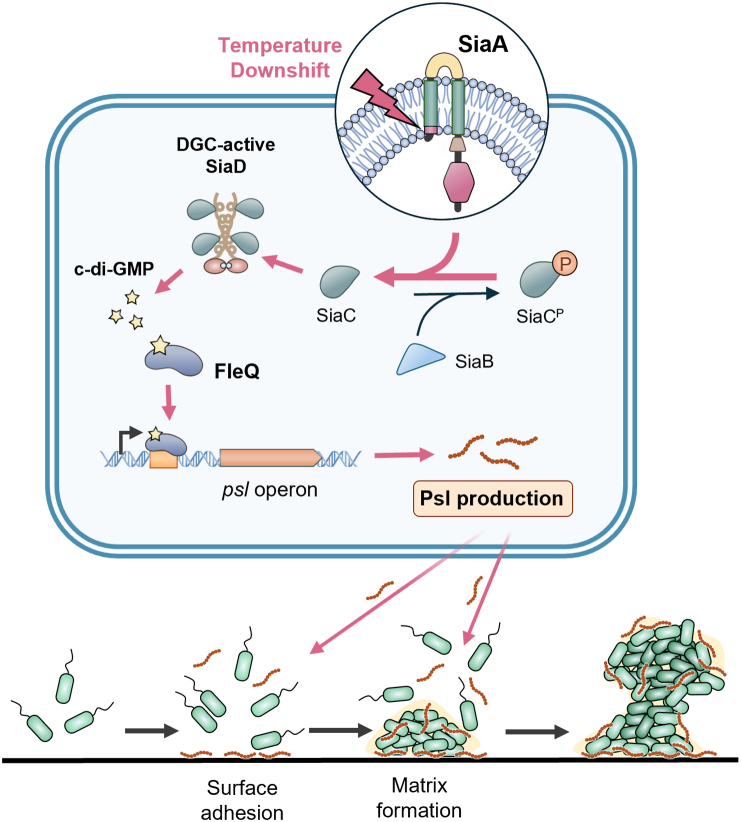 Figure 7
Peer Reviews
No public reviews on file for this paper yet. If you reviewed it on a platform where reviews are public (OpenReview, ICLR, NeurIPS, ICML), you can paste yours below so the community can read it here.
Videos
No videos yet. Explain this paper in a talk, walkthrough, or lecture? Add one.
Taxonomy
TopicsBacterial biofilms and quorum sensing · Antibiotic Resistance in Bacteria · Legionella and Acanthamoeba research