Green bioconversion of insoluble chitin: chitinase development pathways via multi-strategy synergy
Zhi-Ping Sai, Yi-Rui Yin, Li-Quan Yang, Jia-Hui Wang, Xin-Yi Yang, Fu-Xian Liu, Xin Jing, Yi Zhang, Yu-Da Li, Peng Sang, Zheng-Feng Yang

TL;DR
This review explores how enzymes called chitinases can break down insoluble chitin in an eco-friendly way, using advanced techniques to improve their efficiency.
Contribution
The paper introduces multi-strategy synergies combining AI, immobilization, and regulation to enhance chitinase performance for bioconversion.
Findings
Chitin's insolubility and crystallinity pose major structural barriers to enzymatic degradation.
Protein engineering methods like directed evolution and domain fusion improve chitinase efficiency.
Synergistic frameworks integrating AI and immobilization boost high-performance chitin bioconversion.
Abstract
As one of the most abundant natural polysaccharides on Earth, chitin is limited in its high-value utilization by its natural insolubility and high crystalline structure. Enzymatic degradation—especially via chitinases—serves as a highly promising approach for the green bioconversion of insoluble chitin. This review systematically analyzes the structural barriers that hinder the degradation of insoluble chitin and elucidates the enzymatic hydrolysis mechanisms underlying its conversion. Recent advances in enhancing chitinase catalytic efficiency through protein engineering approaches—including directed evolution, rational design, and domain fusion—are comprehensively discussed. In addition, the review highlights the multi-strategy synergistic frameworks that integrate AI-assisted enzyme design, immobilization technology, and expression regulation to achieve high-performance chitin…
Genes, proteins, chemicals, diseases, species, mutations and cell lines named across the full text — each resolved to its canonical identifier and authoritative record.
Click any figure to enlarge with its caption.
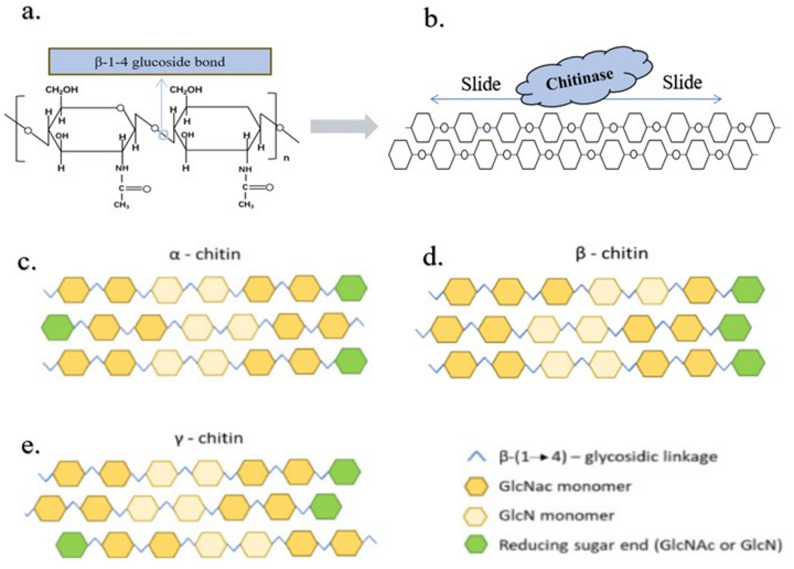 Figure 1
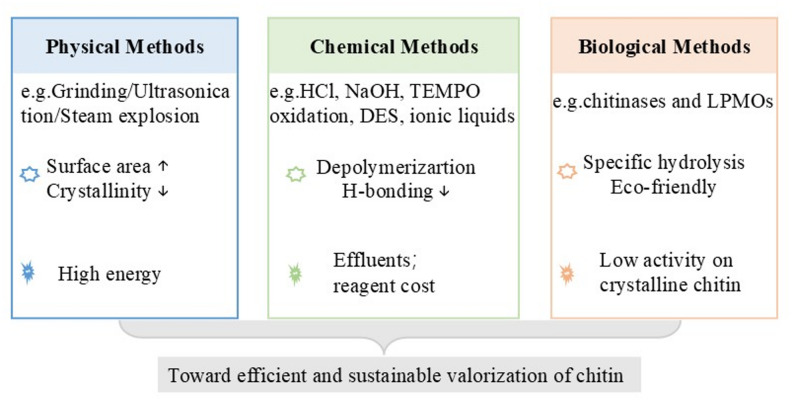 Figure 2
 Figure 3
 Figure 4
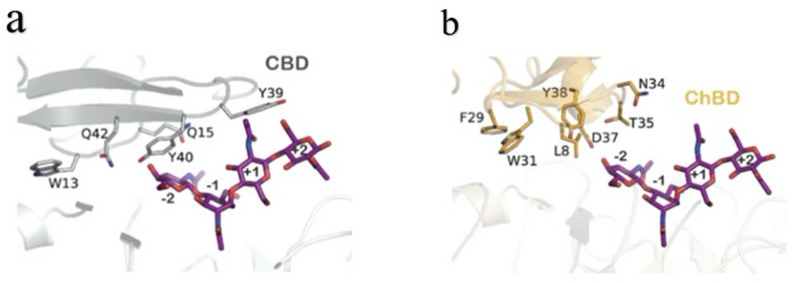 Figure 5
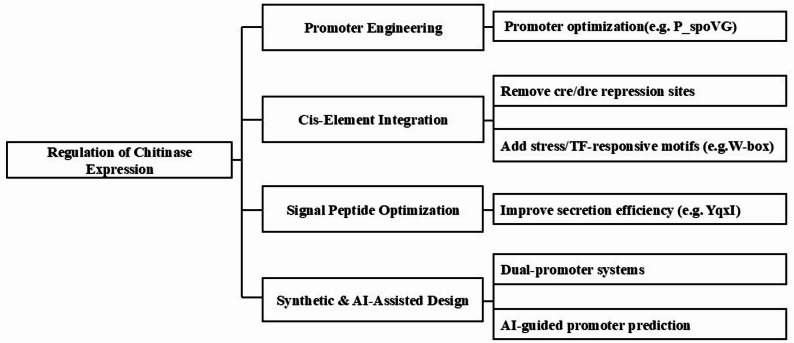 Figure 6
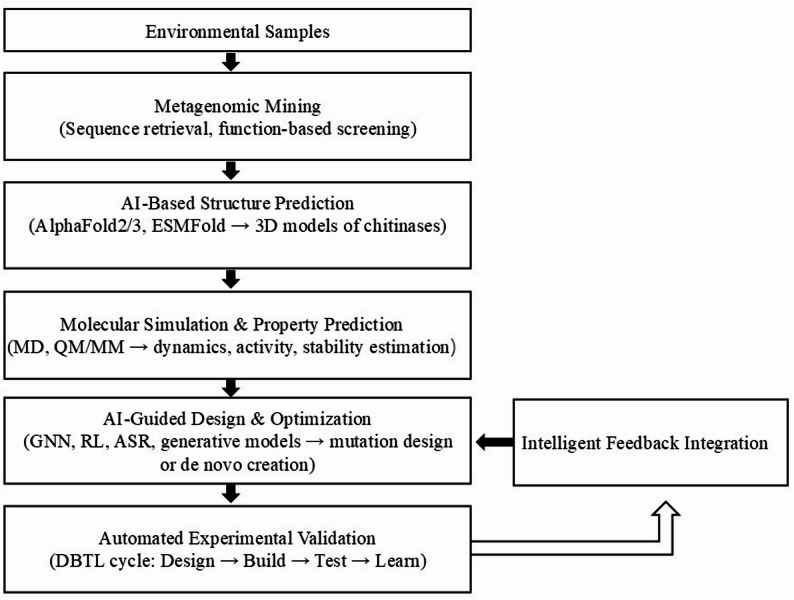 Figure 7
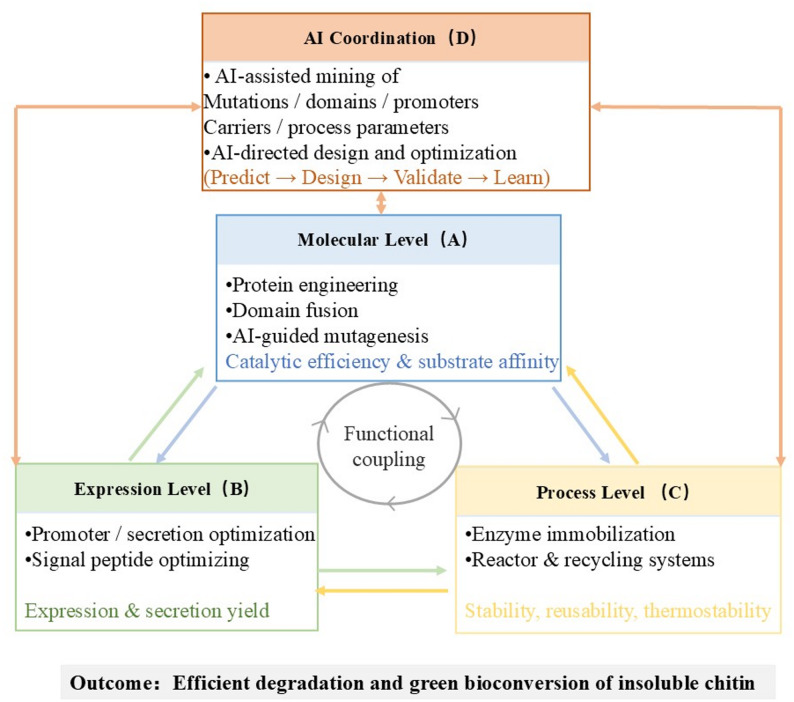 Figure 8
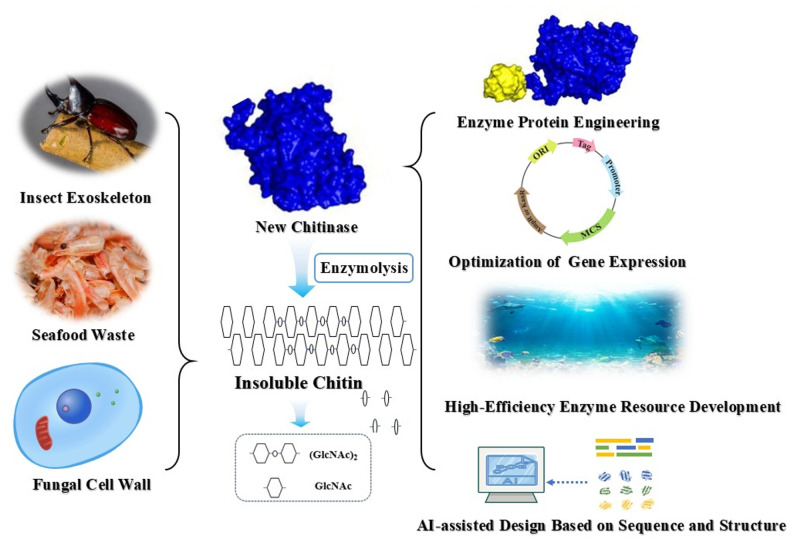 Figure 9
Peer Reviews
No public reviews on file for this paper yet. If you reviewed it on a platform where reviews are public (OpenReview, ICLR, NeurIPS, ICML), you can paste yours below so the community can read it here.
Videos
No videos yet. Explain this paper in a talk, walkthrough, or lecture? Add one.
Taxonomy
TopicsStudies on Chitinases and Chitosanases · Nanocomposite Films for Food Packaging · Enzyme Production and Characterization