Fed-batch strategies for the enhanced biotransformation of cis-epoxysuccinate to L-( +)-tartrate
Jia-Jun Ouyang, Jiang Pan, Jian-He Xu, Chun-Xiu Li, Xu-Dong Kong

TL;DR
This paper introduces two fed-batch methods to improve the production of L-(+)-tartaric acid using enzymatic reactions, enhancing efficiency and ease of separation.
Contribution
The paper presents two novel fed-batch strategies that leverage solubility differences to simplify enzyme-product separation and boost productivity.
Findings
Strategy A achieved a space-time yield of 150 g L−1 h−1 using immobilized whole cells.
Strategy B delivered a space-time yield of 136 g L−1 h−1 and a specific productivity of 484 gproduct/gcatalyst using cell-free extract.
Both strategies streamline downstream processing and enhance industrial scalability.
Abstract
L-( +)-Tartaric acid is a valuable organic acid with broad applications in the food, pharmaceutical, and chemical industries. Its eco-friendly synthesis typically relies on the enzymatic hydrolysis of cis-epoxysuccinate (CES) catalyzed by cis-epoxysuccinate hydrolases (CESHs), but conventional single-batch processes suffer from low space–time yields and poor continuity. To address these challenges, we devised two complementary fed-batch strategies to simplify the enzyme–product separation by exploiting differences in their solubilities. Strategy A employs carrier-free cross-linking immobilization of whole cells using 0.02% glutaraldehyde and 0.1% polyethylenimine. In this system, both the substrate sodium cis-epoxysuccinate (CESNa) and the product sodium L-( +)-tartrate remain soluble, while the enzyme is retained in the insoluble cell matrix. Under fed-batch operation, this…
Genes, proteins, chemicals, diseases, species, mutations and cell lines named across the full text — each resolved to its canonical identifier and authoritative record.
Click any figure to enlarge with its caption.
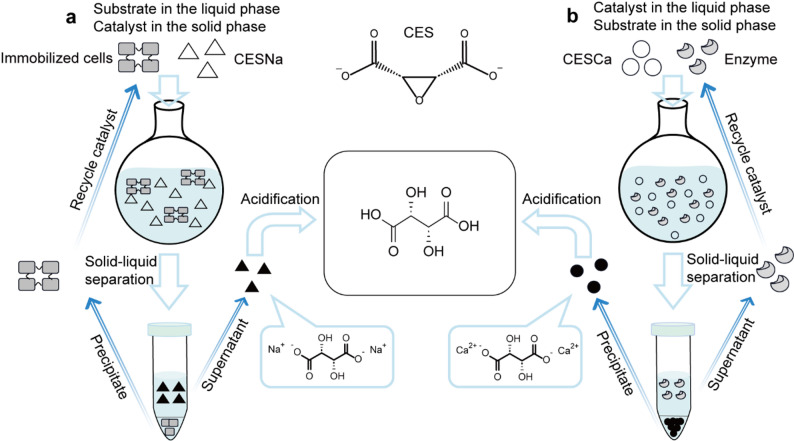 Figure 1
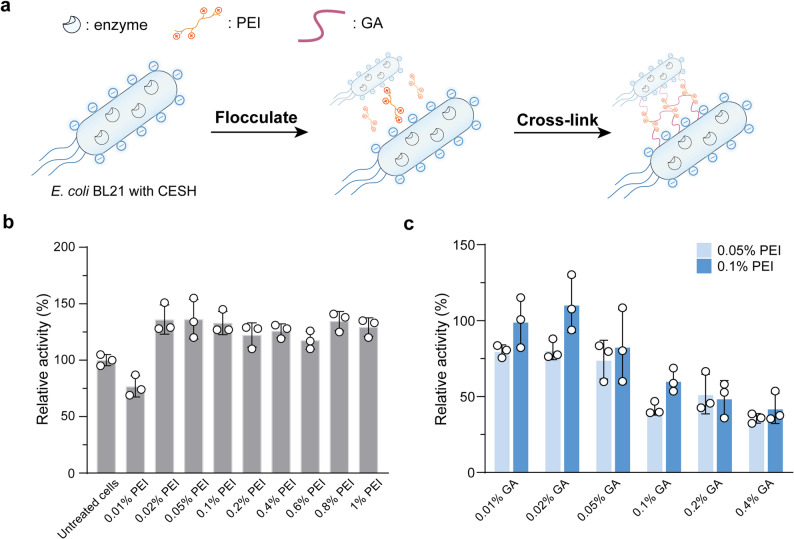 Figure 2
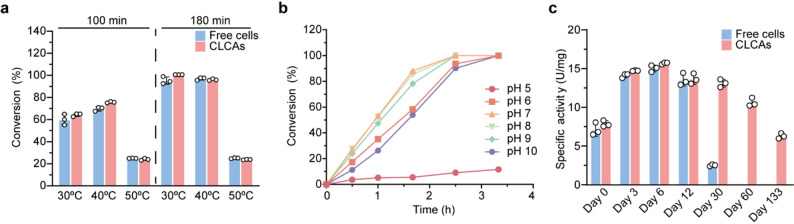 Figure 3
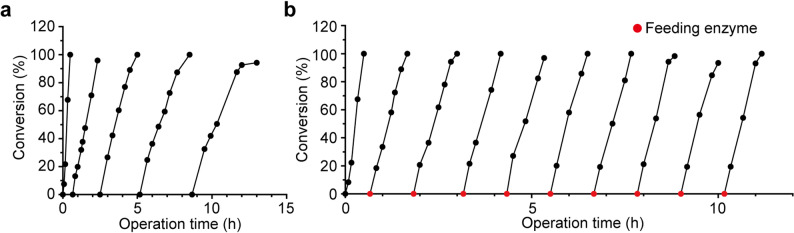 Figure 4
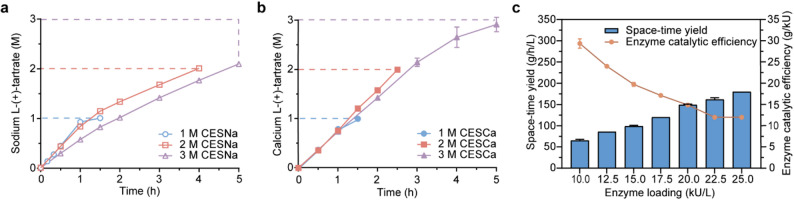 Figure 5
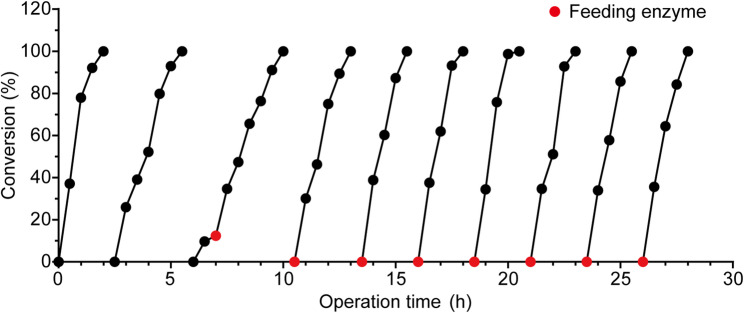 Figure 6
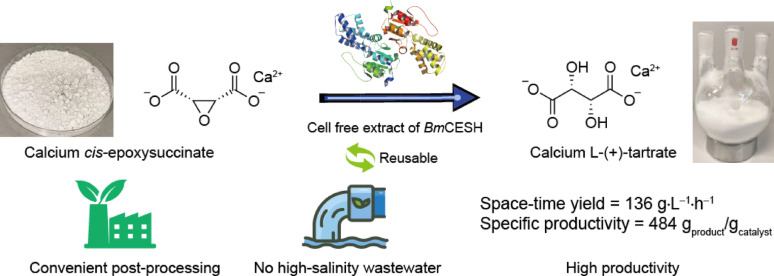 Figure 7
Peer Reviews
No public reviews on file for this paper yet. If you reviewed it on a platform where reviews are public (OpenReview, ICLR, NeurIPS, ICML), you can paste yours below so the community can read it here.
Videos
No videos yet. Explain this paper in a talk, walkthrough, or lecture? Add one.
Taxonomy
TopicsEnzyme Catalysis and Immobilization · Biochemical Acid Research Studies · Microbial Metabolic Engineering and Bioproduction