Identifying metabolic parameters as key indicators of hyperuricemia and ischemic stroke comorbidity via interpretable Clinlabomics models
Yao Jiang, Qin Li, Da Hu, Huaqiang Liao, Shu Chen, Hao Xu, Qian Wu, Mingcai Zhao, Jimin He

TL;DR
This study identifies key metabolic indicators for hyperuricemia and ischemic stroke comorbidity using interpretable machine learning models.
Contribution
The study introduces an interpretable Clinlabomics model to assess risk and identifies specific metabolic parameters linked to the comorbidity.
Findings
AIP was the strongest risk factor for HUA-IS comorbidity (OR = 2.74).
The rpart-based model achieved high performance with an AUC of 0.986 in testing.
SHAP analysis identified UA_admission, UA_3d, TyG, TG, AIP, and LCI as key indicators.
Abstract
Ischemic stroke (IS) with hyperuricemia (HUA) correlates with poor outcomes, yet the shared pathophysiological traits remain unclear. This study examined metabolic parameters in HUA-IS comorbidity and developed an optimal interpretable Clinlabomics model for risk assessment. A total of 2,164 IS patients and 2,459 healthy controls (HCs) were retrospectively enrolled. Participants were divided into four groups: HUA-IS (comorbidity, n=1,082), non-HUA IS (n=1,082), HUA HCs (n=1,314), non-HUA HCs (n=1,145); the latter three were defined as the non-comorbidity group. After 1:1 propensity score matching (PSM), 1,031 cases were matched in each group. Ten metabolic parameters were analyzed: serum uric acid at admission (SUA_admission), SUA on the third day of hospitalization (SUA_3d), triglyceride-glucose index (TyG), triglyceride (TG), high-density lipoprotein cholesterol (HDL−C), atherogenic…
Genes, proteins, chemicals, diseases, species, mutations and cell lines named across the full text — each resolved to its canonical identifier and authoritative record.
Click any figure to enlarge with its caption.
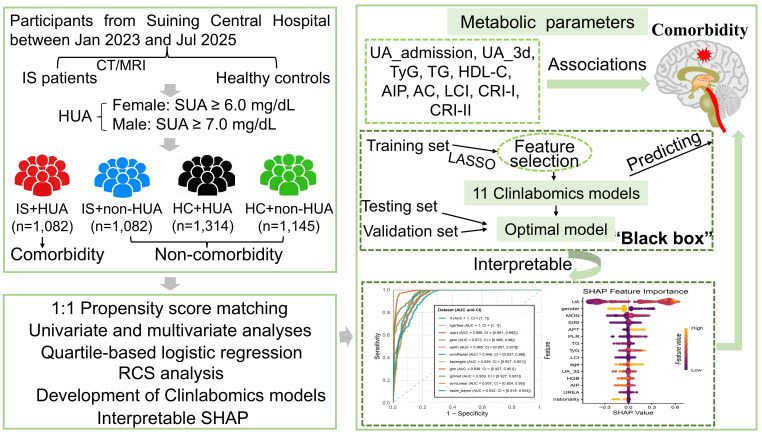 Figure 1
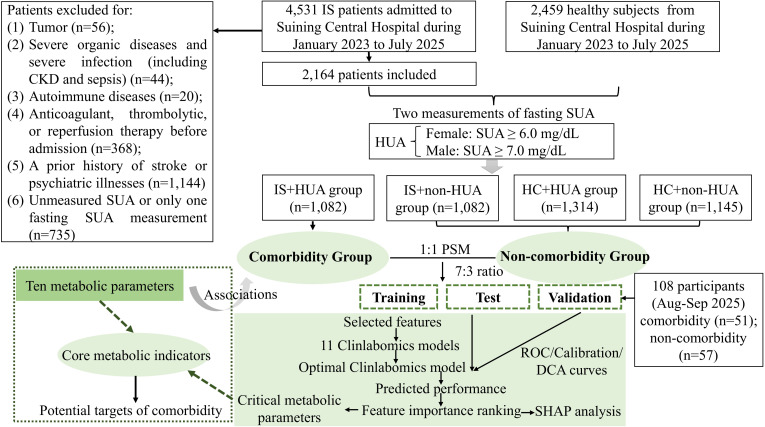 Figure 2
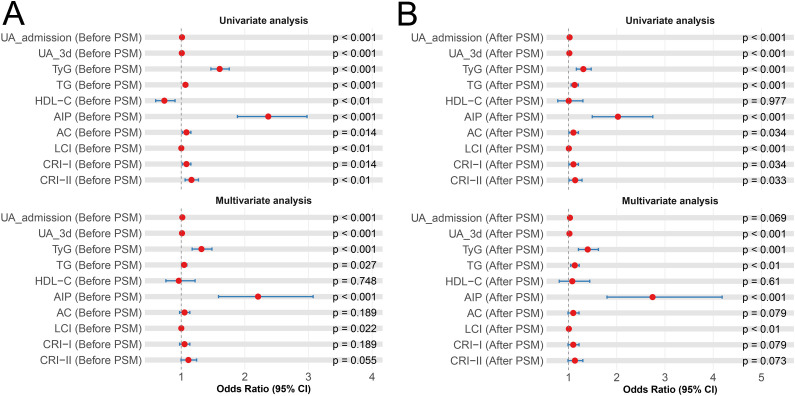 Figure 3
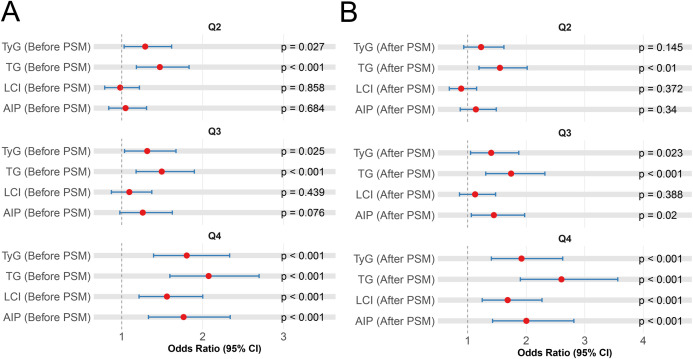 Figure 4
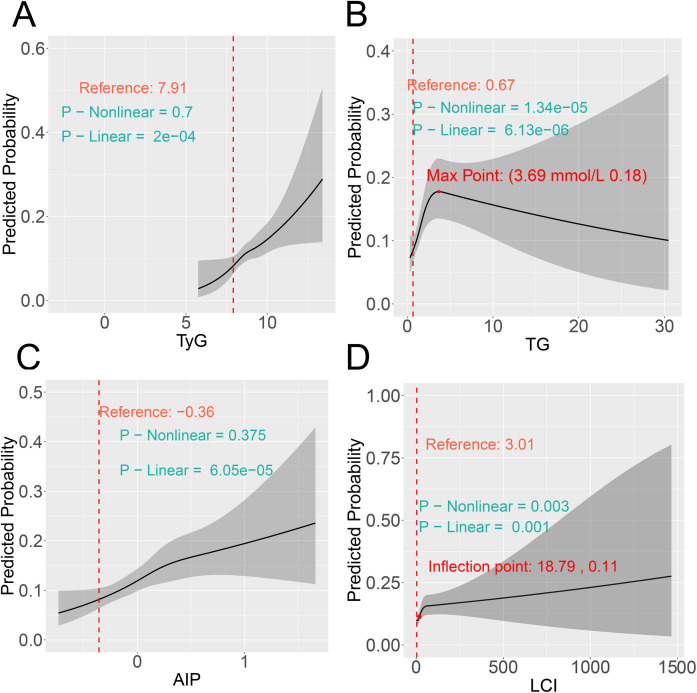 Figure 5
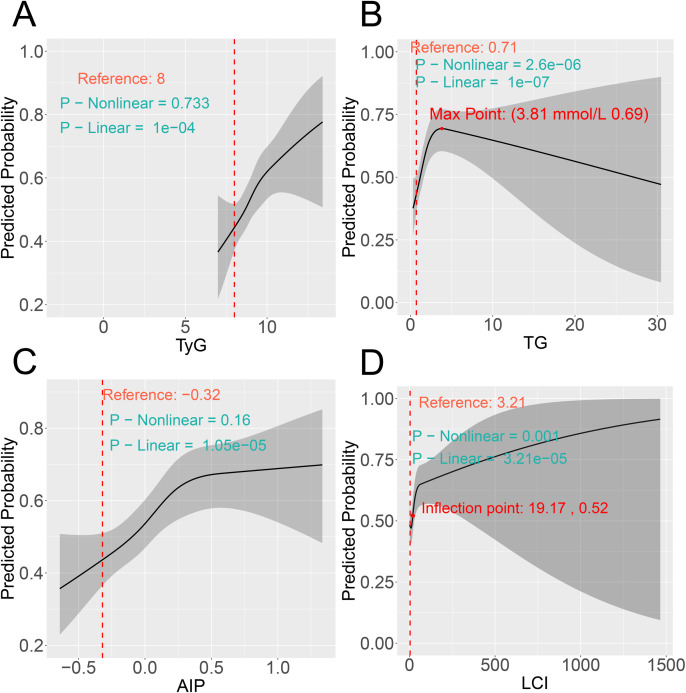 Figure 6
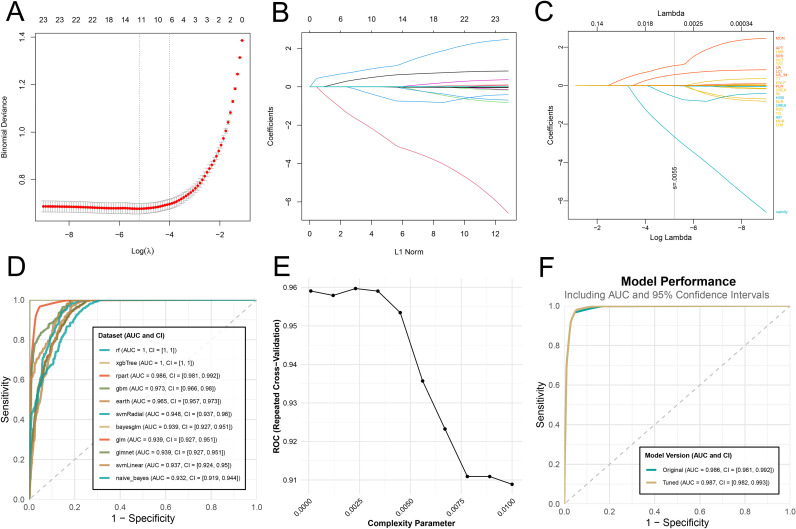 Figure 7
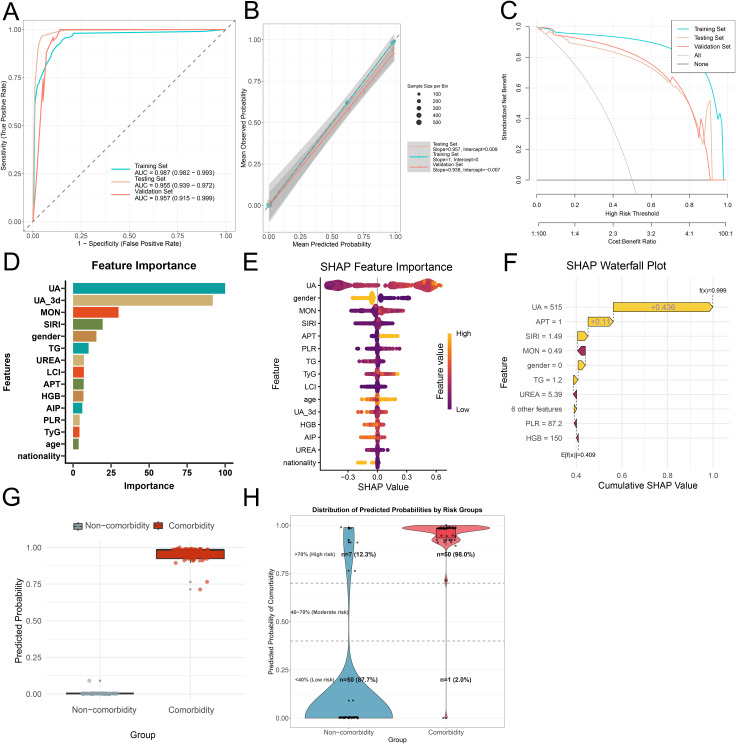 Figure 8
Peer Reviews
No public reviews on file for this paper yet. If you reviewed it on a platform where reviews are public (OpenReview, ICLR, NeurIPS, ICML), you can paste yours below so the community can read it here.
Videos
No videos yet. Explain this paper in a talk, walkthrough, or lecture? Add one.
Taxonomy
TopicsGout, Hyperuricemia, Uric Acid · Folate and B Vitamins Research · Aortic Thrombus and Embolism