LOXL2 labels inflammation-associated myofibroblasts predicting kidney allograft dysfunction and fibrosis
Paula Schütz, Birte Hüchtmann, Veerle Van Marck, Barbara Heitplatz, Carolin Walter, Rebecca Rixen, Hermann Pavenstädt, Stefan Reuter, Konrad Buscher

TL;DR
LOXL2 identifies a new type of myofibroblast linked to kidney transplant dysfunction and fibrosis, offering potential for early detection.
Contribution
LOXL2 is introduced as a novel biomarker for inflammation-associated myofibroblasts in kidney allografts.
Findings
LOXL2 labels SMA-negative, CD68-positive myofibroblasts with high extracellular matrix activity.
LOXL2+ cells are associated with fibrosis, inflammation, and reduced kidney function in transplant biopsies.
High abundance of LOXL2+ cells predicts long-term allograft dysfunction.
Abstract
Progressive allograft fibrosis remains a major obstacle in kidney transplantation. Early identification of patients at high risk could be instrumental to improve outcomes. Here, we investigated Lysyl oxidase like 2 (LOXL2) as a biomarker for graft fibrosis and dysfunction. Using single-cell sequencing and imaging of transplant biopsies, we found that LOXL2 labeled an intertubular myofibroblast-like cell type with a smooth muscle actin (SMA)-negative, CD68-positive phenotype and high extracellular matrix activity. These cells were present in non-fibrotic and fibrotic regions using collagen 3 as a scaffold. Native kidneys also harbored LOXL2+ myofibroblasts, albeit at much lower levels. Following transplant surgery, LOXL2+ cells could rapidly emerge within days, particularly during episodes of rejection, where they associated with leukocyte aggregates. Elevated cell numbers were not…
Genes, proteins, chemicals, diseases, species, mutations and cell lines named across the full text — each resolved to its canonical identifier and authoritative record.
Click any figure to enlarge with its caption.
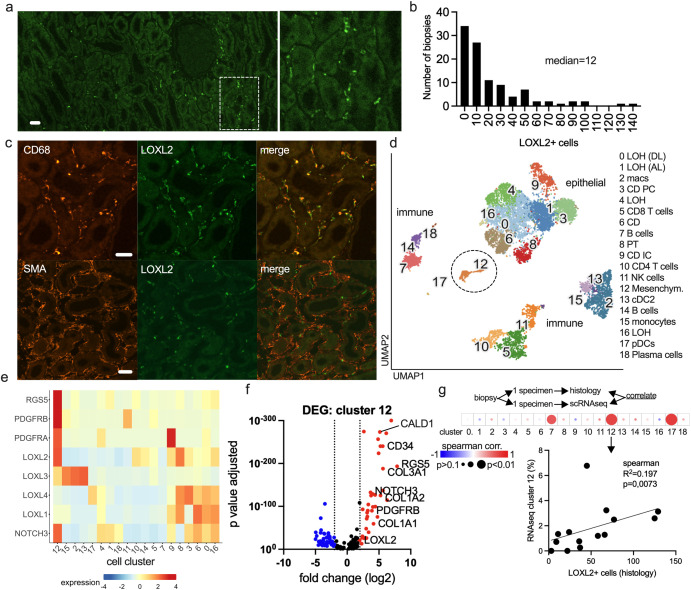 Figure 1
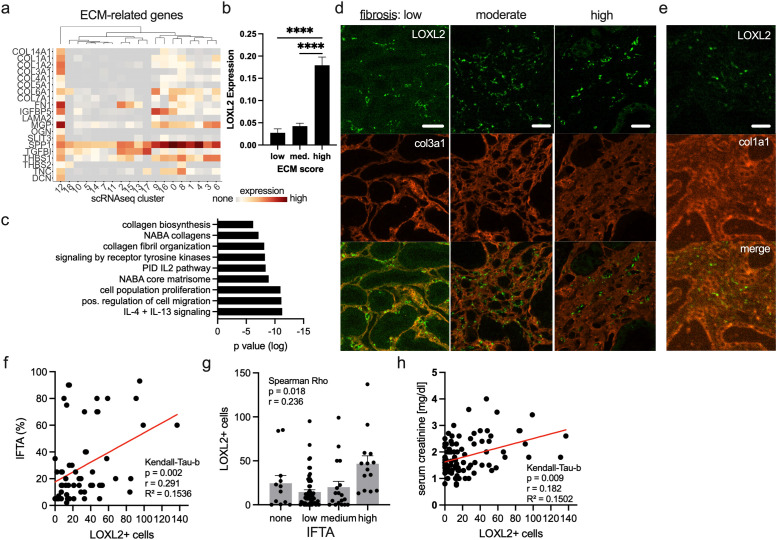 Figure 2
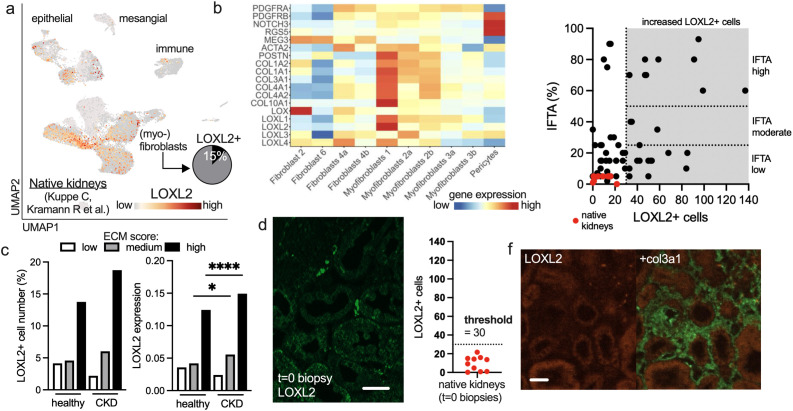 Figure 3
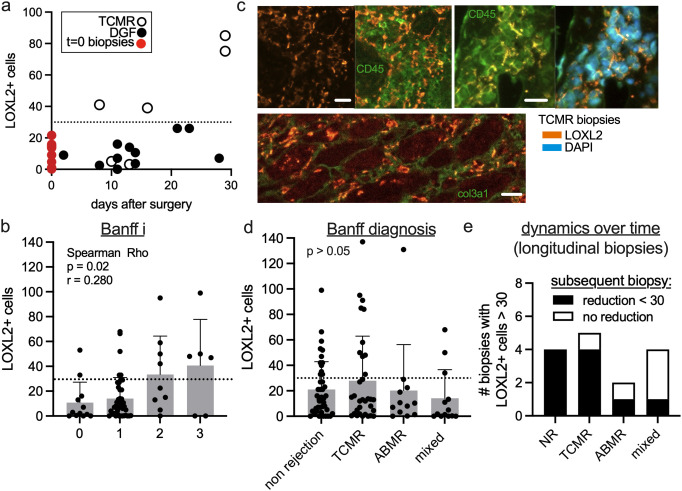 Figure 4
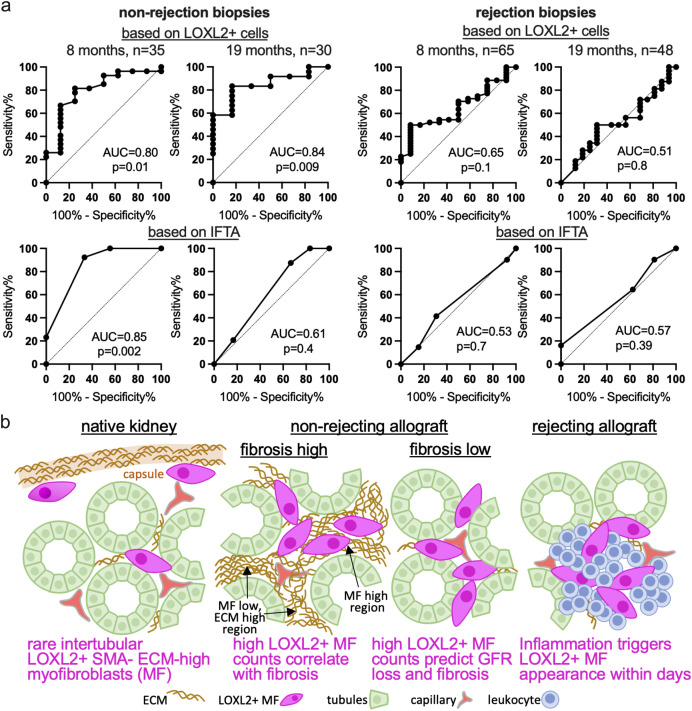 Figure 5
Peer Reviews
No public reviews on file for this paper yet. If you reviewed it on a platform where reviews are public (OpenReview, ICLR, NeurIPS, ICML), you can paste yours below so the community can read it here.
Videos
No videos yet. Explain this paper in a talk, walkthrough, or lecture? Add one.
Taxonomy
TopicsMicrobial metabolism and enzyme function · Renal Transplantation Outcomes and Treatments · Atherosclerosis and Cardiovascular Diseases