Sarcopenic obesity and history of falls in older Italian adults: associations according to different diagnostic combinations
Ana Lúcia Danielewicz, Gabrielle Freitas de Assis, Letícia Martins Cândido, Vanessa Amaral Mendonça, Ana Cristina Rodrigues Lacerda, Gabriella Tringali, Roberta De Micheli, Adele Bondesan, Núbia Carelli Pereira de Avelar, Alessandro Sartorio

TL;DR
This study finds that sarcopenic obesity defined by low handgrip strength is strongly linked to a higher risk of falls in older Italian adults with severe obesity.
Contribution
The study identifies that handgrip strength-based definitions of sarcopenic obesity are more strongly associated with fall risk than other diagnostic combinations.
Findings
SO defined with handgrip strength had sixfold higher odds of falls compared to non-SO individuals.
Muscle function assessed via handgrip strength showed significant associations with falls, regardless of fat mass measurement method.
Definitions using sit-to-stand tests did not show significant associations with fall history.
Abstract
Sarcopenic obesity (SO) is characterized by the coexistence of sarcopenia and excess adipose tissue, increasing the risk of falls and related adverse outcomes in older adults. However, diagnostic criteria for SO remain inconsistent, warranting further investigation. This study aimed to examine the association between SO, defined according to the criteria proposed by the 2022 European Society for Clinical Nutrition and Metabolism (ESPEN) and the European Association for the Study of Obesity (EASO), and the history of falls among hospitalized older Italian adults. This cross-sectional study included 90 older Italian adults (≥ 60 years) with severe obesity (body mass index ≥ 35 kg/m2). The exposure variable, SO, was defined by the concomitant presence of reduced muscle function, high fat mass, and low muscle mass adjusted for body weight. Muscle function was assessed using the Five-Times…
Genes, proteins, chemicals, diseases, species, mutations and cell lines named across the full text — each resolved to its canonical identifier and authoritative record.
Click any figure to enlarge with its caption.
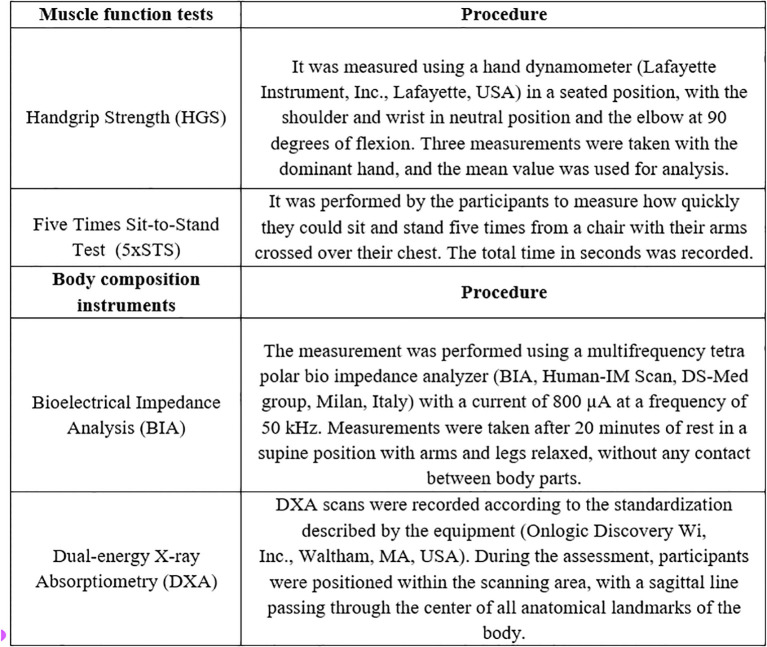 Figure 1
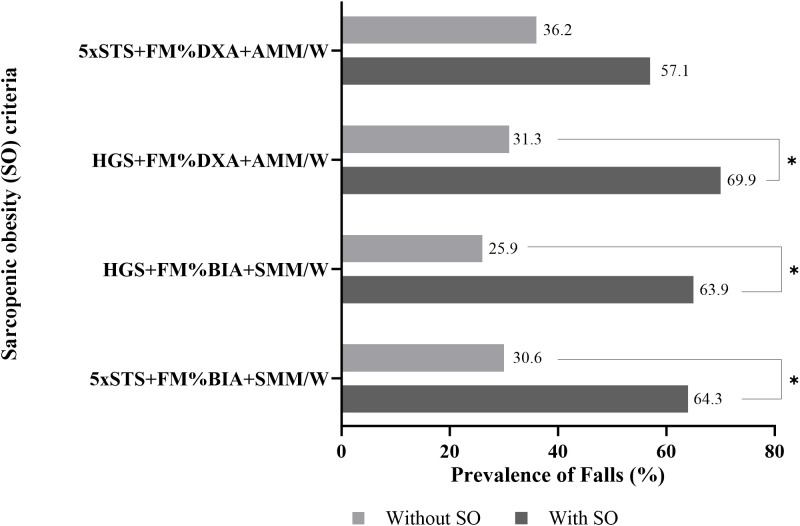 Figure 2
Peer Reviews
No public reviews on file for this paper yet. If you reviewed it on a platform where reviews are public (OpenReview, ICLR, NeurIPS, ICML), you can paste yours below so the community can read it here.
Videos
No videos yet. Explain this paper in a talk, walkthrough, or lecture? Add one.
Taxonomy
TopicsNutrition and Health in Aging · Body Composition Measurement Techniques · Muscle Physiology and Disorders