Quantifying the association between rural older adult daily internet use duration and affective disorders: an empirical study based on propensity score matching
Yudong Miao, Yixi Wang, Zhiping Guo, Tao Li, Jingming Wei, Zhanlei Shen, Dongfang Zhu, Jingbao Zhang, Jiajia Zhang, Mingyue Zhen, Xinran Li, Jinxin Cui, Clifford Silver Tarimo, Qingyong Lu, Jiaxin Han, Lingxiao Mou, Jingwei Qin

TL;DR
This study finds that longer internet use is linked to lower rates of affective disorders in rural older adults, suggesting digital inclusion could improve mental health.
Contribution
The novel contribution is using propensity score matching to quantify how internet use duration affects affective disorders in rural older adults.
Findings
Short-term internet users had higher affective disorder prevalence than medium to long-term users.
Healthy sleep and physical activity were linked to lower affective disorder risk in specific internet usage groups.
Women consistently showed higher affective disorder prevalence across all educational levels.
Abstract
There are significant disparities in internet usage among rural older adults, while affective disorder is an increasing public health concern. The potential link between these phenomena remains underexplored. This study investigates the association between internet use and affective disorder among rural older adults, to inform public health policies promoting appropriate internet engagement and psychological well-being. The baseline survey of the Northern China Lifestyle Medicine Cohort was conducted among rural older adult (≥65 years old) in China from July 2023 to January 2024. Questionnaires were used to collect data on the average daily usage schedule of the Internet and emotional disorders. Multivariate Logistic regression models were used to determine the factors influencing the prevalence of affective disorders. Propensity score matching (PSM) analysis was adopted to explore the…
Genes, proteins, chemicals, diseases, species, mutations and cell lines named across the full text — each resolved to its canonical identifier and authoritative record.
Click any figure to enlarge with its caption.
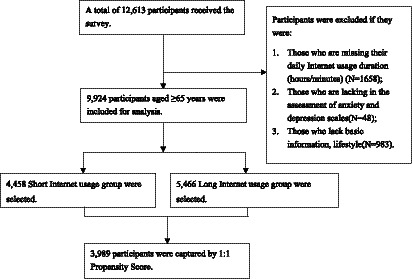 Figure 1
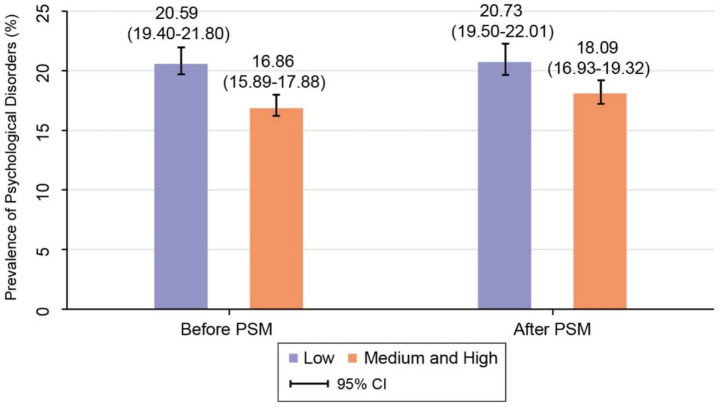 Figure 2
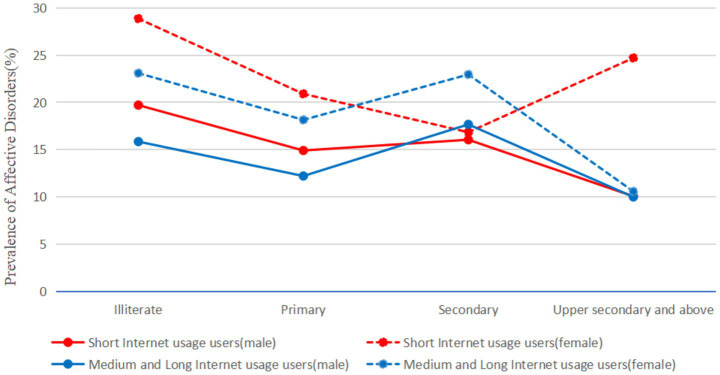 Figure 3
Peer Reviews
No public reviews on file for this paper yet. If you reviewed it on a platform where reviews are public (OpenReview, ICLR, NeurIPS, ICML), you can paste yours below so the community can read it here.
Videos
No videos yet. Explain this paper in a talk, walkthrough, or lecture? Add one.
Taxonomy
TopicsTechnology Use by Older Adults · Impact of Technology on Adolescents · Health Literacy and Information Accessibility