Preclinical studies of histotripsy for intracranial tumors
Hong Chen, Zhenbin Xu, Shengmin Zhang

TL;DR
Histotripsy, a noninvasive ultrasound technique, shows promise for treating intracranial tumors by precisely destroying tumor tissue with minimal damage to healthy areas.
Contribution
This paper reviews preclinical evidence demonstrating histotripsy's potential for treating intracranial tumors and its ability to open the blood–brain barrier.
Findings
Histotripsy enables precise mechanical ablation of intracranial tumors with minimal hemorrhage and collateral damage.
The technique can transiently open the blood–brain barrier, enhancing drug delivery potential.
MRI and acoustic cavitation signals can be used to monitor histotripsy treatment efficacy.
Abstract
The management of intracranial tumors, especially malignant or refractory types, remains a formidable clinical challenge due to the paucity of ideal therapeutic options. Histotripsy, an emerging ultrasound technology, presents a paradigm-shifting therapeutic avenue. As a noninvasive, nonthermal, and nonionizing ultrasonic tissue destruction technique, histotripsy has shown promising therapeutic effects in preclinical studies on intracranial tumors. Preclinical studies demonstrate the capability of histotripsy to achieve precise mechanical ablation of tumor tissue, concurrently minimizing hemorrhagic risk and collateral damage to surrounding healthy structures. Its efficacy can be monitored using MRI sequences or by leveraging the intrinsic acoustic cavitation emission signals. Beyond its direct ablative role, histotripsy can also enable the transient opening of the blood–brain barrier.…
Genes, proteins, chemicals, diseases, species, mutations and cell lines named across the full text — each resolved to its canonical identifier and authoritative record.
Click any figure to enlarge with its caption.
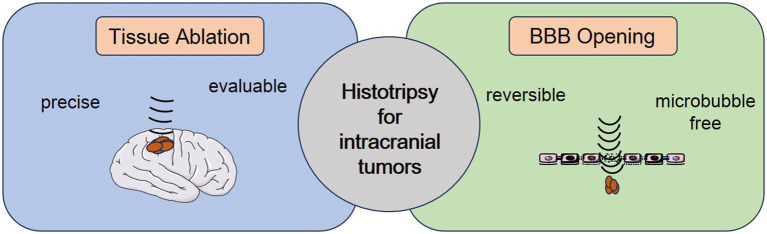 Figure 1
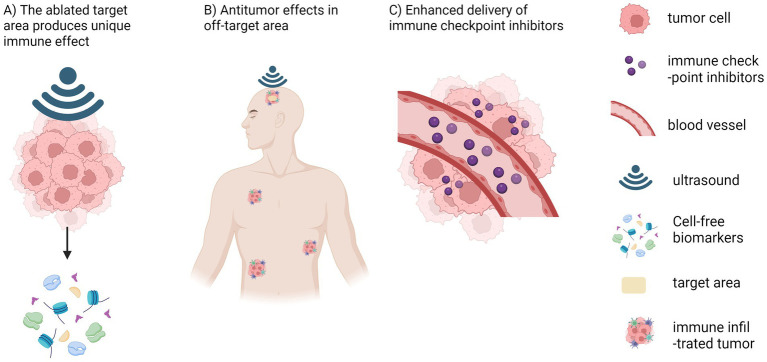 Figure 2
Peer Reviews
No public reviews on file for this paper yet. If you reviewed it on a platform where reviews are public (OpenReview, ICLR, NeurIPS, ICML), you can paste yours below so the community can read it here.
Videos
No videos yet. Explain this paper in a talk, walkthrough, or lecture? Add one.
Taxonomy
TopicsUltrasound and Hyperthermia Applications · Nanoparticle-Based Drug Delivery · Ultrasound and Cavitation Phenomena