Neuroimaging evaluation of high dose methotrexate-induced neurotoxicity in pediatric and young adults: a PET/MRI study
Zahra Shokri Varniab, Hyun Gi Kim, Ricarda von Krüchten, Yashas Ullas Lokesha, Kristina Elizabeth Hawk, Shashi Bhushan Singh, Tie Liang, Sarah Lu-Liang, Lucia Baratto, Michael Iv, Heike Elisabeth Daldrup-Link

TL;DR
This study used PET/MRI to evaluate how high-dose methotrexate affects brain metabolism in young patients, finding short-term increases followed by normalization or possible long-term neurotoxicity.
Contribution
The study provides novel insights into short- and long-term brain metabolic changes following high-dose methotrexate treatment in pediatric and young adult patients.
Findings
Short-term post-HDMTX scans showed significantly increased brain metabolism compared to baseline.
Long-term follow-up scans showed no significant changes or decreased metabolism, suggesting possible neurotoxicity.
Findings suggest initial neuroinflammation followed by potential recovery or lasting damage.
Abstract
High-dose Methotrexate (HDMTX) can induce neurotoxicity, yet its impact on brain metabolism remains underexplored. This study aimed to assess short- and long-term brain metabolic changes post-HDMTX on 18F-FDG PET/MRI relative to baseline (pre-HDMTX) scans. In this IRB approved, retrospective study, we included 19 children and young adults (3 females and 16 males; age 17.9 ± 4.3 years), with lymphoma (n = 13) or osteosarcoma (n = 6). All patients underwent 18F-FDG PET/MRI before (baseline) and after HDMTX (>1000 mg/m2). Post-treatment scans were conducted ≤3 months (short-term group, n = 11) or >3 months (long-term group, n = 8) after completion of HDMTX and were compared with baseline scans. SUVmean and SUVmax of the whole brain cortex and six subregions were measured with PMOD software. A generalized linear regression model was used to evaluate post-pre-HDMTX SUV values differences in…
Genes, proteins, chemicals, diseases, species, mutations and cell lines named across the full text — each resolved to its canonical identifier and authoritative record.
Click any figure to enlarge with its caption.
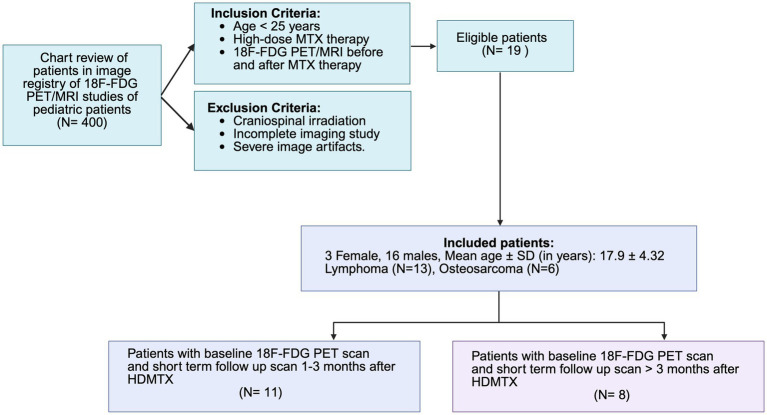 Figure 1
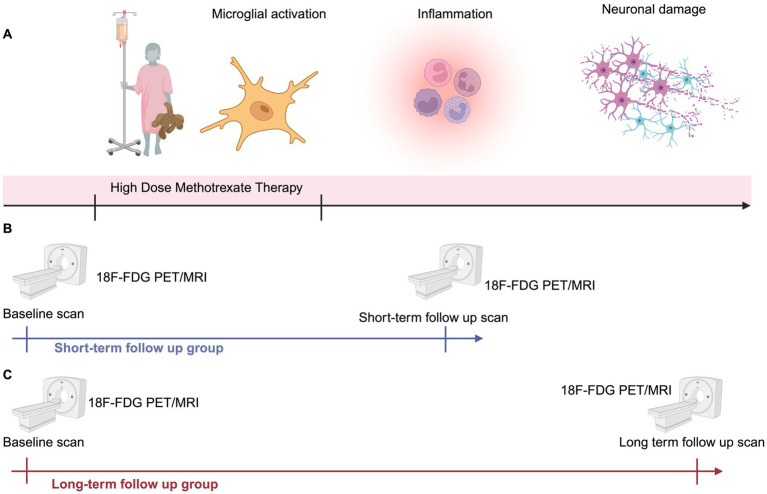 Figure 2
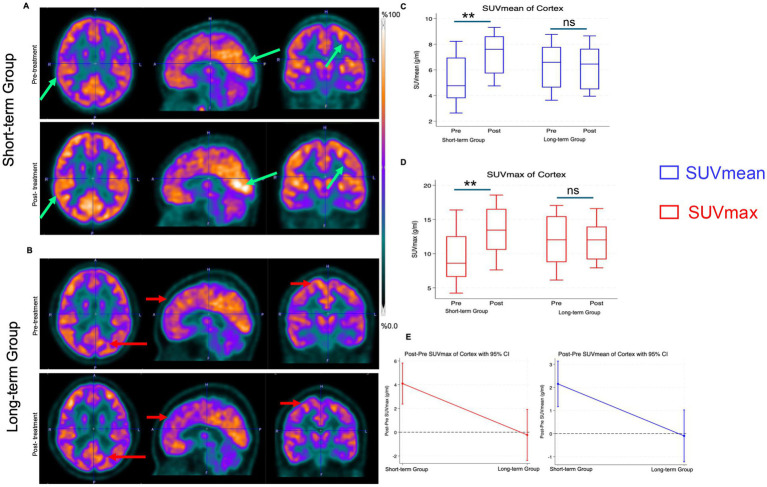 Figure 3
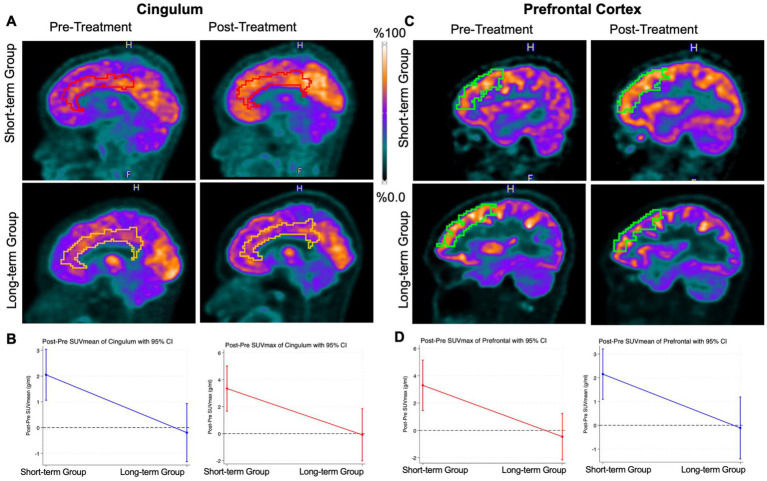 Figure 4
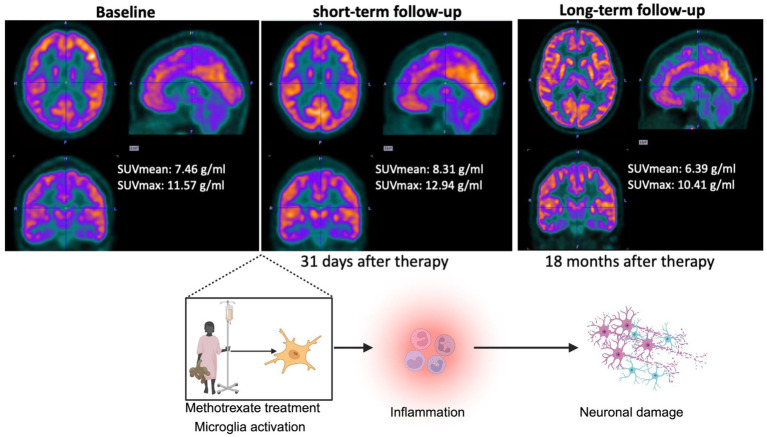 Figure 5
Peer Reviews
No public reviews on file for this paper yet. If you reviewed it on a platform where reviews are public (OpenReview, ICLR, NeurIPS, ICML), you can paste yours below so the community can read it here.
Videos
No videos yet. Explain this paper in a talk, walkthrough, or lecture? Add one.
Taxonomy
TopicsAcute Lymphoblastic Leukemia research · Cancer-related cognitive impairment studies · Childhood Cancer Survivors' Quality of Life