Clinicopathological Features of Superficial Non‐Ampullary Duodenal Epithelial Tumors Involving Brunner's Glands
Kazuki Takayama, Taro Iwatsubo, Mitsuaki Ishida, Shun Sasaki, Akitoshi Hakoda, Noriaki Sugawara, Kazuhiro Ota, Toshihisa Takeuchi, Nao Kawaguchi, Atsushi Tomioka, Ryo Tanaka, Mitsuhiro Asakuma, Sang‐Woong Lee, Kazuhide Higuchi, Yoshinobu Hirose, Hiroki Nishikawa

TL;DR
This study examines how superficial non-ampullary duodenal tumors interact with Brunner's glands, finding that larger tumors or specific shapes are more likely to involve these glands.
Contribution
The study provides new insights into the clinicopathological relationship between SNADETs and Brunner's glands, identifying predictive features for gland involvement.
Findings
Submucosal Brunner's gland involvement was observed in 7.0% of SNADETs.
Lesion size ≥10 mm or 0-IIc morphology predicted gland involvement with 100% sensitivity.
Non-neoplastic Brunner's glands were found at the vertical margin in 15.1% of endoscopic resections.
Abstract
Although Brunner's glands (BGs), located in the submucosa of the duodenum, may be involved by tumor cells of superficial non‐ampullary duodenal epithelial tumors (SNADETs), the detailed incidence and histopathological features have not yet been analyzed. This study aimed to clarify the histopathological relationship between SNADETs and BGs. We retrospectively analyzed SNADETs that were resected at a single center between 2006 and 2021. Resected specimens were histologically evaluated to determine the presence and/or involvement of SNADET in BGs. The relationship between clinicopathological features and tumor involvement in BGs was also assessed. In total, 114 lesions were included. Direct connection with BGs was seen in 52.6% of SNADETs, and submucosal BG involvement was observed in 7.0% (95% confidence interval 3.1%–13.4%) of SNADETs. The presence of submucosal BG involvement was…
Genes, proteins, chemicals, diseases, species, mutations and cell lines named across the full text — each resolved to its canonical identifier and authoritative record.
Click any figure to enlarge with its caption.
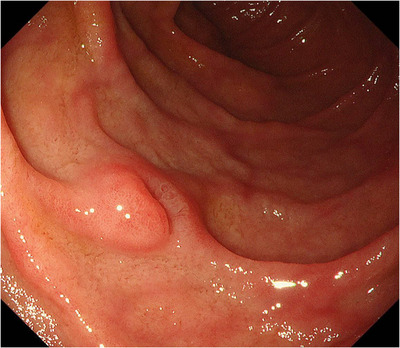 Figure 1
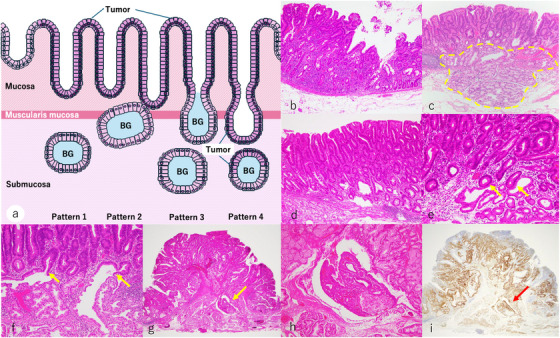 Figure 2
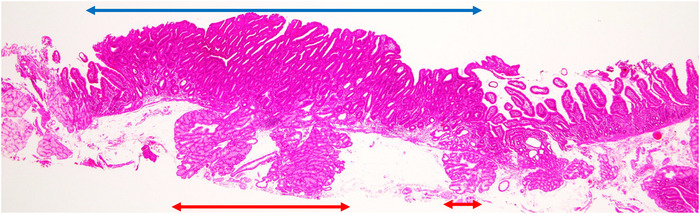 Figure 3
Peer Reviews
No public reviews on file for this paper yet. If you reviewed it on a platform where reviews are public (OpenReview, ICLR, NeurIPS, ICML), you can paste yours below so the community can read it here.
Videos
No videos yet. Explain this paper in a talk, walkthrough, or lecture? Add one.
Taxonomy
TopicsGastrointestinal Tumor Research and Treatment · Gastrointestinal disorders and treatments · Genetic factors in colorectal cancer