Sit‐to‐Stand Power From 2D Pose Estimation as an Indicator of Muscle Strength in Older Adults
Wonjae Hwang, Dain Shim, Joowan Kim, Kyung Rok Oh, Sun Gun Chung, Jaewon Beom, Myung Woo Park, Kyung Su Kim, Joonghee Kim, Chul Hyun Park, Keewon Kim

TL;DR
This study shows that measuring power during a sit-to-stand test using 2D pose estimation is a strong indicator of muscle strength in older adults.
Contribution
The study introduces a cost-effective 2D pose estimation method to assess muscle strength during the sit-to-stand test.
Findings
Peak STS power strongly correlates with muscle strength and mass but weakly with physical performance.
5x-STS time and 30-s STS repetitions correlate more with physical performance than with strength or muscle mass.
2D pose estimation shows high agreement with reference motion capture and force-plate systems.
Abstract
The sit‐to‐stand (STS) test is a crucial tool for sarcopenia assessment. However, the two most widely used diagnostic frameworks differ in their conceptualization of the test. The European Working Group on Sarcopenia in Older People 2 views the STS test primarily as a proxy for muscle strength, while the Asian Working Group for Sarcopenia 2019 (AWGS 2019) classifies it as a measure of physical performance. This discrepancy poses challenges to conceptual clarity in both research and practice. Recent advancements in pose‐estimation algorithms allow for kinematic assessment using a standard handheld devices, providing a simple and cost‐effective alternative to conventional motion‐analysis. A total of 129 community‐dwelling older adults (mean age 71.8 years) who could ambulate independently underwent assessments of muscle strength (knee extensor and handgrip strength), physical performance…
Genes, proteins, chemicals, diseases, species, mutations and cell lines named across the full text — each resolved to its canonical identifier and authoritative record.
Click any figure to enlarge with its caption.
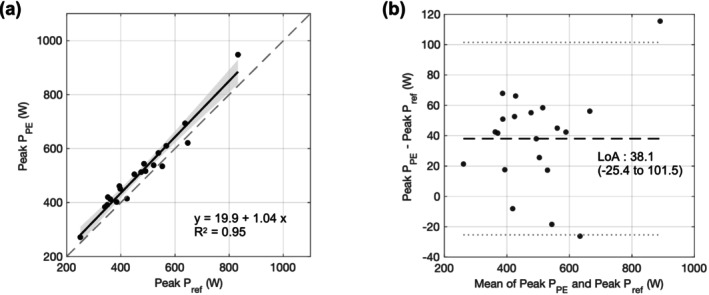 Figure 1
 Figure 2
 Figure 3
Peer Reviews
No public reviews on file for this paper yet. If you reviewed it on a platform where reviews are public (OpenReview, ICLR, NeurIPS, ICML), you can paste yours below so the community can read it here.
Videos
No videos yet. Explain this paper in a talk, walkthrough, or lecture? Add one.
Taxonomy
TopicsNutrition and Health in Aging · Balance, Gait, and Falls Prevention · Frailty in Older Adults