Contexts of Anointing Behavior in a Group of Blond Capuchin Monkeys (Sapajus flavius) Inhabiting an Atlantic Forest Fragment
Ana Paula de Brito‐Araújo, Natsumi Hamada‐Fearnside, Simone Peruzzo, Italo Ferreira Pereira, Poliana Gabriele Alves de Souza Lins, Kyle Miller, Patrícia Elesbão da Silva Rodrigues, Luiz Felipe Moretti Iniesta, Renata Gonçalves Ferreira

TL;DR
Blond capuchin monkeys use millipedes to anoint themselves, possibly to repel parasites, with adult males being more active in this behavior.
Contribution
The study identifies millipede species used in anointing and suggests a multifunctional role including self-medication and social interaction.
Findings
Anointing occurred at a rate of 8 episodes every 100 hours of observation.
Adult males were more actively engaged in anointing bouts compared to other group members.
Anointing is likely multifunctional, involving self-medication, opportunity, and social interaction.
Abstract
Parasitism is one of the primary causes of biotic stress in several taxa, and behaviors resembling self‐medication have been documented in numerous species. Anointing involves the application of chemical substances derived from animals, plants, mud, soils, and minerals, often emitting a pungent odor, onto an animal's body. We examined the circumstances surrounding 34 bouts of anointing with millipedes in a group of blond capuchin monkeys (Sapajus flavius) inhabiting an Atlantic Forest fragment in northeastern Brazil. Over 412 h of observation, we collected behavioral data through photographs, video recordings, and ad libitum field notes. We collected and identified the millipedes to the species level. We tested three non‐mutually exclusive hypotheses on the function(s) of this behavior: self‐medication, social bonding, and opportunistic use. We analyzed data in R using nonparametric…
Genes, proteins, chemicals, diseases, species, mutations and cell lines named across the full text — each resolved to its canonical identifier and authoritative record.
Click any figure to enlarge with its caption.
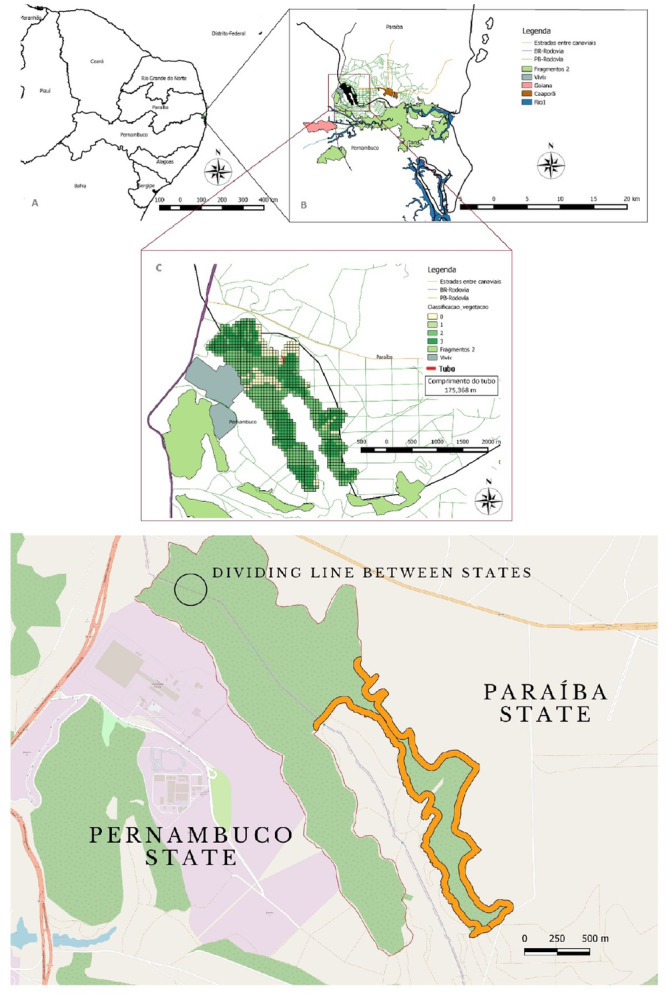 Figure 1
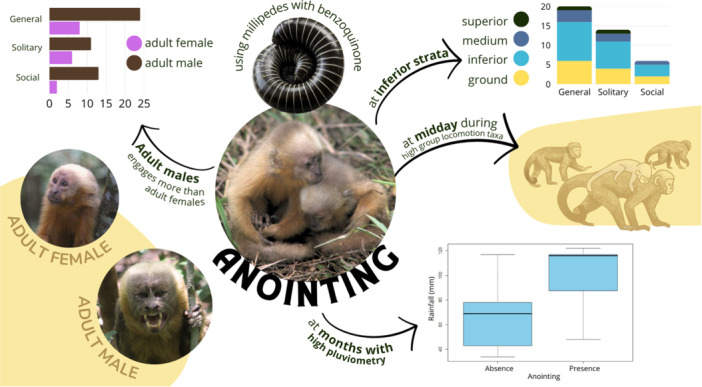 Figure 2
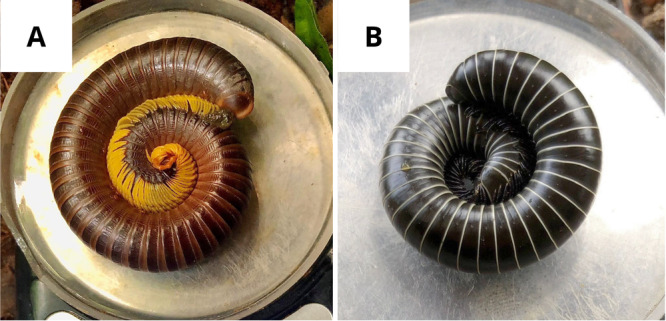 Figure 3
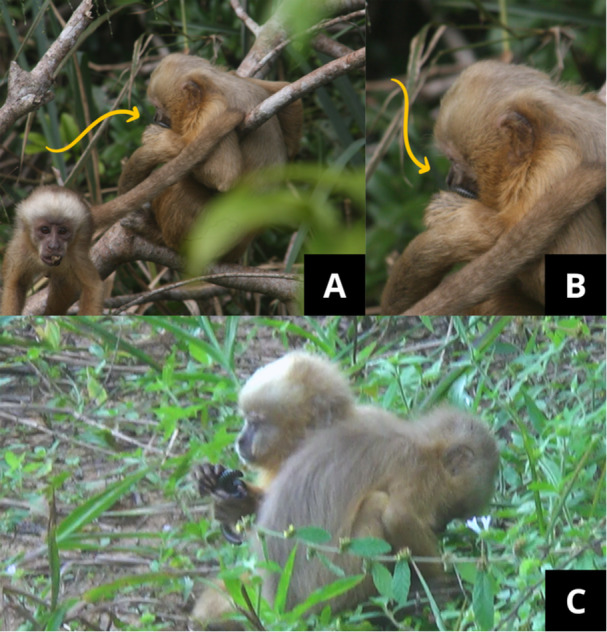 Figure 4
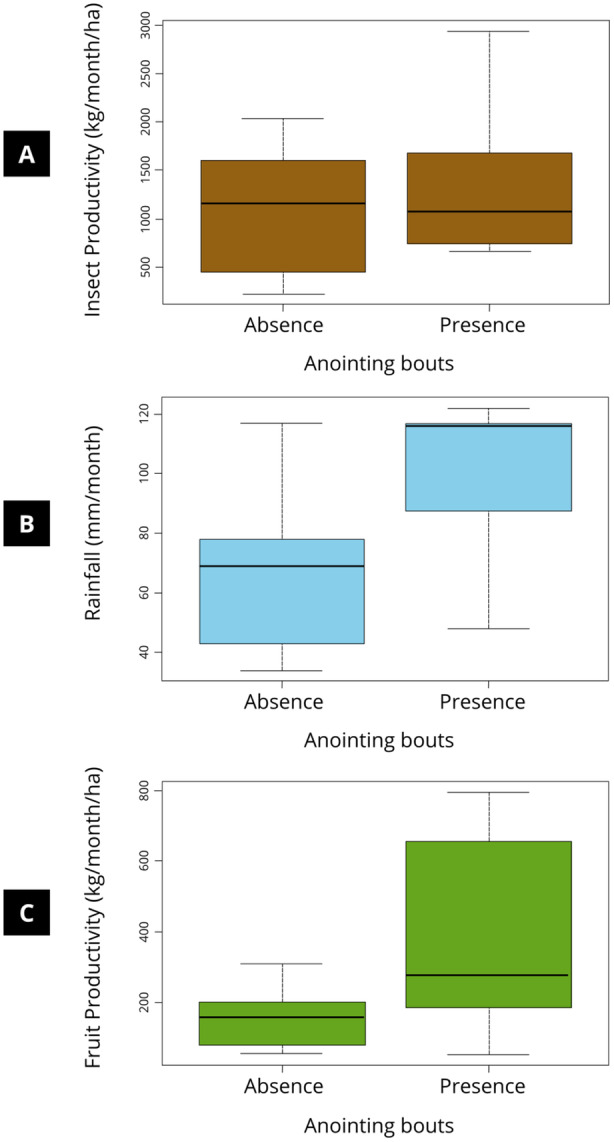 Figure 5
Peer Reviews
No public reviews on file for this paper yet. If you reviewed it on a platform where reviews are public (OpenReview, ICLR, NeurIPS, ICML), you can paste yours below so the community can read it here.
Videos
No videos yet. Explain this paper in a talk, walkthrough, or lecture? Add one.
Taxonomy
TopicsPrimate Behavior and Ecology · Amphibian and Reptile Biology · Hemispheric Asymmetry in Neuroscience