Autoeczematization: A Rare Complication of Contact Dermatitis Triggered by Topical Antibiotic Ointment
George Miura, Norihiro Yoshimoto, Suguru Kurosawa, Hiroyuki Nakamura

TL;DR
A man developed a rare skin reaction called autoeczematization after using a topical antibiotic ointment, highlighting the importance of recognizing this complication.
Contribution
This case report highlights autoeczematization as a rare but important complication of topical antibiotic use.
Findings
A 42-year-old man developed generalized exudative erythematous papules after using Baramycin® ointment.
Discontinuation of the ointment and treatment with clobetasol propionate led to resolution of symptoms.
The case suggests allergic contact dermatitis with secondary autoeczematization.
Abstract
Topical antibiotic ointments are widely prescribed for infection prophylaxis after surgery and trauma, yet they are an important cause of allergic contact dermatitis. Autoeczematization, or id reaction, refers to secondary eczematous eruptions that arise at sites distant from a primary localized inflammatory focus. We report a 42-year-old man who developed generalized exudative erythematous papules after application of Baramycin® (bacitracin and fradiomycin sulfate) ointment to an erosion on his right lower leg treated for cellulitis. Despite improvement of systemic inflammatory markers, well-demarcated erythema confined to the area of ointment and dressing use, accompanied by widespread papules on the trunk, face, and extremities, persisted. Delayed patch testing could have been performed after clinical improvement, but the patient was lost to follow-up, and the clinical course…
Genes, proteins, chemicals, diseases, species, mutations and cell lines named across the full text — each resolved to its canonical identifier and authoritative record.
Click any figure to enlarge with its caption.
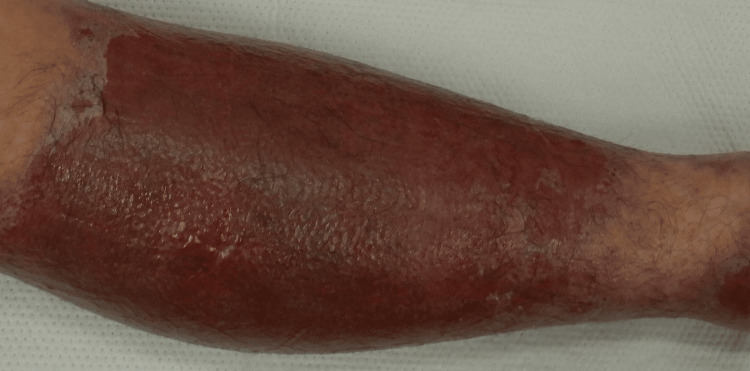 Figure 1
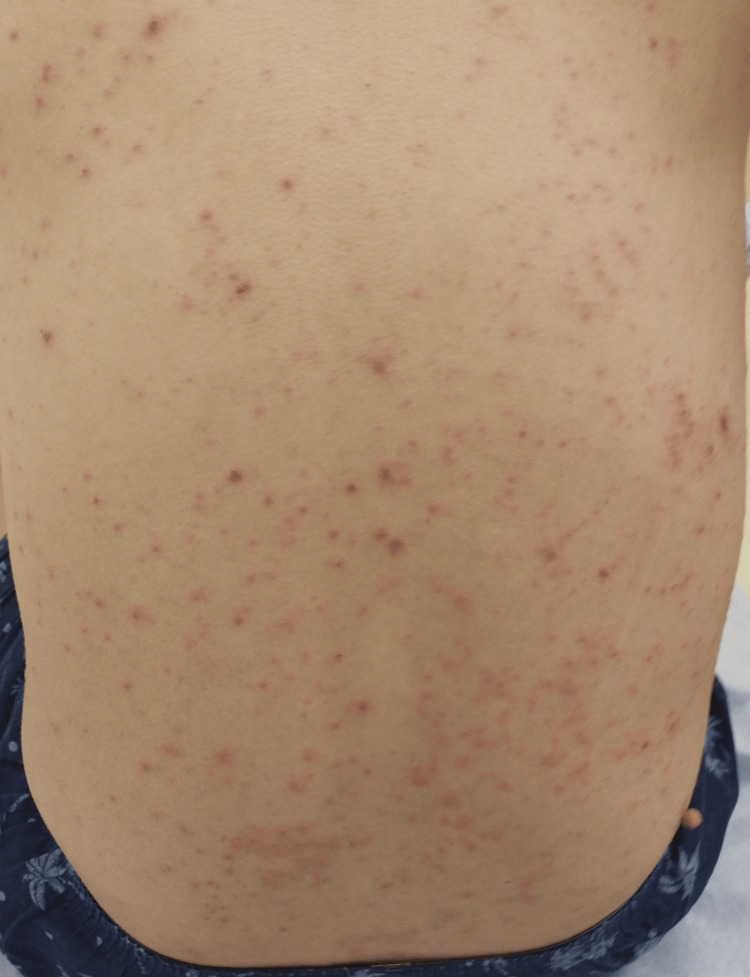 Figure 2
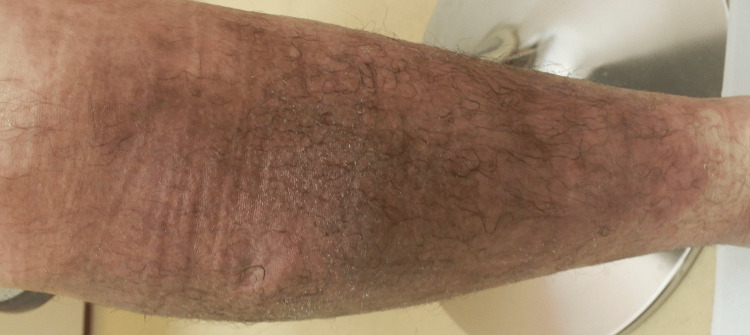 Figure 3
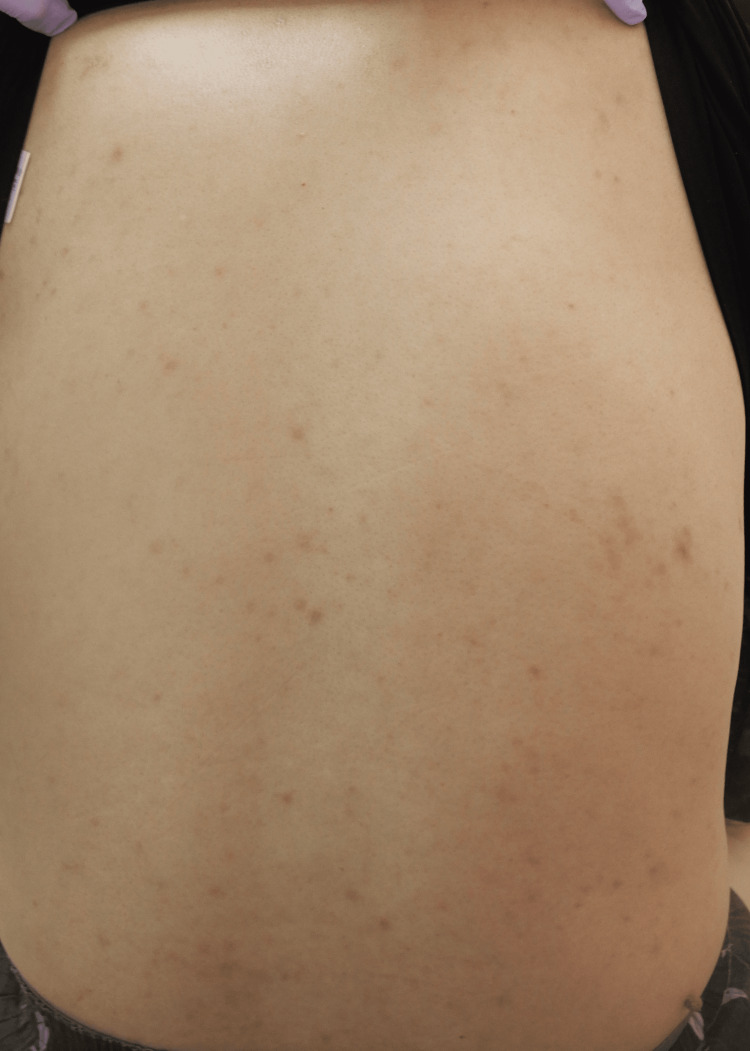 Figure 4
Peer Reviews
No public reviews on file for this paper yet. If you reviewed it on a platform where reviews are public (OpenReview, ICLR, NeurIPS, ICML), you can paste yours below so the community can read it here.
Videos
No videos yet. Explain this paper in a talk, walkthrough, or lecture? Add one.
Taxonomy
TopicsContact Dermatitis and Allergies · Dermatology and Skin Diseases · Nail Diseases and Treatments
Introduction
Topical antibiotic ointments are widely used for infection prophylaxis after surgery and trauma, and are also applied in the treatment of superficial skin infections [1]. Although clinical evidence supporting their efficacy is somewhat limited, the ability to deliver high local concentrations of antibiotics at the site of infection and the reduced risk of systemic toxicity are considered major advantages [2]. However, topical ointments are among the most frequent causes of allergic contact dermatitis (second only to cosmetics) and thus represent important allergens [3].
Autoeczematization (an id reaction) often manifests as secondary eczematous eruptions distant from a primary localized inflammatory or infectious skin focus. Both allergic and irritant contact dermatitis can trigger immunologic responses that lead to widespread eczematous lesions [4]. We report a case of autoeczematization arising from contact dermatitis to a topical antibiotic ointment.
Case presentation
A 42-year-old man was referred to our department with persistent, exudative erythematous papules covering his trunk, limbs, and face (Figures 1, 2).
Well-demarcated erythema on the right lower leg. The lesion corresponds to the dressing area where topical Baramycin® ointment was applied.
At the initial visit, the back shows widespread erythematous papules.
One month earlier, he had been admitted elsewhere for suspected cellulitis of the right lower leg that presented with erythema and swelling. Intravenous antibiotics were administered, and topical Baramycin® (a combination ointment of bacitracin and fradiomycin sulfate) ointment was applied to the erosion on the swollen area of the right lower leg for one month. However, his skin lesions gradually worsened, and one week before his presentation to our hospital, exudative erythematous papules appeared and spread from the right lower leg to the entire body. Despite the improvement of his systemic inflammatory markers, the diffuse eruptions persisted, prompting referral to our hospital.
Physical examination revealed well-demarcated erythema with small vesicles on the right lower leg, precisely corresponding to the area where the gauze dressing had been applied (Figure 1). In addition, erythematous papules were observed on the trunk, face, and extremities, accompanied by intense pruritus. Blood tests showed no remarkable abnormalities. Clinically, the eruption began as sharply demarcated erythema on the right lower leg and subsequently spread as erythema over the entire body. Patch testing was not performed at this stage because the eruptions were so extensive that no unaffected skin was available for testing. However, the distribution of the lesions and the clinical course strongly suggested generalized autoeczematization secondary to contact dermatitis induced by Baramycin® ointment.
We initiated topical clobetasol propionate ointment therapy for the entire body, including the original right lower-leg lesion. Complete resolution of the right lower-leg lesion was achieved in approximately three weeks, leaving residual hyperpigmentation (Figure 3).
After three weeks of topical steroid therapy, the right lower leg shows significant improvement, with only residual hyperpigmentation remaining.
Meanwhile, the trunk lesions largely resolved within one week, although the slower improvement in the right lower leg might have been influenced by the initial cellulitis (Figure 4).
Lesions on the back show marked improvement at one week of topical steroid application.
The Baramycin® ointment was not reinitiated, and no recurrence of autoeczematization was observed.
Discussion
Autoeczematization is an underrecognized complication arising from localized allergic skin inflammation [4]. In contact dermatitis, hapten-specific T-cell activation at the primary site can spread via the systemic circulation, resulting in secondary eczematous eruptions [4]. It is vital to recognize this phenomenon, as continued use of the offending agent or insufficient anti-inflammatory treatment may perpetuate or exacerbate the systemic reaction. Identifying and discontinuing the responsible agent, alongside initiating appropriate topical or systemic therapy, typically leads to rapid resolution of secondary lesions [5].
In addition to triggering autoeczematization, topical medicaments themselves frequently act as potent sensitizers [1]. Topical antibiotics are particularly associated with cosensitization, a phenomenon in which patients become sensitized to two chemically distinct allergens present in the same preparation [6]. For example, polymyxin B and bacitracin, which are often combined in over-the-counter antibiotic ointments, show considerable mutual cosensitization, and high rates of cosensitization have also been reported for neomycin, bacitracin, and polymyxin B [6]. Moreover, topical medicament ingredients can induce cross-reactions when structurally related allergens are encountered through different routes of exposure; in rare instances, such cross-reactions can lead to severe systemic reactions, including erythroderma or even anaphylaxis [6]. Thus, when prescribing topical or systemic antibiotics, it is important to obtain a careful history of previous drug or contact allergies and to consider possible cross-reactivity with related agents.
In treating patients who develop diffuse eczematous rashes following localized inflammation, especially when topical antibiotics or other sensitizers are used, clinicians should remain vigilant for autoeczematization. This case highlights the need to recognize autoeczematization as a complication of localized skin inflammation and to appreciate that allergy to topical antibiotics may indicate broader sensitization. Early suspicion in patients with widespread eczematous lesions enables timely intervention, more appropriate antibiotic selection, and better clinical outcomes.
Conclusions
This report underscores the importance of considering autoeczematization in patients presenting with widespread erythema following the application of topical medicaments. Clinicians should inquire about recent topical antibiotic use, as these agents are common allergens and may trigger generalized eczematous reactions. Early recognition and withdrawal of the offending agent allow prompt resolution and prevent unnecessary investigations or continued exposure.
The reference list from the paper itself. Each links out to its DOI / PubMed record.
- 1Allergic contact dermatitis to topical antibiotics: epidemiology, responsible allergens, and management J Am Acad Dermatol Gehrig KA Warshaw EM 1215820081815892410.1016/j.jaad.2007.07.050 · doi ↗ · pubmed ↗
- 2Current and emerging topical antibacterials and antiseptics: agents, action, and resistance patterns Clin Microbiol Rev Williamson DA Carter GP Howden BP 8278603020172859240510.1128/CMR.00112-16PMC 5475228 · doi ↗ · pubmed ↗
- 3Autosensitisation (autoeczematisation) reactions in a case of diaper dermatitis candidiasis Niger Med J Chirac A Brzezinski P Chiriac AE Foia L Pinteala T 2742755520142501326410.4103/0300-1652.132070 PMC 4089061 · doi ↗ · pubmed ↗
- 4Allergic contact dermatitis and autoeczematization to Proctosedyl® cream and Proctomyxin® cream Case Rep Dermatol Hughes JD Pratt MD 2382461020183051917010.1159/000486475 PMC 6276736 · doi ↗ · pubmed ↗
- 546 cases of allergic contact dermatitis due to topical drugs during the last five years J Environ Dermatol Cutan Allergol Nishioka K Koizumi A Takita Y 253392015 https://jglobal.jst.go.jp/en/detail?JGLOBAL_ID=201502213154972113
- 6Approach to allergic contact dermatitis caused by topical medicaments Can Fam Physician Choi C Vafaei-Nodeh S Phillips J de Gannes G 4144196720213412746310.46747/cfp.6706414 PMC 8202759 · doi ↗ · pubmed ↗