Phage treatment significantly reduces Salmonella shedding in layer hens and Salmonella abundance on the surface of the eggs they produce
Anisha M. Thanki, Natasha Whenham, Tom Dale, Mike R. Bedford, Helen V. Masey O’Neill, Martha R.J. Clokie

TL;DR
Phage treatment in layer hens significantly reduces Salmonella shedding and Salmonella on eggshells, improving food safety.
Contribution
Demonstrates that phage cocktail in drinking water effectively reduces Salmonella in hens and on their eggs.
Findings
Higher phage dose (3×10⁶ PFU/day) reduced Salmonella shedding to 0.00 CFU/g by day 28.
Phage-treated hens produced eggs with 60% less Salmonella on eggshells compared to untreated hens.
Abstract
Non-typhoidal Salmonella species cause 85% of human foodborne cases and infections caused by multidrug-resistant Salmonella strains are increasing. Therefore, alternative antimicrobials are needed, and phage therapy offers a promising tool to reduce the spread of Salmonella in the human food chain. The aim of this study was to determine if a phage cocktail delivered in water could reduce Salmonella shedding in infected egg laying hens, and Salmonella abundance on the surface of eggshells in eggs produced by infected hens. 240 56-week-old layer hens, which were environmentally infected with Salmonella were divided into three treatment groups: T1, no phage cocktail, T2, phage cocktail at dose 3×10⁶ PFU/day and T3, phage cocktail at dose 3×10⁵ PFU/day. The phage cocktail was delivered in their drinking water, for 28 days. Our study found by day 28 the higher phage dose (T2) was more…
Genes, proteins, chemicals, diseases, species, mutations and cell lines named across the full text — each resolved to its canonical identifier and authoritative record.
Click any figure to enlarge with its caption.
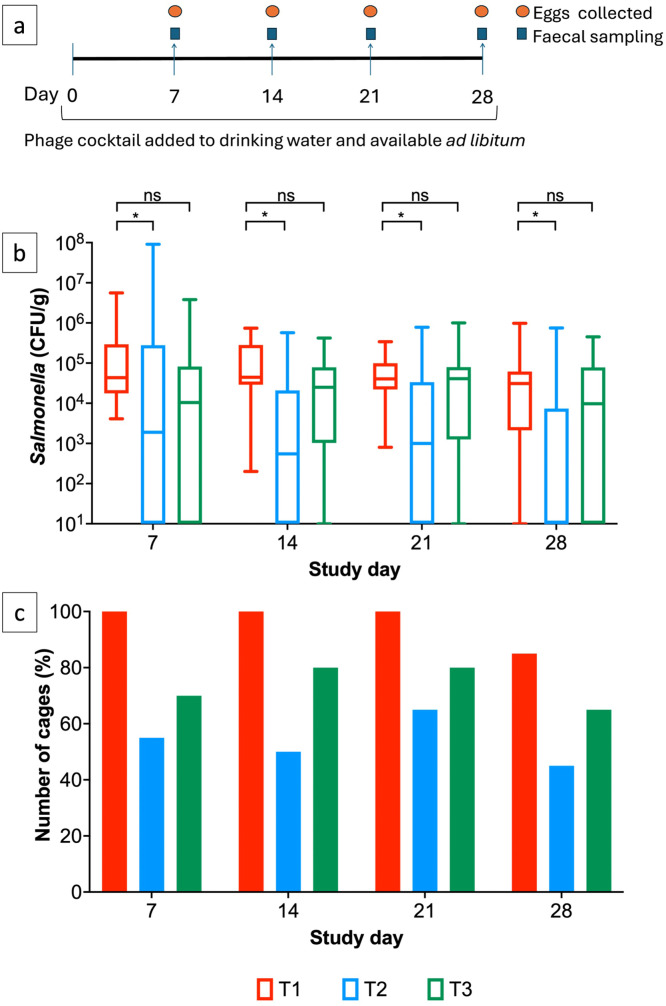 Figure 1
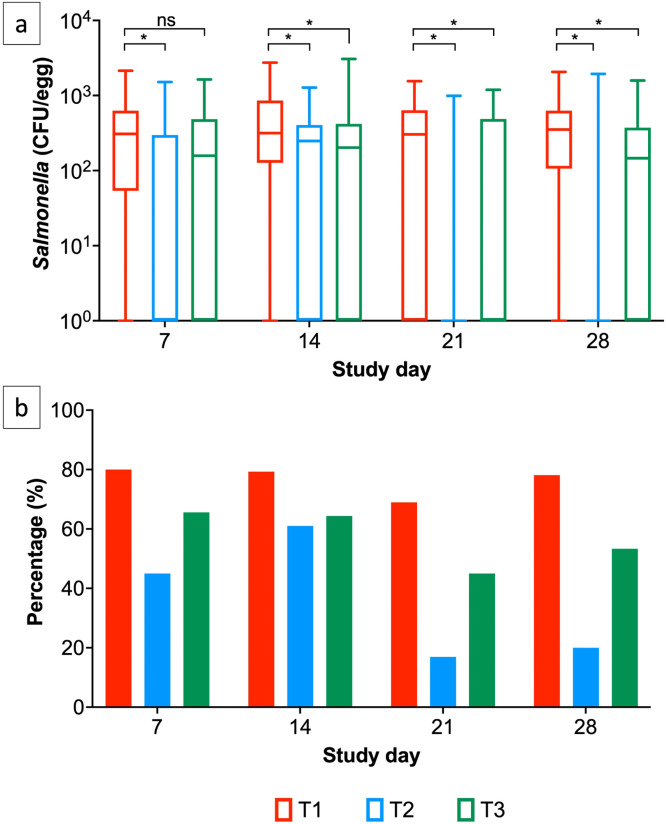 Figure 2
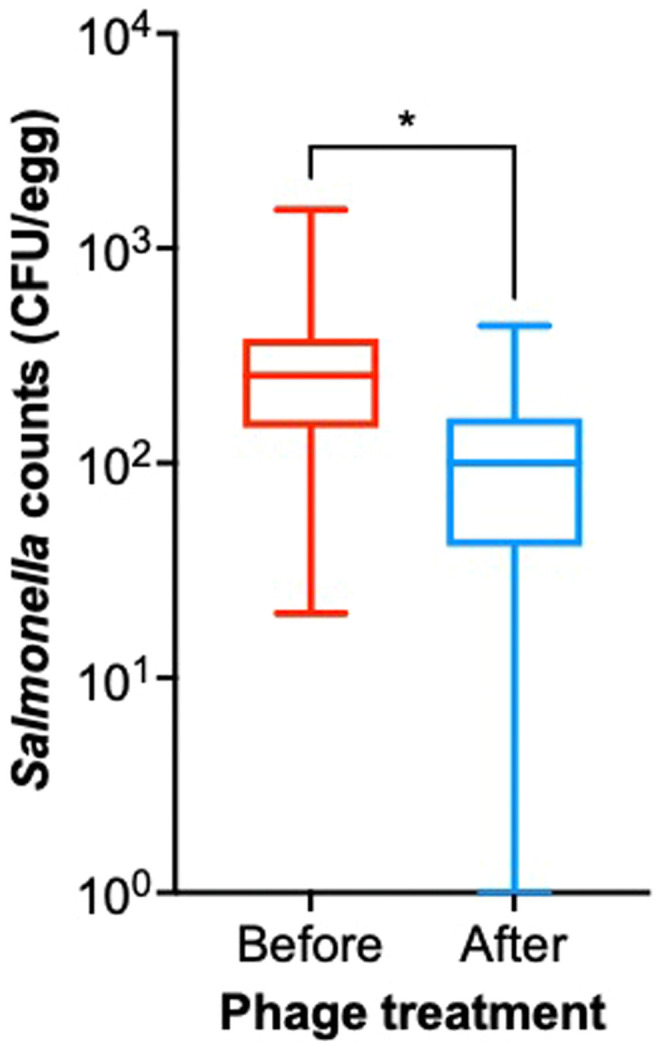 Figure 3
Peer Reviews
No public reviews on file for this paper yet. If you reviewed it on a platform where reviews are public (OpenReview, ICLR, NeurIPS, ICML), you can paste yours below so the community can read it here.
Videos
No videos yet. Explain this paper in a talk, walkthrough, or lecture? Add one.
Taxonomy
TopicsBacteriophages and microbial interactions · Salmonella and Campylobacter epidemiology · Fecal contamination and water quality
Introduction
Globally, each year, nontyphoidal Salmonella spp are responsible for 93 million cases of gastroenteritis and 155,000 deaths of which 85% relate to consumption of contaminated food (Lamichhane et al., 2024). Over 20% of these infections are linked to Salmonella contaminated pork, poultry meat and products, including eggs. The worldwide related health and economic burden is estimated at ∼$3 billion annually (Solís et al., 2023). Therefore, to protect public health, it is imperative to control the spread of Salmonella in the food chain.
Over 2500 Salmonella serotypes have been identified but not all are linked to poultry and human enteric infections. Prevalent infecting serotypes differ based on time and geographical location (Chen et al., 2024). Currently, S. enterica serovars S. Typhimurium, S. Enteritidis**,** S. Idikan, S. Infantis, S. Kedougou, S. Heidelberg and S. Kentucky are dominant and have been linked to poultry outbreaks and subsequent human infections across the world (Chard et al., 2025; Shah et al., 2017).
During the poultry production cycle chickens and laying hens can become infected with Salmonella through consumption of contaminated feed, water or litter, or through aerosol transmission in pens and by contact with Salmonella infected carrier animals such as insects and rodents (Terio et al., 2023). Furthermore, laying hens' genetics, diet, environment and intestinal microbiome are significant factors that predispose hens to Salmonella infection. Eggs produced by infected layer hens can become contaminated with Salmonella through the transovarial route where the infection originates in the reproductive organs and occurs in the yolk before the egg is laid (Gast et al., 2024). Eggs can also become contaminated via the faecal-oral route in where Salmonella cells contaminate eggshells as they pass through the hens colonised gastrointestinal tract (Shaji et al., 2023).
In the United Kingdom (UK) poultry eggs and egg products were implicated in 26% of all Salmonella foodborne outbreaks (18/68) between 2015-2020 and in the European Union (EU) in 2021 were responsible for 44% (37/84) of outbreaks (FDA, 2023). Antibiotics penicillin, tetracycline and chloramphenicol are routinely used to control and treat Salmonella infections (Solís et al., 2023). However, in many places such as the US, EU and the UK the use of antibiotics as growth promoters have been banned and there are government incentives to curtail antibiotic use in agriculture altogether (Castanon, 2007). This is to reduce the spread and burden of antibiotic resistance in the food chain, which subsequently impacts human health (Rahman and Hollis, 2023). In addition, antibiotics are not bacterial species specific and can disrupt the poultry microbiome leading to further enteric infections (Liang et al., 2023). Therefore, alternative control strategies in addition to increased farm biosecurity are being considered to prevent the spread of Salmonella in poultry production. These include vaccination of birds and prebiotics, probiotics, synbiotics and postbiotics (Shaji et al., 2023). However, with all strategies, efficacy data to reduce Salmonella has been inconsistent, thus further research is needed before they can be widely implemented by the industry (Abd El-Hack et al., 2022).
Bacterial viruses, bacteriophages (phages), could also provide a promising alternative preventative or treatment to antibiotics. Phages are bacterial species specific and therefore only lyse the target bacteria without disrupting the remaining microbiome. They are also harmless to human and animal cells. Lytic phages lyse their target bacterial host by taking over the host’s machinery to replicate which leads to bacterial cell death and the release of further infecting phages (Clokie et al., 2011). Lytic phages can be used therapeutically against human and animal bacterial pathogens and collective therapeutic data has highlighted their effectiveness, efficacy and safety (Węgrzyn, 2023; Cui et al., 2024).
Salmonella challenge poultry studies have highlighted that phage or phages combined as cocktails delivered orally, in feed or in water are effective at reducing Salmonella infection in infected broiler birds (Thanki et al., 2021; Gigante and Atterbury, 2019). For example, a study showed birds experimentally infected with Salmonella Enteritidis and treated with phage cocktail ProBe-Bac® in feed available ad libitum for 28 days reduced Salmonella colonisation by 1.5 log_10_ CFU/ml between 7-14 days post-infection (n=30). The authors tested two phage doses with inclusion in the basal diet at 1 g/kg and 1.5 g/kg (phage titre was not stated), and the latter inclusion rate was most effective in reducing Salmonella abundance in their caeca and liver (p<0.05) (Sarrami et al., 2023). Phages are also effective at reducing Salmonella abundance in eggs. Braz et al (2025) showed applying a single phage phSE-5 at dose 10^8^ PFU/mL in liquid whole eggs reduced S. Typhimurium abundance by 1.8 log_10_ CFU/mL after 12 h. Furthermore, when the phage was sprayed on eggshells at the same dose it caused a 1.3 log_10_ CFU/mL reduction in Salmonella counts after 8 hours (Braz et al., 2025). Although these and published studies show phages are efficacious against Salmonella the optimal phage dose is unknown and likely could be phage specific.
We have developed a two-phage cocktail, which includes phages SPFM10 and SPFM14 part of the Seulviruses genus against Salmonella. Our phage cocktail can effectively lyse multiple serotypes of Salmonella associated with infections in poultry and swine, which are also responsible for human food poisoning (Thanki et al., 2019; Thanki, Clavijo et al., 2022; Thanki et al., 2022). This includes the prevalent poultry infecting serotypes S. Typhimurium, monophasic S. Typhimurium, S. Enteritidis, S. Idikan, S. Kedougou, S. Derby and S. Bovismorbificans (Thanki et al., 2021). Furthermore, we showed when the phage cocktail was delivered in feed to experimentally challenged broiler birds, phage treatment significantly reduced Salmonella shedding in infected birds (p<0.05). Similar to the poultry study discussed above, optimal dose was unknown and we tested three doses of the phage cocktail at 10^5^ PFU/day, 10^6^ PFU/day and 10^7^ PFU/day in feed, which were all available ad libitum for 42 days. We found the lowest dose 10^5^ PFU/day was the most effective and reduced S. Typhimurium to below detectable limits levels in all birds by day 42. The higher doses also significantly reduced Salmonella shedding (p<0.05) (Thanki et al., 2023).
These experimental poultry challenge studies demonstrate the effectiveness of phage therapy (Melaku et al., 2025). However, there is limited data on phage efficacy to treat Salmonella infected layer hens and if treating layer hens with phages can also reduce Salmonella abundance on the surface of eggs they produce. The aim of this study was to determine if the phage cocktail SPFM10-SPFM14 we have developed can reduce Salmonella colonisation and shedding in layer hens on a commercial farm, and if it reduces the Salmonella burden associated with the eggs they produce.
Unlike most previous studies that have evaluated phage efficacy using experimentally challenged birds or artificially inoculated eggs, our work investigated a naturally infected population of layer hens maintained under typical farm conditions. This setting, common in many parts of the world, provided a realistic test of phage performance under environmental infection pressures rather than controlled laboratory challenge. Despite the unknown serotype(s) of infecting Salmonella and the absence of prior host–phage matching, we wanted to determine if our cocktail could reduce Salmonella colonisation and shedding when administered via drinking water at 10⁶ PFU/L and 10^5^ PFU/day. Our study highlights the higher dose was most effective at reducing Salmonella abundance in infected layer hens and in the eggs produced by these hens Salmonella counts on the surface of the eggshell were significantly reduced.
Methods and materials
Salmonella strain and phages used in this study
The Salmonella enterica subsp. enterica serovar Typhimurium SL1344 strain was used as the phage propagating strain. The strain was routinely grown on Xylose Lysine Deoxycholate (XLD) agar (Oxoid, UK) medium at 37°C overnight on which Salmonella produces distinct black colonies. Liquid cultures of SL1344 were made by inoculating single colonies grown on XLD media into Luria broth (LB) (Melford, UK) and cultures were incubated overnight at 37°C whilst being shaken at 100 rpm. Phages SPFM10 and SPFM14, are both part of an international Leicester patent ‘Therapeutic Bacteriophages’ and were used for this study (PCT/GB2019/052695).
Phage propagation and titration
Phages SPFM10 and SPFM14 were propagated individually in LB broth as previously described (Thanki et al., 2023). Briefly, SL1344 liquid cultures were diluted 1/100 in 1 L of LB broth and grown to optical density 0.2 (wavelength 600 nm). After which 10 mL of phage at titre ∼10^8^ plaque forming units per mL (PFU/mL) was added. Phage and bacterial cultures were grown for 6 hours at 37°C at 100 rpm, centrifuged at 4200 x g for 15 minutes and filtered with 0.2 micron pore size filters. Phage lysates were diluted 10-fold in SM buffer (100 mM NaCl, 8 mM MgSO_4_·7H_2_O, and 50 mM Tris-Cl) to calculate phage titres. Dilutions were plated using the plaque assay method on LB 1% (w/v) agar plates on a lawn of SL1344 and plates were incubated at 37°C overnight (Kutter, 2009). A total volume of 12 L of phages were produced, and each phage was at a titre of 3×10^8^ PFU/mL.
Layer hen trial
The laying hen trial was conducted at Poultry Research Farm Ltd in India in accordance with the animal welfare practices in India and approved by the Committee for Control and Supervision of Experiments on Animals.
At the start of the study layer hens were 56 weeks of age, which will be referred to as day 0 of the study. The study was conducted for 4 weeks at which point hens were 60 weeks of age and will be referred to as day 28 of the study. In this study a total of 240 female Hyline layer hens were used and were equally divided into three treatment (T) groups i.e. 80 hens per treatment group. Hens were housed in open sided poultry houses in cages. Four hens were housed per cage and there were 20 cages per treatment group. Feed (Table 1) and water was available ad libitum throughout the study. Layer hens were not challenged with Salmonella and were already infected, confirmed by the poultry site. The groups were: T1 Salmonella infected, no phage; T2 Salmonella infected, phage treatment at a dose of 10^6^ PFU/day; T3 Salmonella infected, phage treatment at a dose of 10^5^ PFU/day. Phages SPFM10 and SPFM14 were mixed at equal volumes, added to drinking water and available ad libitum via nipple drinkers.Table 1. Ingredient and nutrient composition of the feed diet fed to layer hens.Table 1. Ingredientg/kgMaize533.5De-oiled rice bran122.34Soybean meal123.5Distillery dried grain with soluble50Rape seed meal40Lime stone powder0Stone grit 32% (w/w)108Dicalcium phosphate13.94Common salt3.04Soda Bicarbonate0.72DL Methionine1.16L Lysine HCl0.7Trace minerals1Vitamin premix0.5Toxin Binder1Choline Cl0.5Vitamin E – Se0.1NutrientsEnergy (kcal/kg)2400Protein %15.5Calcium %3.9aP%0.36% Dig Lys0.62% Dig Meth0.34% Dig M+c0.56% Dig thr0.44% Sodium0.16
Faecal samples were processed to monitor Salmonella abundance as described previously (Thanki et al., 2023). Briefly, 1 g of faecal sample was weighed in sterile plastic tube, followed by the addition of 9 mL Buffered peptone water (BPW) and diluted 10-fold in BPW. Dilutions were plated on circular XLD plates, on which 0.1 mL was added and uniformly spread using L-shaped spreaders. Plates were incubated overnight at 37°C and Salmonella abundance was expressed as CFU/g. Faecal samples were collected on days 7, 14, 21 and 28. The study plan is shown in Fig. 1a.Fig. 1. Image (a) shows the phage layer hen trial plan. Salmonella abundance (b) in faecal samples collected weekly over 28 days and (c) the percentage of cages positive for Salmonella. Statistical differences between treatment groups (n=20) are displayed on the graph (ns p>0.05 and * p<0.05).Fig 1
To determine Salmonella abundance on the surface of the eggshell, each individual egg was immersed in 15 mL of BPW in a sterile plastic bag. The egg was then massaged for 2 minutes after which the eggshell rinse was collected in a sterile tube and then processed for enumeration for total Salmonella abundance. The wash sample was diluted 10-fold in BPW and 0.1 mL was plated on circular XLD plates. Plates were incubated overnight at 37°C and Salmonella abundance was expressed as CFU/egg.
Egg wash study
Eggshell surfaces were swabbed and processed as detailed above to determine Salmonella abundance. Swabs were placed in 2 mL BPW, diluted 10-fold in BPW, and plated on XLD media. Plates were incubated overnight at 37°C. All Salmonella positive eggs were arranged in trays in the Biosafety Cabinet, the phage cocktail was sprayed at dose 10^6^ PFU/litre onto the surface of the eggs and stored for 3 hours. The phage cocktail was applied at 0.5 mL/s with a manual spray to ensure even coverage around the eggshell surface area, which was approximately 80 cm^2^/egg. After 3 hours contact time all the eggs were swabbed and placed in 2 mL BPW, then the swabs were processed for enumeration of Salmonella as described above.
Statistical analysis
To determine statistical differences in Salmonella abundance between treatment groups one-way ANOVA was conducted and student T-tests were performed. P values <0.05 were noted as significant. The program Prism 9 version 9.0.2 (134) was used for analysis. Layer hen performance data and egg quality data were analysed with JMP Pro 14 and p values <0.05 were considered as significant.
Results
Salmonella shedding in layer hens
To determine if phage treatment could reduce Salmonella colonisation and shedding in infected layer hens, phage cocktail SPFM10-SPFM14 was delivered in water at two doses: 10^6^ PFU/day (T2) and 10^5^ PFU/day (T3) (Fig. 1a). Prior to study start, caecal swabs were taken from layer hens to identify which were infected with Salmonella and 240 Salmonella positive hens were included in the trial. Hens had average Salmonella abundance of 4×10^6^ CFU/g, though the infecting Salmonella serotype was unknown.
After 7 days post phage treatment the median Salmonella abundance in faecal samples were 4.33×10^4^, 1.90×10^3^ and 1.04×10^4^ CFU/g for T1 (Salmonella infected, no phage), T2 (Salmonella infected, phage dose 10^6^ PFU/day) and T3 (Salmonella infected, phage dose 10^5^ PFU/day) respectively. Salmonella was isolated from 100% of cages in group T1 (20/20). In comparison, Salmonella in the phage-treated groups T2 and T3 was reisolated in 55% (11/20) and 70% (14/20) cages respectively (Fig. 1b and c).
On days 14 and 21, average Salmonella abundance was significantly lower in T2 in comparison to T1 (p<0.05) and Salmonella was only isolated from 50-65% of cages versus 100% in T1. Median abundance counts were 4.44×10^4^ CFU/g, 5.50x10^2^ CFU/g for groups T1 and T2 respectively. In T3 samples, medium abundance was lower than T1 at 2.5×10^4^ CFU/g but not significantly different (p>0.05) and Salmonella was isolated from 80% (16/20) of cages (Fig. 1b and c). On the last day of the study on day 28, median Salmonella abundance counts were 3.10×10^4^, 0.00 (below the detection limit) and 9.75×10^3^ CFU/g for T1, T2 and T3 respectively. Counts were significantly lower in T2 (p<0.05) and Salmonella was reisolated from fewer numbers of cages in phage treated groups in 45% (9/20) and 65% (13/20) of cages in groups T2 and T3 (Fig. 1b and c).
Salmonella abundance on eggshell surfaces
Eggs produced by phage treated layer hens were screened for Salmonella at days 7, 14, 21 and 28 (Fig. 2). 60 eggs were screened per group on each collection day. At all sampling days after phage treatment began, Salmonella abundance was significantly lower in eggs produced by layer hens in T2 (Salmonella infected, phage dose 10^6^ PFU/day) in comparison to T1 (Salmonella infected, no phage). After 14 days there were also significant reductions in Salmonella abundance on eggshell on eggs produced by layer hens in T3 (Salmonella infected, phage dose 10^5^ PFU/day). Furthermore, the percentage of eggs positive for Salmonella were statistically consistently lower in eggs produced by phage treated layer hens in groups T2 and T3 versus T1 (p<0.05) (Fig. 2a and b). At day 7, 80%, 45% and 65% eggs were positive for Salmonella in eggs produced by hens in groups T1, T2 and T3 respectively. By day 28, 78%, 30% and 54% of eggs were positive for Salmonella in eggs produced by hens in groups T1, T2 and T3 respectively (Figs. 2a and b).Fig. 2(a) Salmonella abundance on eggshell surface in eggs produced by T1 and phage treated layer hens (T2 and T3) and (b) percentage of Salmonella positive eggs. Statistical differences between treatment groups (n=60) are displayed on the graph (ns p>0.05 and * p<0.05).Fig 2
Layer bird performance and egg quality
There were no significant differences in egg production, feed intake, egg mass, body weight, egg weight, percentage of eggshell defects or egg mass across groups T1, T2 and T3 over 28 days (Table 2). There was a significant difference in feed intake in 7 days post phage treatment where layer hens in groups T2 and T3 consumed more feed than in T1 (p=0.0007). Feed intake was 109, 111 and 113 g for T1, T2 and T3 layer hens respectively (Table 2). There was also a significant difference in feed intake per egg on day 21 where intake was lower in groups T1 and T2 in comparison to T3 (p=0.017). Feed intake was 136.1, 131.4 and 147.6 g for T1, T2 and T3 layer hens respectively (Table 2).Table 2. Average egg production parameters of layer hens from days 7, 14, 21 and 28.Table 2Day 7****Performance parameters1Treatment group****EP (%)****FI/layer (g)****FI/egg (g)****FI/EM (g)****BW (g)****EW (g)****ESD (%)****EM (g/layer/day)****T177.0109145.82.51577.058.62.045.2T280.6111140.92.41539.558.92.447.5T381.8113138.72.31567.459.83.848.9LSD 5%185.333.80.6111.16.16.012.3P0.36780.00070.54050.35540.20180.56600.27990.3089R-Square0.03450.22660.02140.03560.05460.01980.04370.0404RMSE10.98433.225720.65930.392167.94213.74313.65657.5326Day 14****T178.8109142.32.41577.058.91.446.5T280.3110139.72.41539.558.52.247.0T381.1111138.42.41567.458.31.047.3LSD 5%18.14.633.00.6111.13.74.211.2P0.79670.14040.82440.91200.20180.69220.34530.9334R-Square0.00790.06660.00680.00320.05460.01280.03660.0024RMSE11.06622.833320.16380.362567.94212.26302.55396.8498Day 21****T180.4110136.12.31577.059.60.247.8T280.9111131.42.31539.559.81.648.3T381.8111147.62.41594.758.31.047.8LSD 5%15.35.36.00.4169.94.93.49.4P0.87840.40120.0170.91280.23820.25680.12620.9389R-Square0.00450.03160.13320.00320.04910.04660.07000.0022RMSE9.35223.689417.85060.290873.89272.97782.10105.7340Day 28****T180.5110140.32.31583.661.36.449.4T281.1112132.72.41559.959.12.047.9T382.1112141.32.31573.359.63.748.9LSD 5%11.94.920.50.4120.85.09.68.5P0.76880.1390.06780.49430.60040.06960.0650.6576R-Square0.00920.06690.09010.02440.01770.08930.09150.0146RMSE7.30792.982612.56810.223673.9053.05545.87355.18551EP egg production percentage = amount of eggs / number of layers x 100; FI/layer (g) = average daily feed intake per layer; FI/egg (g) = average feed intake required to produce one egg; FI/EM (g) = average feed intake required to produce 1g of egg mass; BW (g) = average layer bodyweight; EW (g) = average egg weight; ESD (%) = percentage of eggs produced with eggshell defects (cracks & other abnormalities etc); EM (g/layer/day) = average amount of egg mass produced per lay per day. P probability, N number of replicates, SEM standard error mean, RMSE root mean squared error.
Furthermore, there were no statistically significant differences in egg quality parameters: egg weight, egg density, egg breaking strength, haugh unit score, shell weight and shell thickness between treatment groups (Table 3). The haugh unit scores were also not statistically significant between groups, which is a measure of egg protein quality based on the height of its egg white. Thus, phage treatment did not impact egg quality (Table 3).Table 3. Egg quality variables produced by layer hens collected on days 14 and 35 (n=60).Table 3Performance parameters1Treatment groups****EW (g)****ED (g/cm^3^)****ES (N)HUSW (g)****ST (mm)****SP, %Day 14159.81.019.977.15.670.49.5259.81.019.574.95.630.49.4358.51.018.475.55.650.49.9LSD 5%9.00.08.716.10.90.13.1P0.3420.4320.3200.4450.9320.4140.312SEM0.4180.0010.4040.7360.0410.0020.141R-square0.0120.0100.0130.0100.0080.0100.013RMSE5.5960.0095.4059.9900.5510.0331.898Day 35****159.61.017.173.75.820.49.8259.81.018.573.95.900.49.9358.61.017.671.65.780.49.9LSD 5%9.00.09.815.20.90.11.3P0.4370.4120.4180.3920.4940.7900.643SEM0.4080.0000.4450.6940.0410.0030.061R-square0.0090.0100.0100.0100.5580.0030.005RMSE5.5590.0066.0639.4450.5580.0430.8251EW egg weight; ED egg density, ES egg breaking strength, HU haugh unit score, SW shell weight, ST shell thickness, SP shell percent, P probability, N number of replicates, SEM standard error mean, RMSE root mean squared error.
Phage egg spray study
A total of 391 eggs produced by layer hens in T1 were screened, of which 132 were Salmonella positive. These 132 eggs had average Salmonella abundance of 3.10×10^2^ CFU/egg and were sprayed with phage at a dose of 10^6^ PFU/litre (Fig. 3). After phage treatment, average Salmonella abundance was significantly (p<0.05) reduced to 1.16×10^2^ CFU/egg. Furthermore, in 13% (17/132) of eggs sprayed with the phage cocktail, the average Salmonella abundance was 0.00 CFU/egg (Fig. 3).Fig. 3Salmonella abundance before and post phage treatment on Salmonella positive eggs (n=132). Statistical differences between groups are displayed on the graph (ns p>0.05 and * p<0.05).Fig 3
Discussion
Poultry and their derived products are major sources of foodborne infections in humans. Although the poultry industry follows good manufacturing practices throughout the supply chain, controlling Salmonella in the food chain continues to be a challenge. Furthermore, it can be difficult to spot Salmonella infection as infected birds including layer hens often show no clinical symptoms, but contaminated eggs produced by infected hens pose a food safety risk (Gast et al., 2024). If infection in birds is detected, antibiotics are used for treatment. However, due to prevalence of antibiotic resistance alternative antimicrobials are needed to control Salmonella contaminating layer hens and the eggs they produce (Shaji et al., 2023). In our study we showed phage treatment offers a promising solution to controlling Salmonella. The phage cocktail was delivered in water for 28 days, which significantly reduced Salmonella shedding in layer hens and reduced its presence on the surface of eggs produced by treated layers.
In this study we tested two phage doses: 10^6^ PFU/day and 10^5^ PFU/day, selected based on data from our previous broiler bird study (Thanki et al., 2023). In that broiler study we showed that the lower dose of 10^5^ PFU/day cleared infection, as shown by the observation that Salmonella was not recovered from faecal or caecal samples from challenged broiler hens. The dose of 10^6^ PFU/day also significantly reduced Salmonella abundance, thus we tested both doses (Thanki et al., 2023). Our current layer hen study showed both doses consistently significantly reduced Salmonella faecal shedding. We also showed that Salmonella was reisolated from fewer cages and fewer eggs were Salmonella positive. However, the 10^6^ PFU/day dose was more efficacious at reducing Salmonella shedding and egg contamination. One potential explanation could be a higher phage dose was needed to lyse the infecting Salmonella strain(s).
Efficacy of phage treatment to reduce Salmonella colonisation and shedding in laying hens has been documented by others, who have delivered single phage or phage cocktails in feed or water. Similar to our study, Lim et al (2020) previously showed a single phage delivered at dose 10^6^ PFU/kg in feed, significantly reduced Salmonella colonisation in layer hens challenged with S. Gallinarum. Indeed, they found the challenge strain was not reisolated from the liver, spleen or caecum from infected and phage treated hens over 21 days (Lim et al., 2011). In another study conducted by Zhao et al (2012) feed was supplemented with a phage cocktail at volumes of 0.020%. 0.035% and 0.050% in total feed. The concentration of the three-phage cocktail used was 10^8^ PFU/g, which was higher than our study. Like our study, birds were not challenged with Salmonella. They showed phage treatment reduced Salmonella faecal shedding from 3.47 log_10_CFU/g in Salmonella infected groups to ∼2.11 log_10_CFU/g in all phage treated groups over 6 weeks. They found no significant differences between the phage inclusion volumes tested, which could be due to the rate only varying by 0.015% (Zhao et al., 2012). In comparison, in our trial as the dose varied by 10-fold and we observed significant differences in efficacy between the doses.
Our data shows that phage treatment delivered in water to layer hens is effective in reducing Salmonella shedding in layer hens and reduces Salmonella abundance on eggshell surfaces on their eggs. Our hypothesis is the phage cocktail may have effectively transitioned through the intestinal mucosa to reach the reproductive tract, which resulted in the observed reduction in Salmonella abundance on eggshell surfaces. Although we did not sample the ovaries to monitor abundance to validate this, but a recent study conducted by Villamizar et al, 2024 suggests phages could be re-isolated from ovaries of layer hens. However, it should be noted that they screened for phages in a pooled organ pool that included ovaries, bone marrow, liver and spleen samples. Therefore, it is difficult to conclude phages were present in ovaries (Hernández Villamizar et al., 2024).
Overall, the performance of layer hens and egg quality were not negatively impacted by phage treatment. The performance of layer hens between the phage-treated and untreated groups was comparable. The only significant differences were at day 7 where feed intake was higher in the phage-treated groups T2 and T3 versus T1. There was also a difference in feed intake per egg on day 21, where intake was lower in groups T1 and T2 in comparison to T3. These fluctuations in feed intake could be due to several factors such as environmental and behavioural factors, which includes weather or stress. For egg quality there were no significant differences between groups, which suggests phages are safe and do not impact egg production or quality. Similar results were found by Villamizar et al, 2024 and Zhao et al, 2012, providing further evidence phages are safe to use and with no recorded side effects (Villamizar et al., 2024; Zhao et al., 2012).
Furthermore, the same cocktail demonstrated biocontrol potential when applied directly to eggshells, producing a marked reduction in Salmonella abundance within three hours. Comparable studies by Wang et al. (2025) and Braz et al. (2025), which used much higher phage doses (10⁸–10⁹ PFU/mL) against artificially inoculated eggs, achieved only modest (<2 Log₁₀ CFU/egg) reductions (Wang et al., 2025; Braz et al., 2025). In comparison to these studies our lower-dose, short-contact phage treatment was efficacious under naturally contaminated conditions. This underscores the potency and practical applicability of our phage cocktail for on-farm Salmonella control. Though direct quantitative log-reduction comparisons are difficult due to difference in methodologies used between studies.
It should be noted that most comparison studies discussed here used experimentally challenged birds and eggs to test phage efficacy. However, in our phage efficacy study we used environmentally infected layer hens and their Salmonella positive eggs they produced, which is more representative of on-farm infections. Also, it was unknown the serotype of the infecting Salmonella strain or strains and no preliminary screening was carried out to determine if our phage cocktail lysed the infection strain(s). Therefore, our study is representative of a real on-farm situation, where the infecting Salmonella strain(s) serotype could be unknown prior to phage treatment. Our phage cocktail was effective in this scenario at reducing Salmonella colonisation and shedding.
In summary, our phage cocktail delivered in drinking water at dose 10^6^ PFU/day significantly reduced Salmonella shedding over four weeks in environmentally infected layer hens and did not negatively impact their performance. The phage cocktail also significantly reduced Salmonella abundance on the eggshell surface of eggs produced by phage treated layer hens. Furthermore, the phage cocktail could be used as a disinfectant as it significantly reduced Salmonella abundance on eggshell when directly sprayed onto this surface. This data further supports our extensive efficacy data highlighting the effectiveness of phage therapy against Salmonella.
CRediT authorship contribution statement
Anisha M. Thanki: Writing – original draft, Project administration, Investigation, Formal analysis. Natasha Whenham: Project administration, Methodology, Conceptualization. Tom Dale: Writing – review & editing, Formal analysis. Mike R. Bedford: Writing – review & editing, Formal analysis. Helen V. Masey O’Neill: Supervision, Project administration. Martha R.J. Clokie: Writing – review & editing, Supervision, Funding acquisition.
Disclosures
The authors declare that they have no known competing financial interests or personal relationships that could have appeared to influence the work reported in this paper.
The reference list from the paper itself. Each links out to its DOI / PubMed record.
- 1Abd El-Hack M.E.El-Saadony M.T.Salem H.M.El-Tahan A.M.Soliman M.M.Youssef G.B.A.Taha A.E.Soliman S.M.Ahmed A.E.El-Kott A.F.Al Sayad K.M.Swelum A.A.Alternatives to antibiotics for organic poultry production: types, modes of action and impacts on bird's health and production Poult. Sci.1014202210169610.1016/j.psj.2022.101696 PMC 884428135150942 · doi ↗ · pubmed ↗
- 2Braz M.Pereira C.Freire C.S.R.Almeida A.Evaluation of the potential of phage ph SE-5 to fight Salmonella typhimurium in milk, liquid whole egg, and eggshell J. Appl. Microbiol.136202510.1093/jambio/lxaf 00839794278 · doi ↗ · pubmed ↗
- 3Castanon J.I.R.History of the use of antibiotic as growth promoters in European poultry feeds Poult. Sci.861120072466247110.3382/ps.2007-0024917954599 · doi ↗ · pubmed ↗
- 4Chard A.N.Eisenstein T.Cote A.Kremer-Caldwell S.Salmonella illness outbreaks attributed to chicken by product type, United States, 1998–2022 J. Food Prot.8812202510.1016/j.jfp.2025.10066041161595 · doi ↗ · pubmed ↗
- 5Chen R.Yang L.Pajor M.S.Wiedmann M.Orsi R.H.Salmonella associated with agricultural animals exhibit diverse evolutionary rates and show evidence of recent clonal expansionm Bio 152024 e 01913 e 0192410.1128/mbio.01913-2439287448 PMC 11492988 · doi ↗ · pubmed ↗
- 6Clokie M.R.J.Millard A.D.Letarov A.V.Heaphy S.Phages in nature Bacteriophage 112011314510.4161/bact.1.1.1494221687533 PMC 3109452 · doi ↗ · pubmed ↗
- 7Cui L.Kiga K.Kondabagil K.Węgrzyn A.Current and future directions in bacteriophage research for developing therapeutic innovations Sci. Rep.14120242440410.1038/s 41598-024-76427-5PMC 1148726639420115 · doi ↗ · pubmed ↗
- 8Food and Drug Administration. 2023. Salmonella risk profile of UK-produced hen shell eggs: Hazard identification. https://www.food.gov.uk/research/salmonella-risk-profile-of-uk-produced-hen-shell-eggs-hazard-identification.