An unusual case of recurrent acute pancreatitis successfully treated via precut papillotomy (with video)
Shi-Han Chen, Jia-Su Li, Wei Zhu, Yan Chen, Jie Chen

Abstract
Genes, proteins, chemicals, diseases, species, mutations and cell lines named across the full text — each resolved to its canonical identifier and authoritative record.
Click any figure to enlarge with its caption.
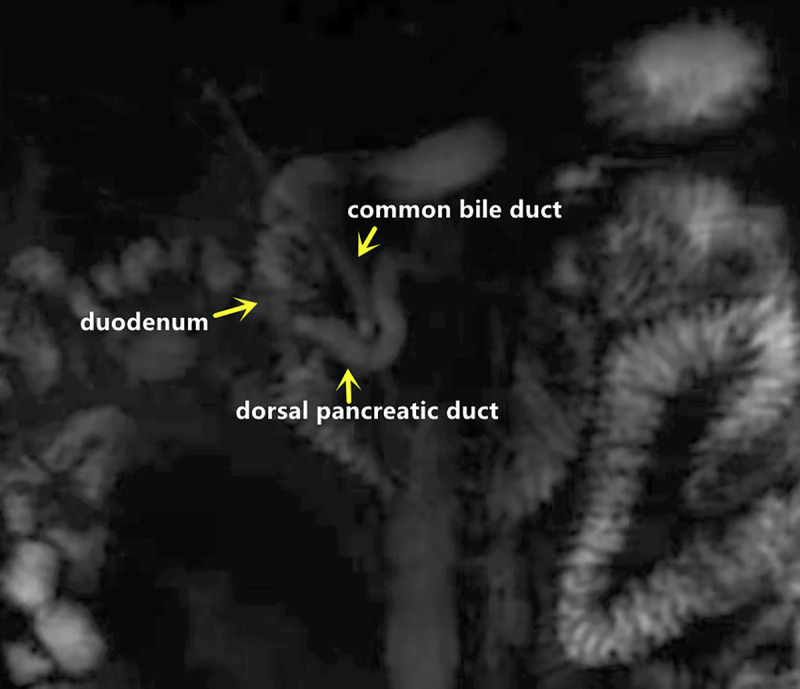 Figure 1
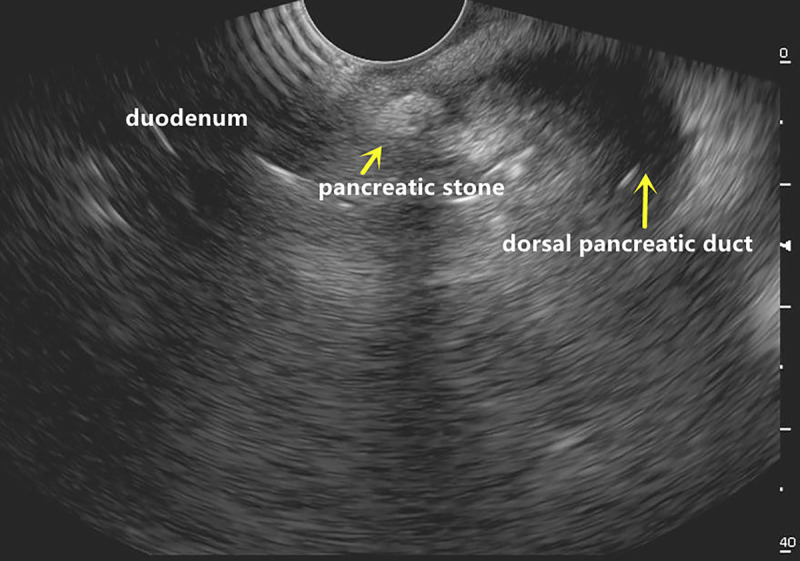 Figure 2
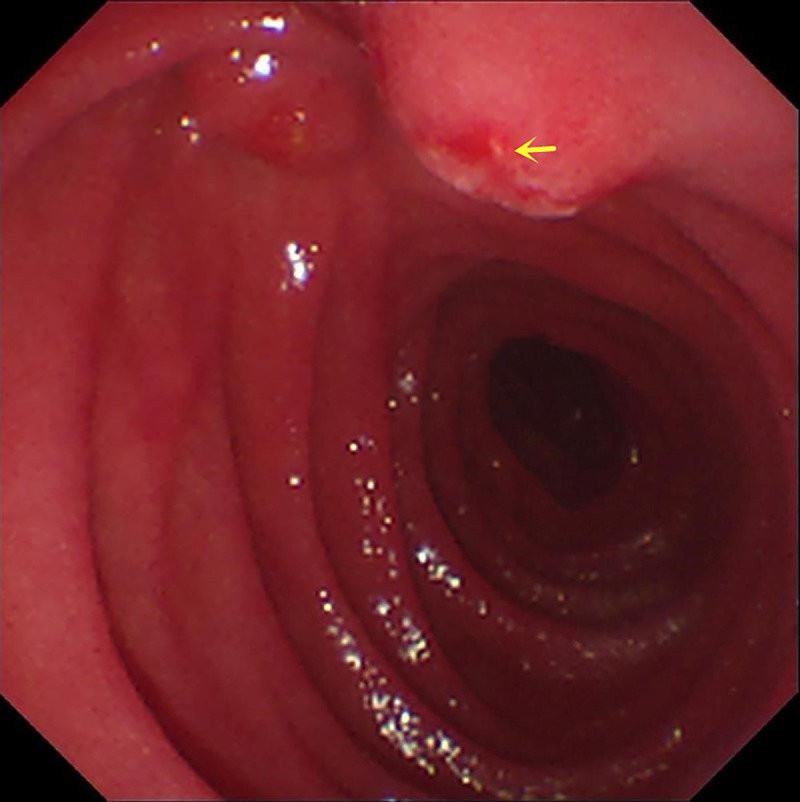 Figure 3
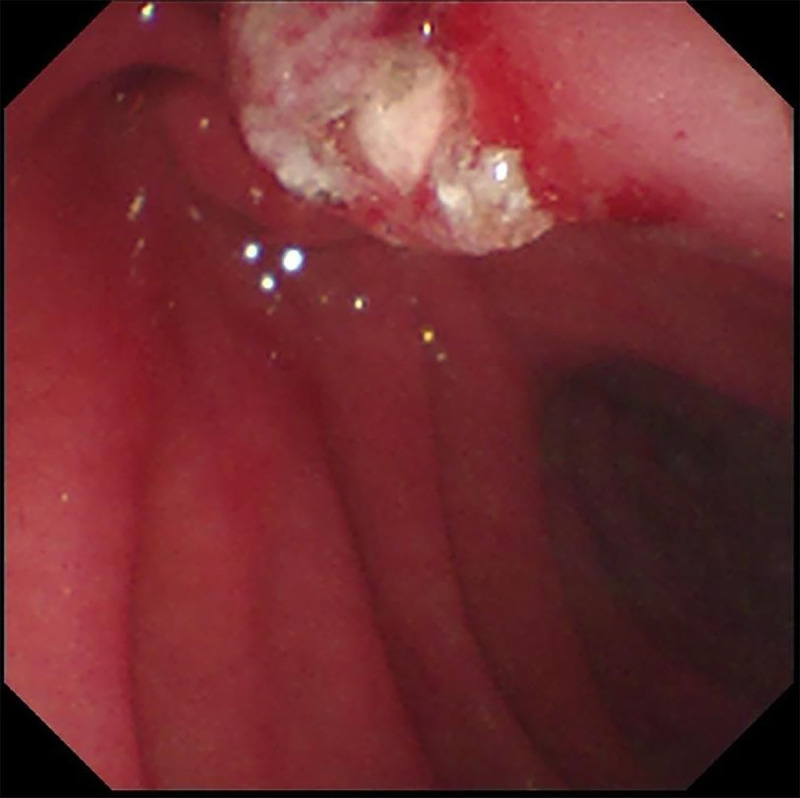 Figure 4
Peer Reviews
No public reviews on file for this paper yet. If you reviewed it on a platform where reviews are public (OpenReview, ICLR, NeurIPS, ICML), you can paste yours below so the community can read it here.
Videos
No videos yet. Explain this paper in a talk, walkthrough, or lecture? Add one.
Taxonomy
TopicsPancreatitis Pathology and Treatment · Pancreatic and Hepatic Oncology Research · Gastrointestinal disorders and treatments
Here we report a rare case of recurrent acute pancreatitis in a 34-year-old man caused by pancreatic stone impaction at the minor papilla rather than pancreas divisum (PD). Initial magnetic resonance cholangiopancreatography identified PD without pancreatic stones [Figure 1], but subsequent EUS revealed a protruding minor papilla and complete PD, with a 5 × 3-mm pancreatic stone impacted at the orifice of the dorsal pancreatic duct and diffuse ductal dilation [Figure 2]. Cannulation of minor papilla under endoscopic retrograde cholangiopancreatography failed, and the whitish stone was found embedded within the minor papilla [Figure 3]. A dual-knife papillotomy on minor papilla at the 12-o’clock position was used, exposing the impacted pancreatolith [Figure 4]. Precut papillotomy of minor papilla in the 4-o’clock direction was additionally performed, and the stone was successfully removed [Video 1]. The dorsal pancreatic duct was then cannulated easily, and a pancreatic stent was inserted into the duct for drainage. No postoperative complications occurred. Over 6 months of follow-up, the patient’s quality of life remained good.
This case also highlights that EUS has a superior diagnostic accuracy over magnetic resonance cholangiopancreatography for recurrent acute pancreatitis etiologies,^[1]^ and the dual-knife precut papillotomy technique is safe and effective in such clinical conditions.^[2]^
Supplementary Videos
Video 1. Endoscopic extraction of a pancreatic stone encased in the minor papilla using dual-knife precut papillotomy technique allowing successful cannulation of the dorsal pancreatic duct. Videos are available only at the official website of the journal (www.eusjournal.com).
Acknowledgments
None.
Source of Funding
Dr Yan Chen is supported by the National Natural Science Foundation of China (No. 82200718).
Ethical Approval
This case was conducted in accordance with the ethical standards described in the latest revision of the Declaration of Helsinki.
Informed Consent
Informed consent for patient participation and publication was received from the patient.
Conflicts of interest
The authors declare that they have no financial conflict of interest with regard to the content of this report.
Author Contributions
Yan Chen and Jie Chen did the concept and design. Yan Chen did the acquisition of data. Shi-Han Chen and Jia-Su Li performed the analysis and interpretation of data. Shi-Han Chen and Jia-Su Li wrote and reviewed the manuscript. Wei Zhu, Yan Chen, and Jie Chen reviewed the manuscript and performed study supervision.
Data Availability Statement
All data relevant to the case are included in the article.
The reference list from the paper itself. Each links out to its DOI / PubMed record.
- 1Wan J Ouyang Y Yu C, . Comparison of EUS with MRCP in idiopathic acute pancreatitis: a systematic review and meta-analysis. Gastrointest Endosc 2018;87:1180–1188.29225082 10.1016/j.gie.2017.11.028 · doi ↗ · pubmed ↗
- 2CotéGA Durkalski-Mauldin VL Serrano J, . Sphincterotomy for acute recurrent pancreatitis randomized trial: rationale, methodology, and potential implications. Pancreas 2019;48:1061–1067.31404020 10.1097/MPA.0000000000001370 PMC 6699897 · doi ↗ · pubmed ↗