Estimating the motor exploration in reinforcement learning
Anja T. Zai, Corinna Lorenz, Shakana Srikantharajah, Nicolas Giret, Richard H.R. Hahnloser

TL;DR
The paper introduces a new method to estimate motor exploration in reinforcement learning, inspired by brain organization and tested in songbirds.
Contribution
A latent RL agent is introduced that estimates optimal exploration and matches brain-generated motor variability in learning.
Findings
Latent RL aligns with non-optimal learning in songbirds and humans.
Exploration can be estimated from single-trial behavioral data.
Estimated explorations match brain variability driving learning.
Abstract
What exploration strategies do animals use to learn motor skills? Reinforcement learning (RL) theory is a powerful framework to study motor learning, but provides no guidance for estimating motor exploration – the behavioral component aimed at discovering better strategies. We address this gap by taking inspiration from the brain’s modular organization and postulating a latent learner that explores by injecting an additive source of ideal randomness into behavior. Assuming the learner is ignorant of other motor components, evolutionary fitness argues that these should display mainly non-ideal variability. We verify this behavioral decomposition in songbirds undergoing vocal pitch conditioning. The estimated vocal explorations account for the motor contribution of a cortico-basal ganglia pathway, while other components capture birds’ suboptimal learning trajectories. Latent RL therefore…
Click any figure to enlarge with its caption.
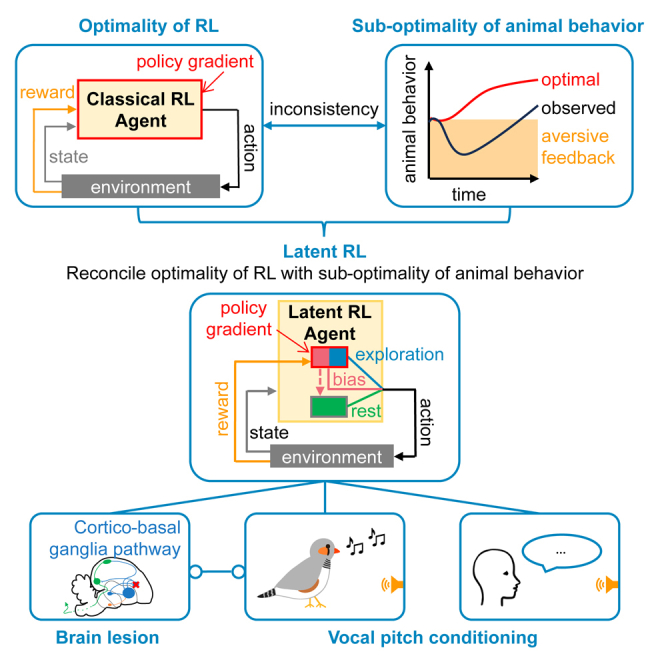 Figure 1
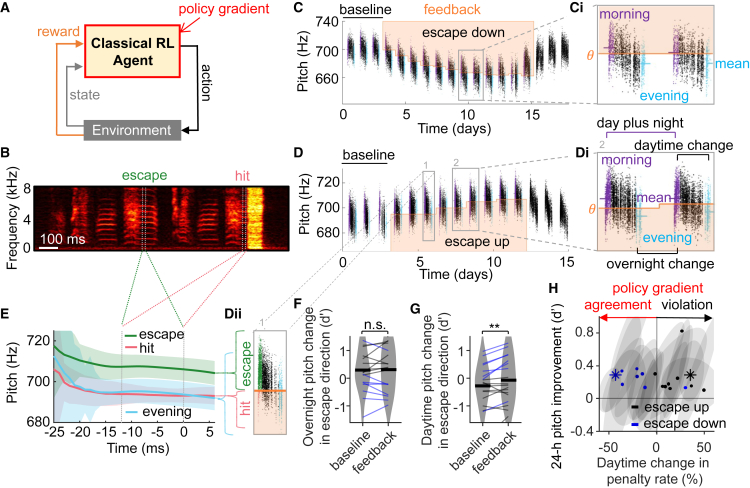 Figure 2
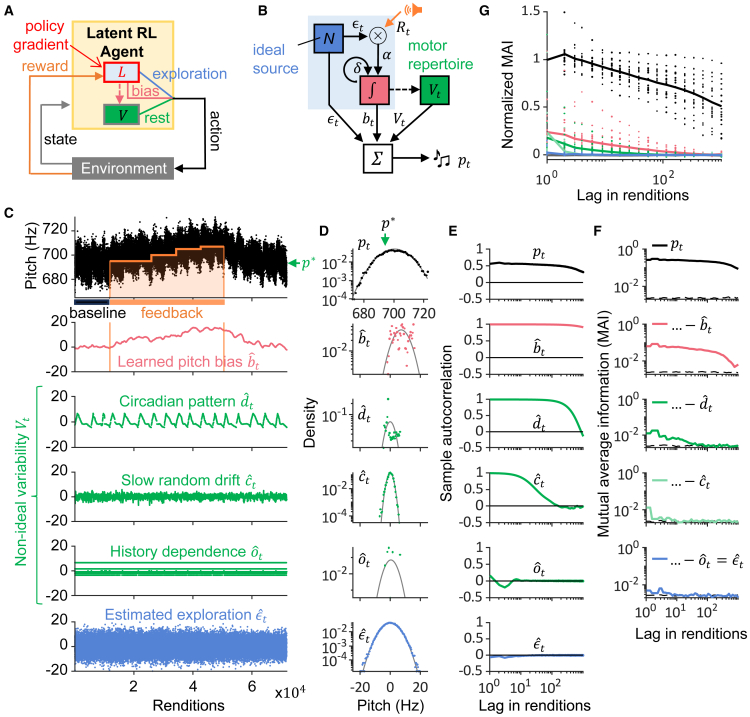 Figure 3
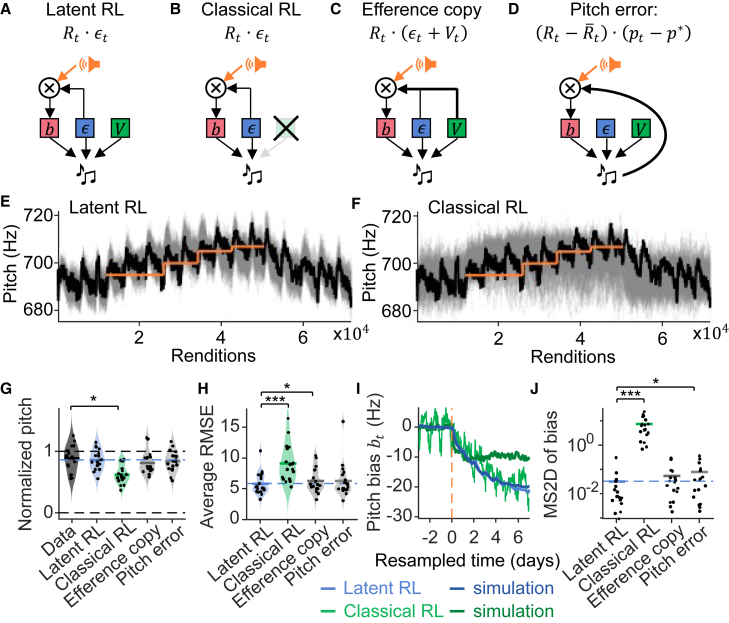 Figure 4
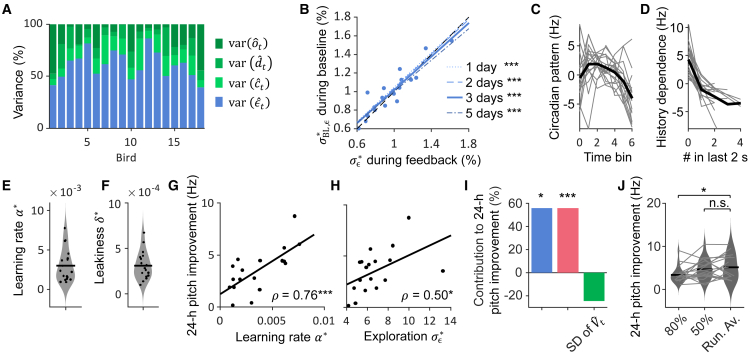 Figure 5
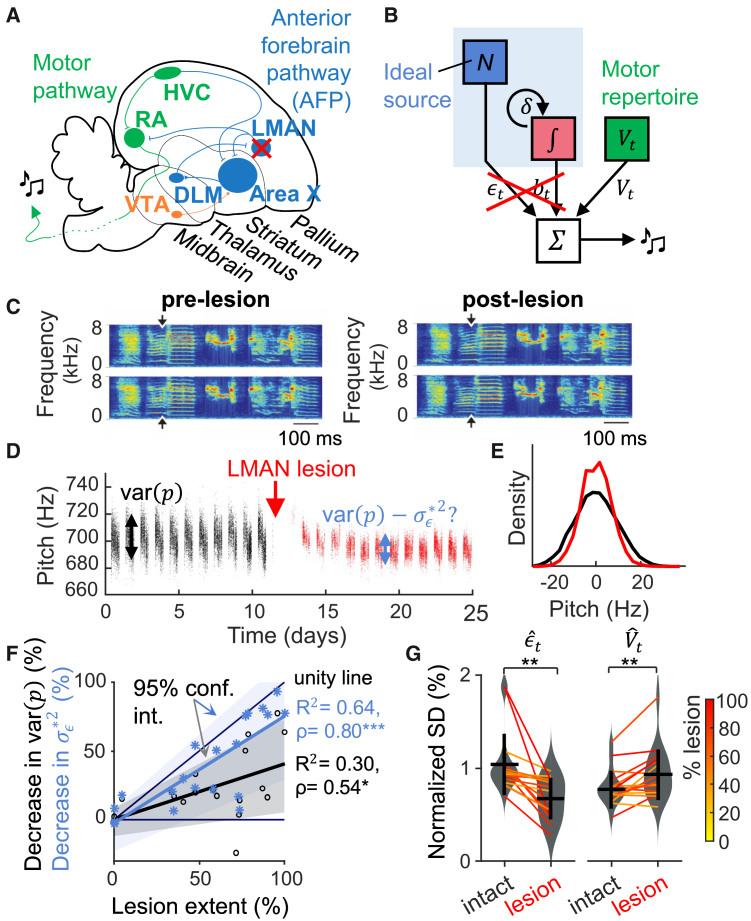 Figure 6
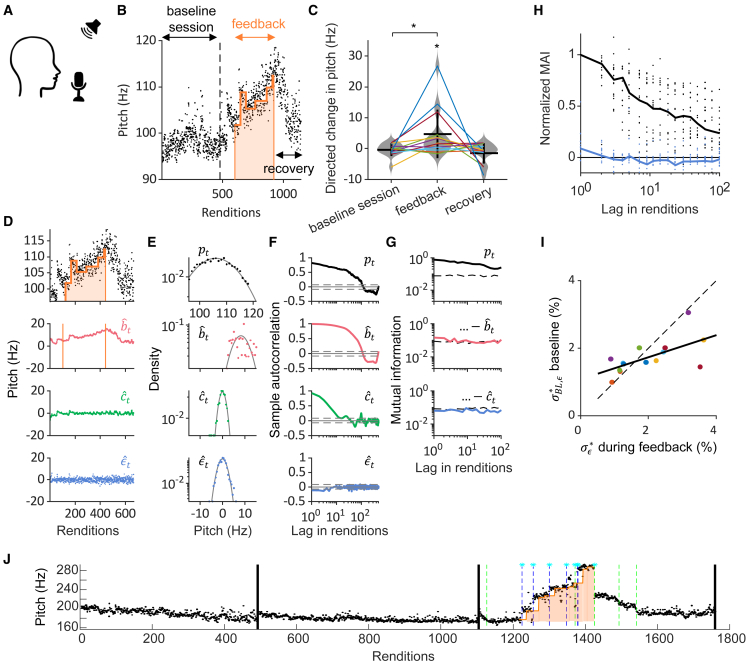 Figure 7
Peer Reviews
No public reviews on file for this paper yet. If you reviewed it on a platform where reviews are public (OpenReview, ICLR, NeurIPS, ICML), you can paste yours below so the community can read it here.
Videos
No videos yet. Explain this paper in a talk, walkthrough, or lecture? Add one.
Taxonomy
TopicsAnimal Vocal Communication and Behavior · Animal Behavior and Reproduction · Neurobiology and Insect Physiology Research