Different Fc scaffolds enhance the breadth of in vitro neutralization of the same Fab against different Rotavirus strains
Mabel Rocio Miranda-Echagüe, Giacomo Vezzani, Elena Morandi, Melania Della Peruta, Mirko Scordio, Teresa Anne Clarisse Reyes, Davide Oldrini, Miren Iturriza-Gómara, Rebecca Jo Loomis, Omar Rossi

TL;DR
Different antibody scaffolds affect how well antibodies neutralize various rotavirus strains in lab tests.
Contribution
This study shows that antibody scaffolds influence neutralization breadth against different rotavirus strains.
Findings
mAbs targeting the same epitope showed different neutralization activities in various scaffolds.
IgA scaffolds demonstrated enhanced breadth of neutralization compared to other scaffolds.
Scaffold choice impacts antibody functionality against homologous and heterologous rotavirus strains.
Abstract
Rotaviruses are the primary cause of severe dehydrating diarrhea in infants and young children globally. Currently, several oral rotavirus vaccines are available; however, they have shown reduced effectiveness and quicker waning of protection in low- and middle-income countries (LMICs) compared to high-income countries (HICs). Both neutralizing and non-neutralizing antibodies against the middle (VP6) and outer layer capsid proteins (VP4 and VP7) are detected after infection, with higher titers being linked to disease protection. Historically, human derived rotavirus-specific monoclonal antibodies (mAbs) have been produced in an IgG1 scaffold, irrespective of whether their native scaffold was IgG or IgA. To explore the impact of antibody scaffolds on their functional activity we expressed mAbs targeting epitopes on VP8* or VP7 viral proteins in IgG1, IgG2, IgG3, IgG4, IgA1, and IgA2…
Genes, proteins, chemicals, diseases, species, mutations and cell lines named across the full text — each resolved to its canonical identifier and authoritative record.
Click any figure to enlarge with its caption.
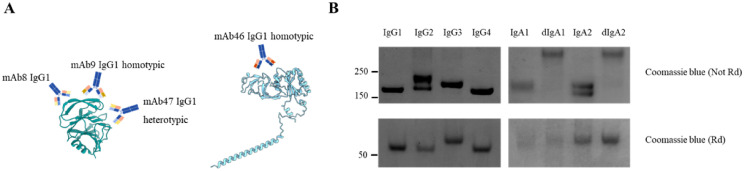 Figure 1
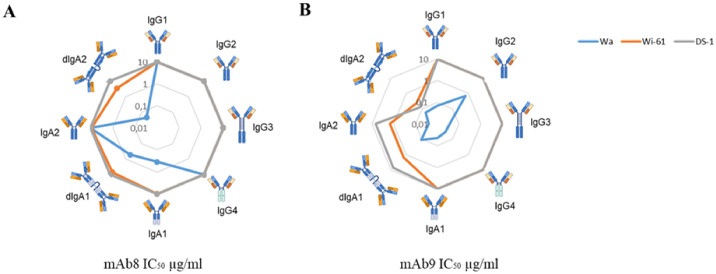 Figure 2
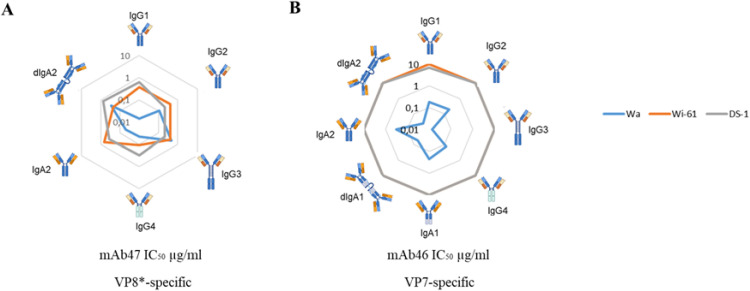 Figure 3
Peer Reviews
No public reviews on file for this paper yet. If you reviewed it on a platform where reviews are public (OpenReview, ICLR, NeurIPS, ICML), you can paste yours below so the community can read it here.
Videos
No videos yet. Explain this paper in a talk, walkthrough, or lecture? Add one.
Taxonomy
TopicsViral gastroenteritis research and epidemiology · Transgenic Plants and Applications · Respiratory viral infections research