Quadriceps force and medio-laterally directed joint force during knee flexion in a personalized patellofemoral joint model
Annabelle Weigert, Leandra Bauer, Hanna Jacobi, Matthias Woiczinski, Antje Dinauer, Boris M. Holzapfel, Peter E. Müller, Thomas R. Niethammer

TL;DR
This study uses MRI data to create personalized knee models and analyzes how anatomical differences affect patellofemoral joint forces during a simulated squat.
Contribution
The study introduces a method to integrate MRI-derived knee geometries into musculoskeletal simulations for analyzing patellofemoral joint loading.
Findings
Mediolateral patellofemoral joint reaction force increased with knee flexion, peaking between 7 and 67 N/kg BW.
A model with Dejour type B trochlear dysplasia showed the highest lateral loading and quadriceps force.
The method enables in-silico analysis of anatomical risk factors for patellofemoral instability.
Abstract
Patellofemoral instability (PFI) is a multifactorial condition influenced by complex interactions between anatomical structures and dynamic stabilizers. Accurate assessment of mediolateral patellofemoral joint loading remains challenging, particularly during physiologically relevant joint angles simulated under controlled kinematic conditions. Anatomy-based individualized musculoskeletal models provide an in-silico approach to investigate these biomechanical parameters, such as the loading patterns. The purpose of this study was to develop individualized musculoskeletal knee models based on MRI-derived anatomical data from cadaveric specimens and to quantify the mediolateral component of the patellofemoral joint reaction force during a standardized, computer-driven squat simulation. Quadriceps muscle forces were estimated to assess the demand on dynamic stabilizers. : MRI scans from…
Genes, proteins, chemicals, diseases, species, mutations and cell lines named across the full text — each resolved to its canonical identifier and authoritative record.
Click any figure to enlarge with its caption.
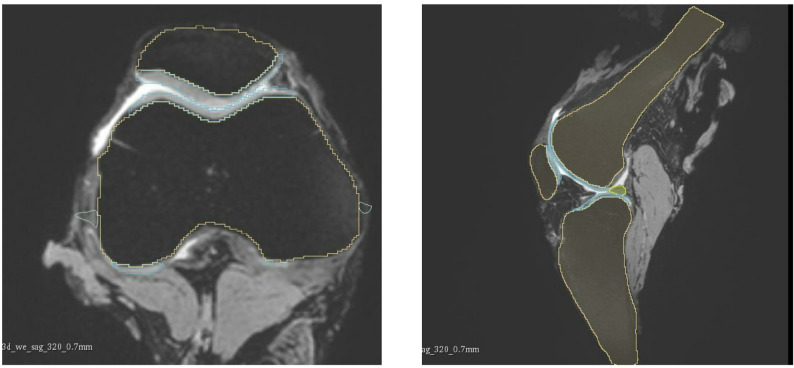 Figure 1
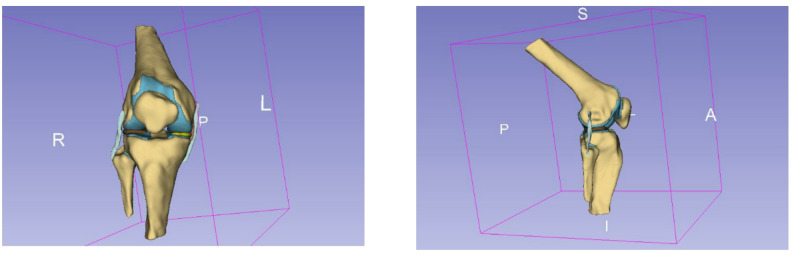 Figure 2
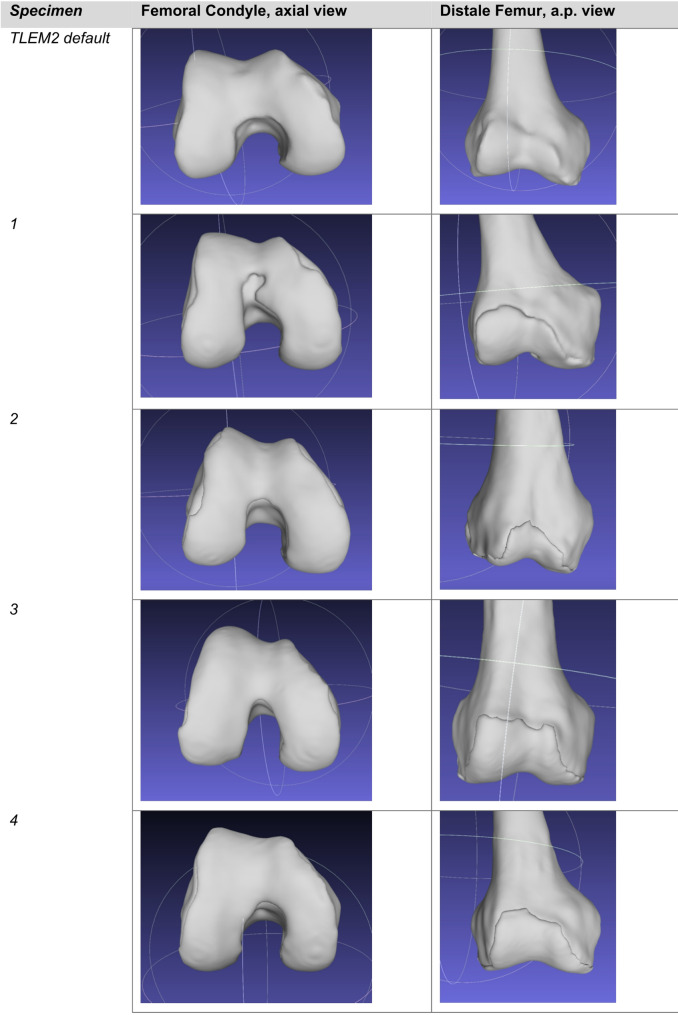 Figure 3
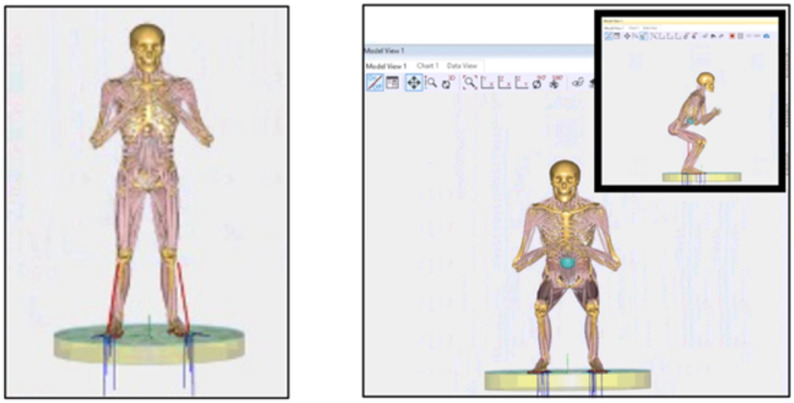 Figure 4
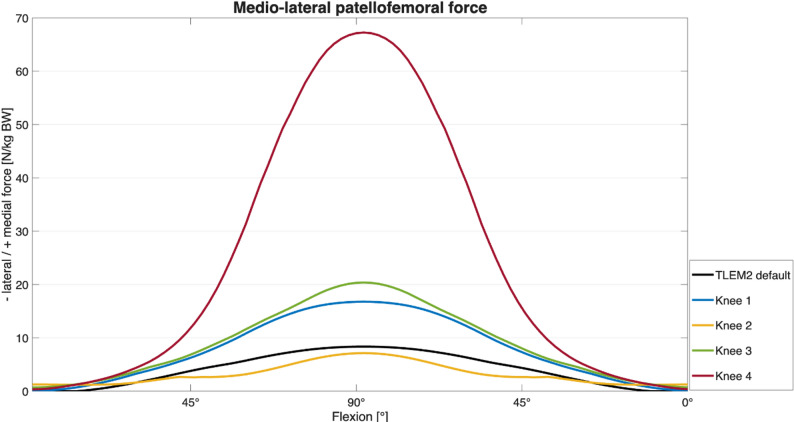 Figure 5
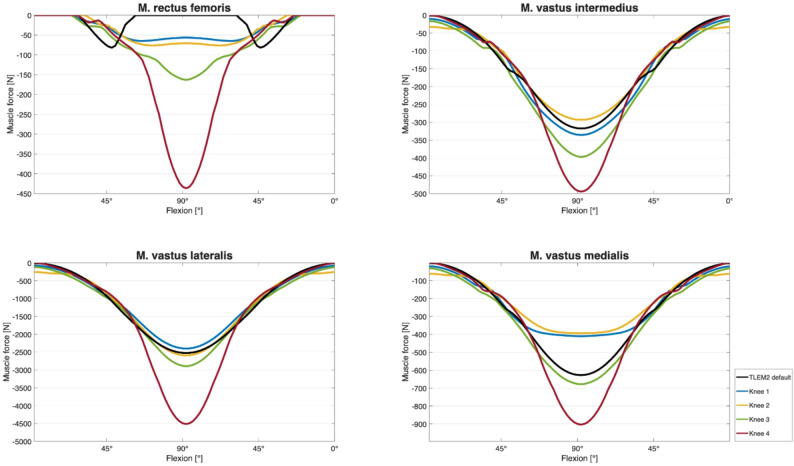 Figure 6
Peer Reviews
No public reviews on file for this paper yet. If you reviewed it on a platform where reviews are public (OpenReview, ICLR, NeurIPS, ICML), you can paste yours below so the community can read it here.
Videos
No videos yet. Explain this paper in a talk, walkthrough, or lecture? Add one.
Taxonomy
TopicsLower Extremity Biomechanics and Pathologies · Total Knee Arthroplasty Outcomes · Osteoarthritis Treatment and Mechanisms