Endoscopic submucosal dissection for early gastric cancer in the elderly: Spanish multicenter prospective study during initial experience
Maria Moreno-Sanchez, Alberto Herreros de Tejada, Glòria Fernández-Esparrach, Unai Goikoetxea, Enrique Rodriguez de Santiago, Eduardo Albéniz, Joaquin Rodriguez Sánchez, Pablo Miranda Garcia, Oscar Nogales, Hugo Uchima, Alvaro Terán, David Lora-Pablos, Jose Diaz Tasende

TL;DR
This study shows that endoscopic submucosal dissection (ESD) is a safe and effective treatment for early gastric cancer in elderly patients, though survival rates are lower in those over 80 due to comorbidities.
Contribution
The study provides new survival data for elderly Western patients undergoing ESD for early gastric cancer, highlighting risks and outcomes specific to octogenarians.
Findings
Five-year overall survival was 78% in patients in their 70s and 57% in those in their 80s.
ASA-PS ≥ III was the only independent risk factor for lower overall survival in octogenarians.
Delayed bleeding and 30-day mortality were higher in patients aged 80 and older.
Abstract
Data on survival for elderly Western patients undergoing endoscopic submucosal dissection (ESD) for early gastric cancer (EGC) are scarce. A multicenter, prospective, cohort study (2016–2022) was conducted in 26 Spanish hospitals that included patients aged > 70 years treated with ESD for EGC. The primary endpoint was overall survival in octogenarians compared with the previous decade; secondary outcomes included safety and technical success. A total of 217 patients were included, 135 in their 70s (Group A) and 82 in their 80s (Group B). Group B had higher comorbidity (73.2% vs 46.7%; P < 0.001) and greater anticoagulant use (39.5% vs 17.3%; P < 0.001). Technical success and intraprocedural adverse events were similar, but delayed bleeding was higher in Group B (22.8% vs 8.2%; P = 0.003). No intraprocedural deaths occurred, but three patients in Group B (3.6%) died within 30 days (2…
Genes, proteins, chemicals, diseases, species, mutations and cell lines named across the full text — each resolved to its canonical identifier and authoritative record.
Click any figure to enlarge with its caption.
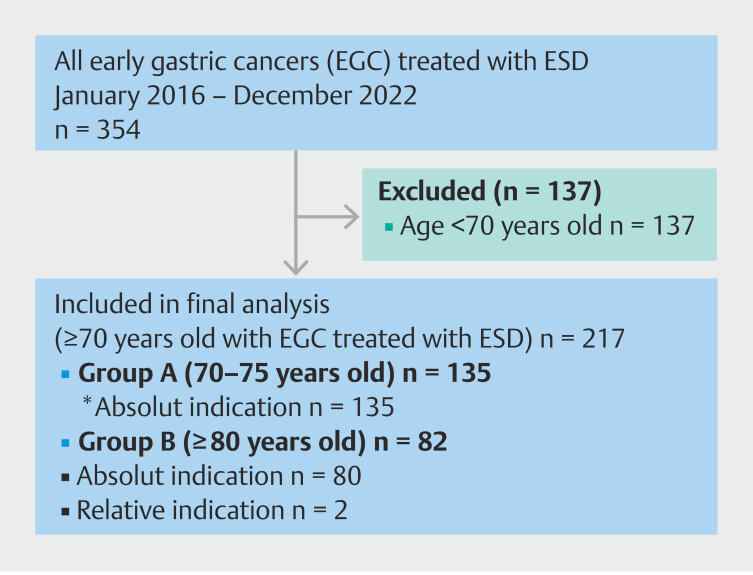 Figure 1
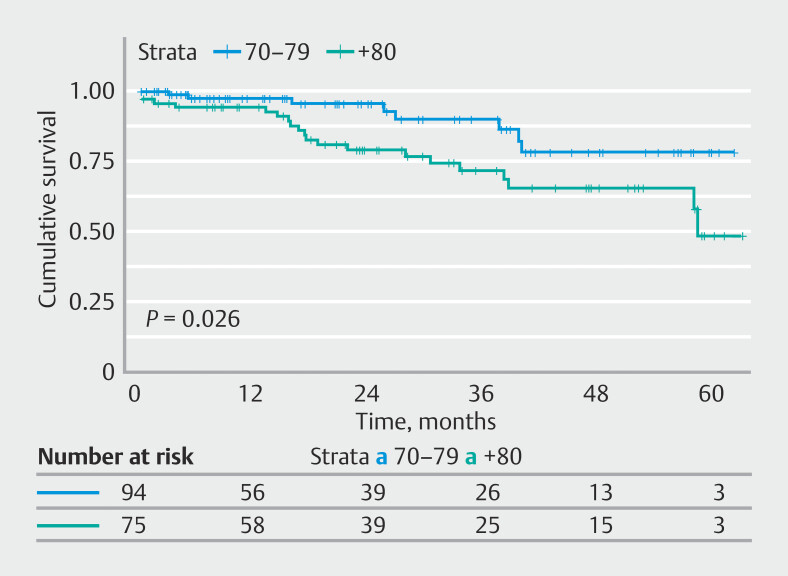 Figure 2
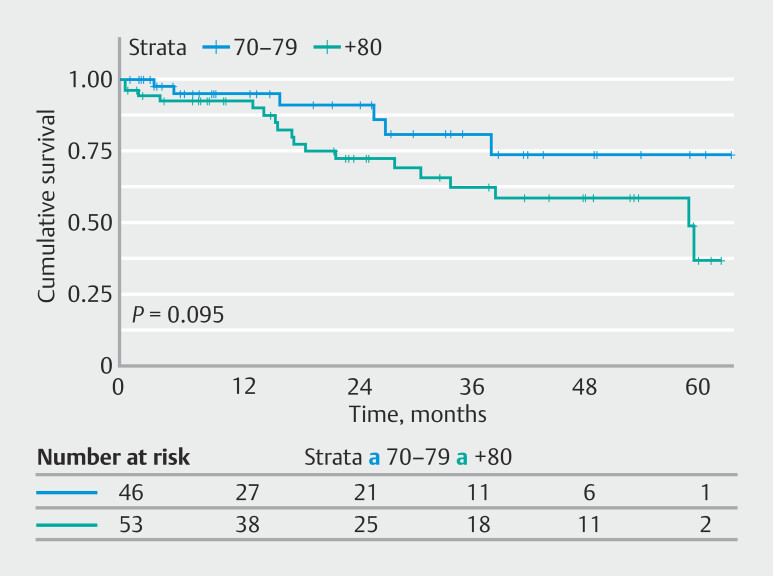 Figure 3
 Figure 4
Peer Reviews
No public reviews on file for this paper yet. If you reviewed it on a platform where reviews are public (OpenReview, ICLR, NeurIPS, ICML), you can paste yours below so the community can read it here.
Videos
No videos yet. Explain this paper in a talk, walkthrough, or lecture? Add one.
Taxonomy
TopicsGastric Cancer Management and Outcomes · Esophageal Cancer Research and Treatment · Gastrointestinal Tumor Research and Treatment