First report of Usutu virus fatal infections in Chilean tinamous (Nothoprocta perdicaria), brahminy starlings (Sturnia pagodarum), and multiple other bird species in zoological gardens and wildlife in the Czech Republic
Jan Kamiš, Veronika Grymová, Petr Suvorov, Luc Tardy, Petr Vrána, Jan Kirner, Soňa Peková, Vladimír Piaček, Miša Škorič, Jan Pokorný, Natalie Rudenko, Martin Palus, Václav Hönig

TL;DR
This study reports the first fatal Usutu virus infections in several bird species in the Czech Republic, highlighting the virus's impact on zoo and wild birds and its public health implications.
Contribution
First documentation of fatal USUV infections in Chilean tinamous, Brahminy starlings, and other birds in the Czech Republic.
Findings
USUV RNA was detected in multiple bird species, including owls, starlings, and tinamous, from zoos and the wild.
Phylogenetic analysis showed all isolates belonged to the Europe 2 genetic lineage with partial geographic clustering.
Serological testing confirmed exposure to USUV and cross-neutralization with WNV in additional birds.
Abstract
The Usutu virus (USUV; Orthoflavivirus, Flaviviridae) is a mosquito-borne pathogen causing fatal neuroinfections in susceptible wild and captive birds, particularly blackbirds, other passerines, and owls. Zoological gardens provide favourable conditions for the circulation of such viruses due to the proximity of diverse species and limited options for prevention. Following the sudden death of several Chilean tinamous kept in the Brno zoological garden, we tested tissues sampled from 22 bird cadavers (from zoos, private owners, and free-living birds) for the presence of USUV and West Nile virus (WNV) RNA using duplex reverse transcription qPCR. Near-complete whole-genome sequences were acquired from positive samples by next-generation sequencing and subjected to phylogenetic analyses. Furthermore, serum samples from additional zoo animals and privately owned birds were screened for…
Genes, proteins, chemicals, diseases, species, mutations and cell lines named across the full text — each resolved to its canonical identifier and authoritative record.
Click any figure to enlarge with its caption.
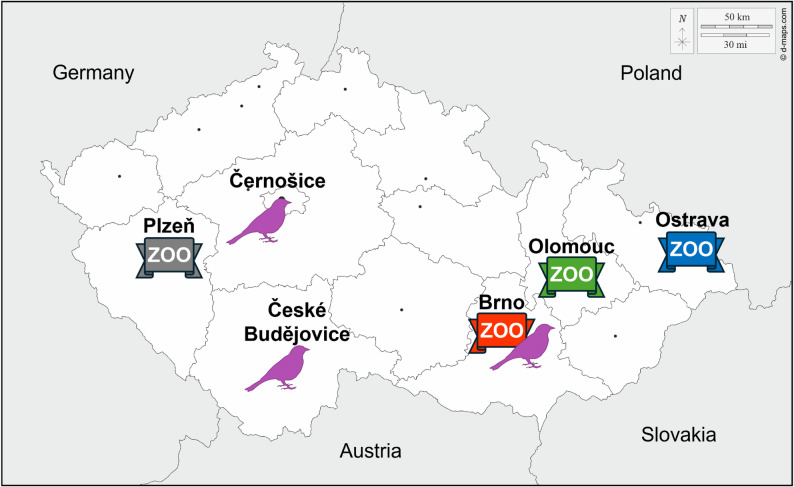 Figure 1
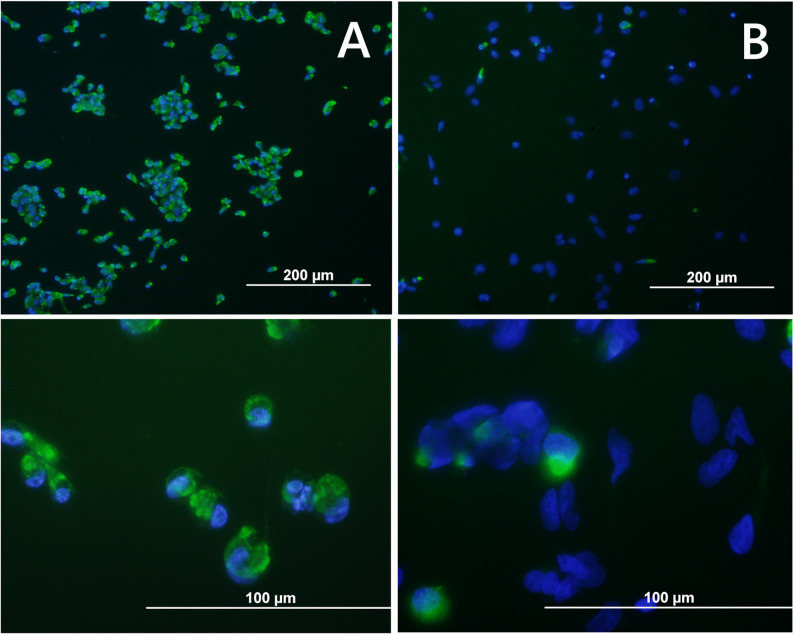 Figure 2
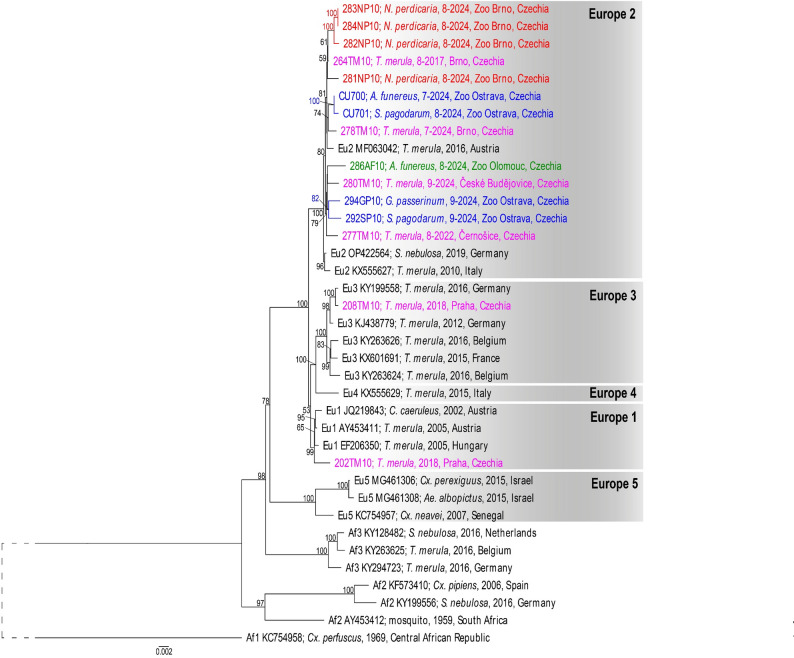 Figure 3
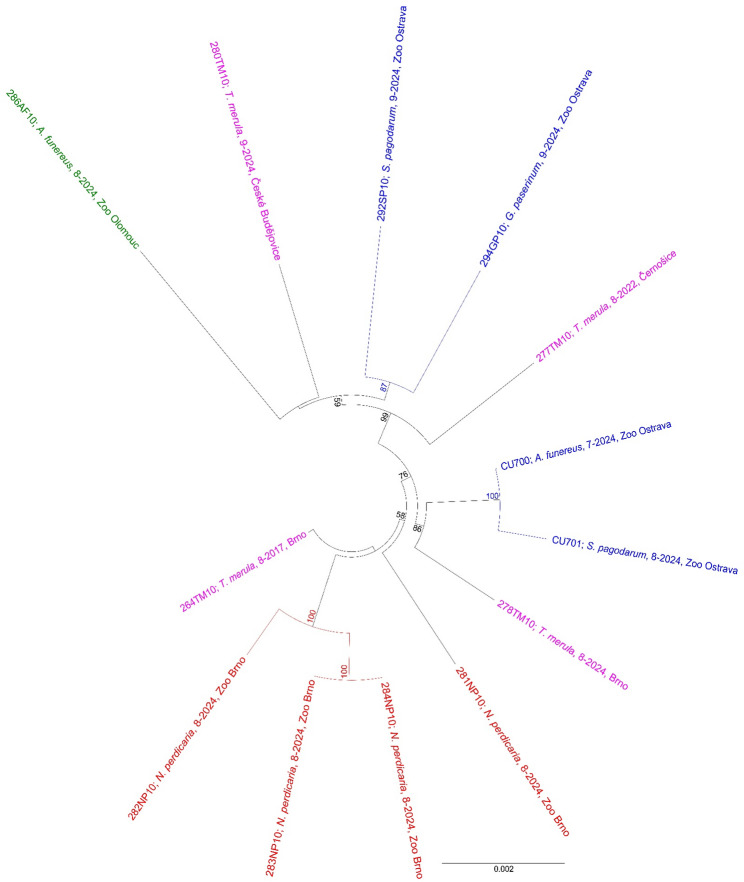 Figure 4
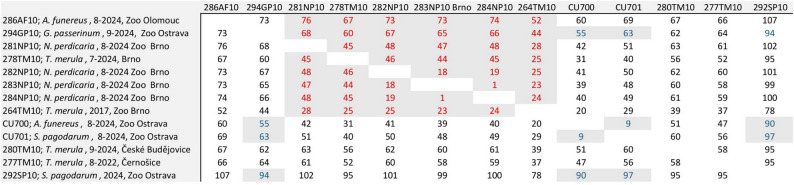 Figure 5
Peer Reviews
No public reviews on file for this paper yet. If you reviewed it on a platform where reviews are public (OpenReview, ICLR, NeurIPS, ICML), you can paste yours below so the community can read it here.
Videos
No videos yet. Explain this paper in a talk, walkthrough, or lecture? Add one.
Taxonomy
TopicsMosquito-borne diseases and control · Invertebrate Immune Response Mechanisms · Vector-borne infectious diseases