What is a normal left ventricular ejection fraction in healthy adults? A meta-analysis of population-based echocardiographic studies
Anne Emilie Morsing, Filip Gnesin, Asya Lyass, Charlotte Andersson

TL;DR
This study determines normal left ventricular ejection fraction (LVEF) ranges in healthy adults, finding that an LVEF below 50% is unlikely to be normal.
Contribution
The study provides updated normal LVEF thresholds by sex and race/ethnicity using a meta-analysis of population-based echocardiographic data.
Findings
The pooled mean LVEF was 62.8% with lower normal limits of 51.8% and upper limits of 73.2%.
Women had higher LVEF (63.7%) than men (61.9%), with lower normal limits of 52.7% and 51.7%, respectively.
An LVEF below 50% is highly unlikely to be normal across all demographic subgroups.
Abstract
Transthoracic echocardiography derived left ventricular ejection fraction (LVEF) is a cornerstone in heart failure risk prevention. However, the lower limits of normal LVEF remains imprecisely defined. We aimed to define normal LVEF ranges by sex, age group, and self-reported race/ethnicity using data from population-based echocardiographic studies. We systematically searched MEDLINE for studies published between January 1, 2000, and January 3, 2025, that reported the mean and standard deviation of LVEF measured by 2D or 3D echocardiography in healthy, community-based adult populations. In 10 studies (n = 10,427; female sex, 48%), the pooled mean LVEF was 62.8% (95% confidence interval, 61.0%–64.7%), with estimated lower and upper normal limits of 51.8% and 73.2%, respectively. Women had higher mean LVEF (63.7%) than men (61.9%), with corresponding lower normal limits of 52.7% and…
Genes, proteins, chemicals, diseases, species, mutations and cell lines named across the full text — each resolved to its canonical identifier and authoritative record.
Click any figure to enlarge with its caption.
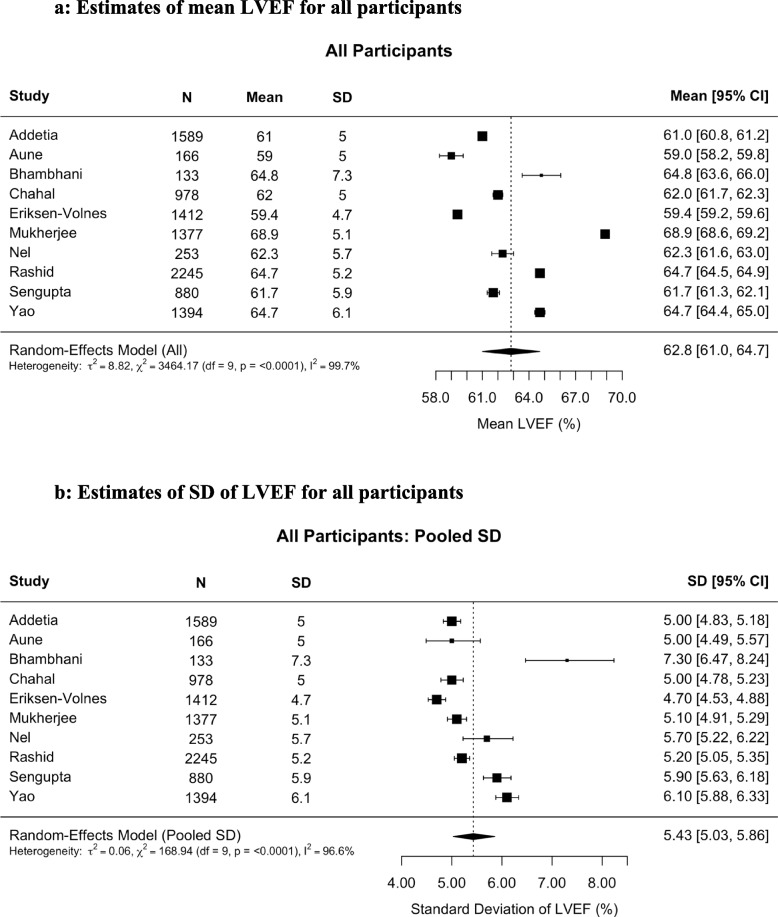 Figure 1
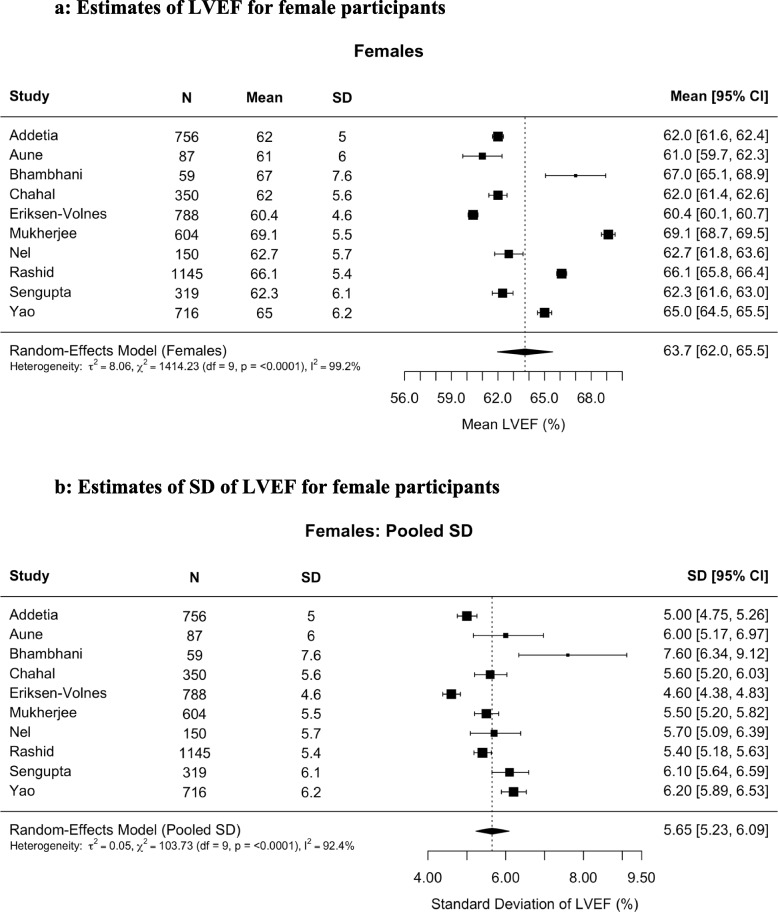 Figure 2
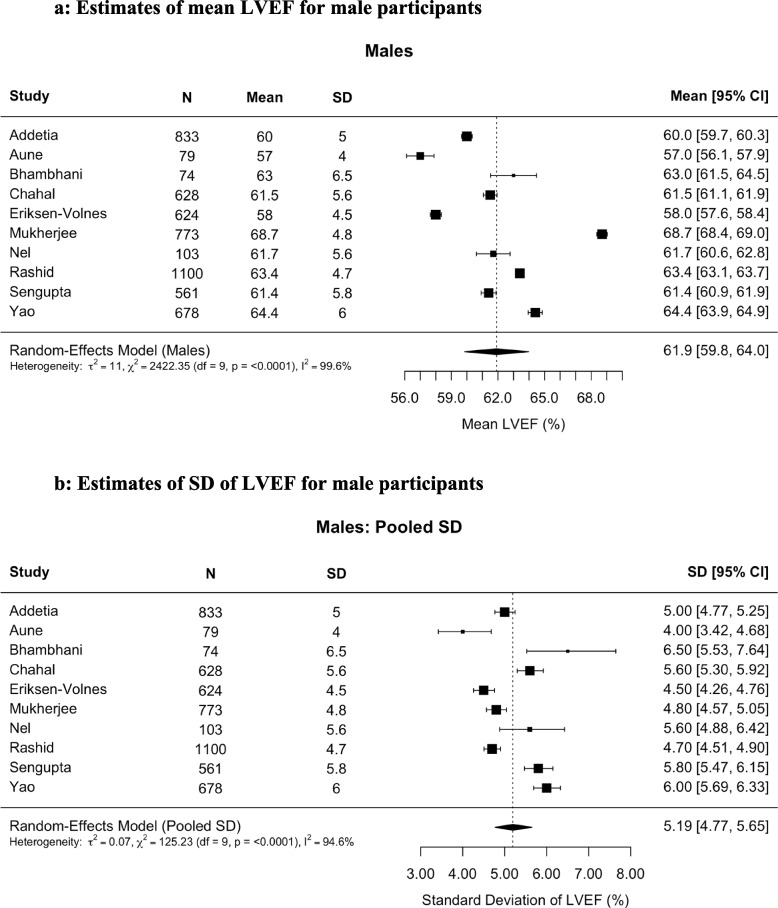 Figure 3
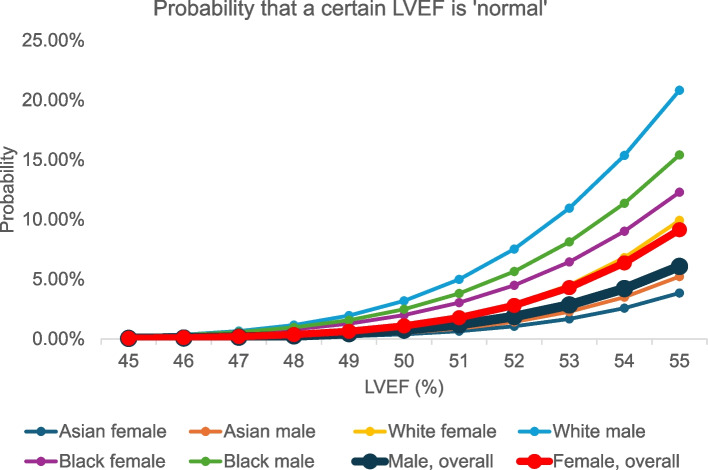 Figure 4
Peer Reviews
No public reviews on file for this paper yet. If you reviewed it on a platform where reviews are public (OpenReview, ICLR, NeurIPS, ICML), you can paste yours below so the community can read it here.
Videos
No videos yet. Explain this paper in a talk, walkthrough, or lecture? Add one.
Taxonomy
TopicsCardiovascular Function and Risk Factors · Cardiac Imaging and Diagnostics · Pulmonary Hypertension Research and Treatments