Pediatric Graves’ orbitopathy: TRAb and FT-3 are also prognostic factors in children—A tertiary center study
Karim Al-Ghazzawi, Michael Oeverhaus, Arber Rama, Cordula Kiewert, Nikolaos Bechrakis, Ying Chen, Inga Neumann, Anja Eckstein

TL;DR
This study finds that FT-3 and TRAb levels predict remission in children with Graves’ orbitopathy, suggesting thyroidectomy may benefit those with high levels.
Contribution
The study identifies FT-3 and TRAb as novel prognostic factors in pediatric Graves’ orbitopathy and suggests thyroidectomy improves outcomes in high-risk patients.
Findings
Pediatric Graves’ orbitopathy typically presents with milder symptoms than adult cases.
High FT-3 or TRAb levels at diagnosis are linked to lower remission rates in children.
Thyroidectomy leads to faster TRAb normalization and higher remission rates in pediatric patients.
Abstract
Graves’ orbitopathy (GO) is an autoimmune disease of the orbit that occurs most often in relation to autoimmune. The clinical picture varies and is dependent on many risk factors, especially age, antibody levels and the quality of control of thyroid function. This study aimed to (1) compare the clinical characteristics of pediatric and adult Graves’ orbitopathy (GO), (2) identify factors associated with remission in pediatric GO, and (3) assess the influence of thyroid treatment modality on TRAb dynamics in pediatric patients. We reviewed the medical records of all pediatric patients with GO (< 18 years) and compared the results with those of a random sample of 482 (18–50 years old) adult patients from the Graves’ Orbitopathy Database (GODE), which includes 4260 patients from our tertiary referral center. A subcohort analysis of pediatric GO patients receiving definitive (surgical)…
Genes, proteins, chemicals, diseases, species, mutations and cell lines named across the full text — each resolved to its canonical identifier and authoritative record.
Click any figure to enlarge with its caption.
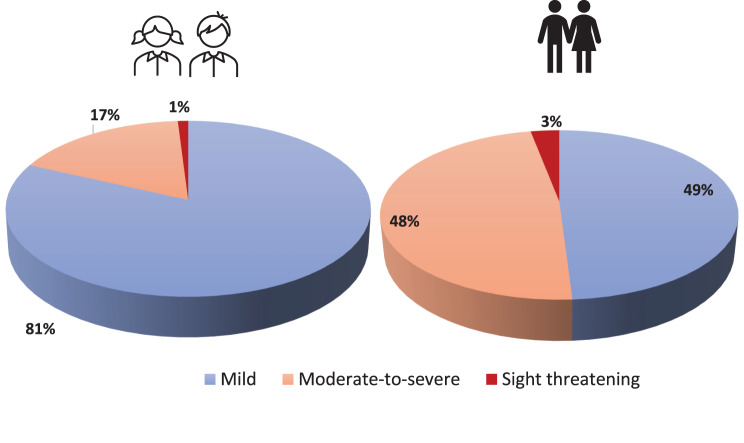 Figure 1
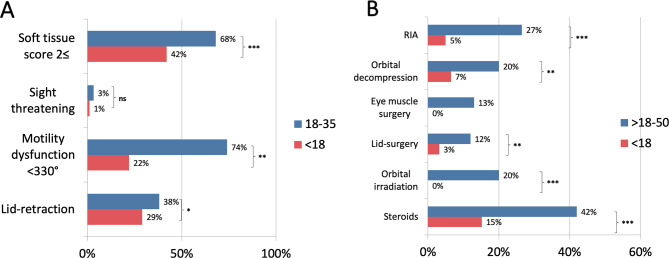 Figure 2
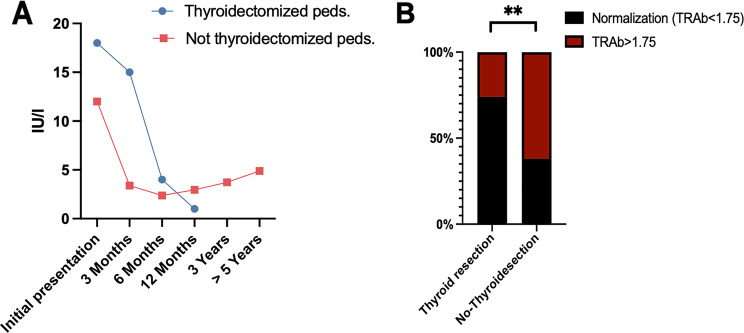 Figure 3
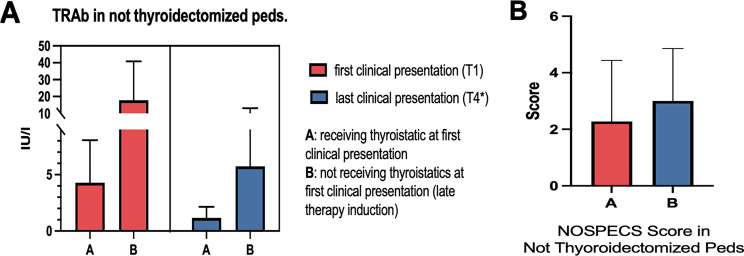 Figure 4
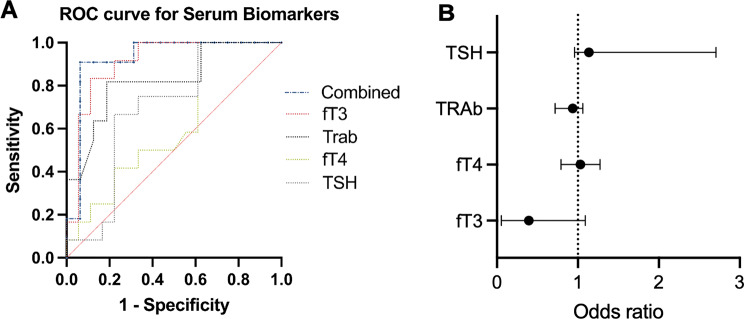 Figure 5
Peer Reviews
No public reviews on file for this paper yet. If you reviewed it on a platform where reviews are public (OpenReview, ICLR, NeurIPS, ICML), you can paste yours below so the community can read it here.
Videos
No videos yet. Explain this paper in a talk, walkthrough, or lecture? Add one.
Taxonomy
TopicsOphthalmology and Eye Disorders · IgG4-Related and Inflammatory Diseases · Vestibular and auditory disorders