Informing the redesign of psychiatric seclusion rooms: a mixed-methods pre-evaluation with individuals with lived experience
Leonie Ascone, Candelaria Mahlke, Nour Tawil, Larissa Samaan, Martin Frisch, Lena Nugent, Rebecca Nixdorf, Florian Börncke, Daniel Lüdecke, Rabea Fischer, Nora Bach, Cindy Hackbarth, Timothy McCall, Jürgen Gallinat, Simone Kühn

TL;DR
People with experience of psychiatric seclusion prefer calming blue and green walls and nature imagery over sterile designs, suggesting these could improve well-being in seclusion rooms.
Contribution
The study introduces participatory pre-evaluation of seclusion room designs using mixed methods and lived experience feedback.
Findings
Nature-themed wallpapers and blue/green walls were rated as more restorative and less stressful than neutral or sterile designs.
Participants emphasized the need for calm, homelike environments and transparent communication in seclusion room design.
Abstract
In acute psychiatric inpatient settings, where perception is altered and emotional vulnerability is heightened, many facilities use coercive seclusion rooms for safety. This practice has been increasingly criticized for its psychological impact. While architectural guidelines emphasize human-centered and biophilic design to support well-being, empirical evidence on how design features in this specific setting affect patients remains limited. This mixed-methods study examined how individuals with lived experience of coercive isolation in seclusion rooms (N = 30) perceived different wall designs. The participants viewed ten digitally rendered images of a to-be-redesigned seclusion room, including furniture, varying in wall design (six nature-themed images, three wall colors: blue, green, beige; and a white empty control room) and rated each on restfulness, stress, liking, and overwhelm.…
Genes, proteins, chemicals, diseases, species, mutations and cell lines named across the full text — each resolved to its canonical identifier and authoritative record.
Click any figure to enlarge with its caption.
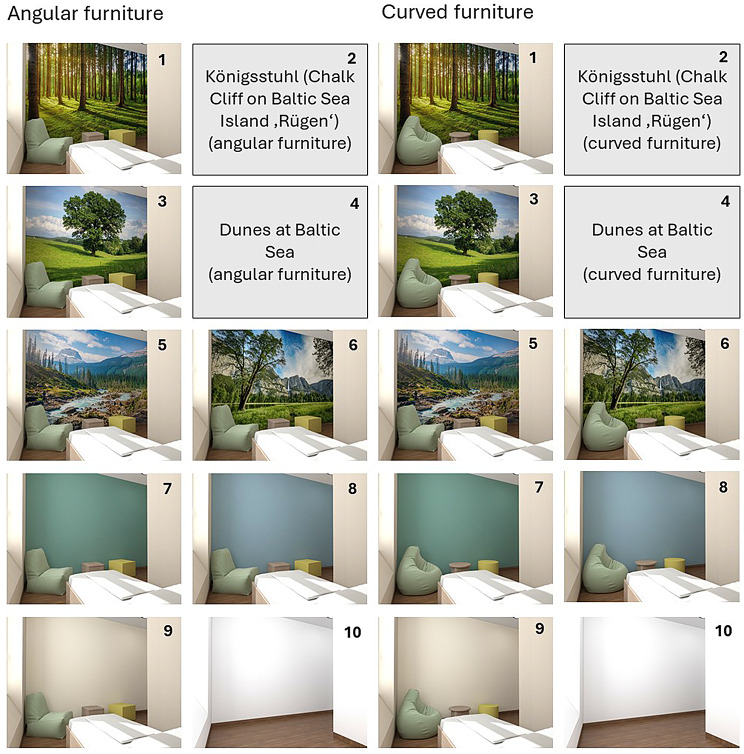 Figure 1
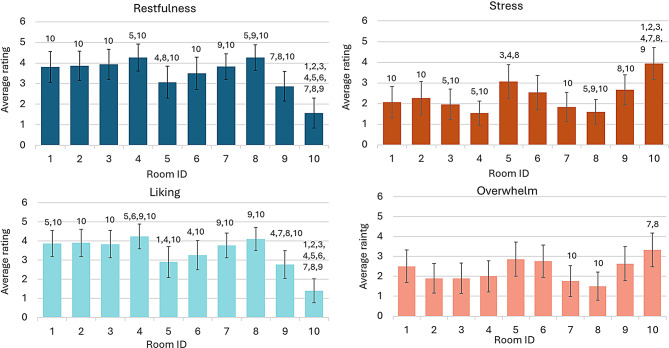 Figure 2
Peer Reviews
No public reviews on file for this paper yet. If you reviewed it on a platform where reviews are public (OpenReview, ICLR, NeurIPS, ICML), you can paste yours below so the community can read it here.
Videos
No videos yet. Explain this paper in a talk, walkthrough, or lecture? Add one.
Taxonomy
TopicsUrban Green Space and Health · Healthcare Decision-Making and Restraints · Art Therapy and Mental Health