Human 3D liver spheroids support productive infection of a novel tick-borne phenuivirus
Wenbo Xu, Liyan Sui, Nan Liu, Lesley Bell-Sakyi, Yicheng Zhao, Yuanzhi Wang, Yinghua Zhao, Changfeng Zhu, Quan Liu

TL;DR
A new tick-borne virus, Mukawa virus, was studied using human liver spheroids, revealing its potential threat to human health and the need for further evaluation.
Contribution
The study introduces a human 3D liver spheroid model that supports productive infection of a novel tick-borne virus and demonstrates its pathogenic potential.
Findings
The adapted Mukawa virus strain caused severe cytopathic effects and 100% mortality in suckling mice.
Human liver spheroids infected with the virus showed impaired synthetic functions and increased inflammation.
Epidemiological screening detected low-level exposure to the virus in tick-bitten patients in China.
Abstract
The identification of novel tick-borne viruses, such as Mukawa virus (MKWV), underscores a growing need to assess their potential public health risks. In this study, we isolated the MKWV strain HLJ1 from Ixodes persulcatus ticks. While this initial isolate demonstrated limited replication in mammalian cell lines and mice, it productively infected human primary cell-derived 3D spheroids. Serial passaging in this model significantly enhanced viral titers, suggesting adaptive evolution. The resulting adapted strain exhibited increased virulence, causing pronounced cytopathic effects in Vero cells, infecting diverse mammalian cell types, and leading to 100% mortality in suckling mice, with associated liver inflammation and damage. These pathogenic outcomes were recapitulated in the 3D human liver spheroids, which showed impaired cellular synthetic functions, cell death, and heightened…
Genes, proteins, chemicals, diseases, species, mutations and cell lines named across the full text — each resolved to its canonical identifier and authoritative record.
Click any figure to enlarge with its caption.
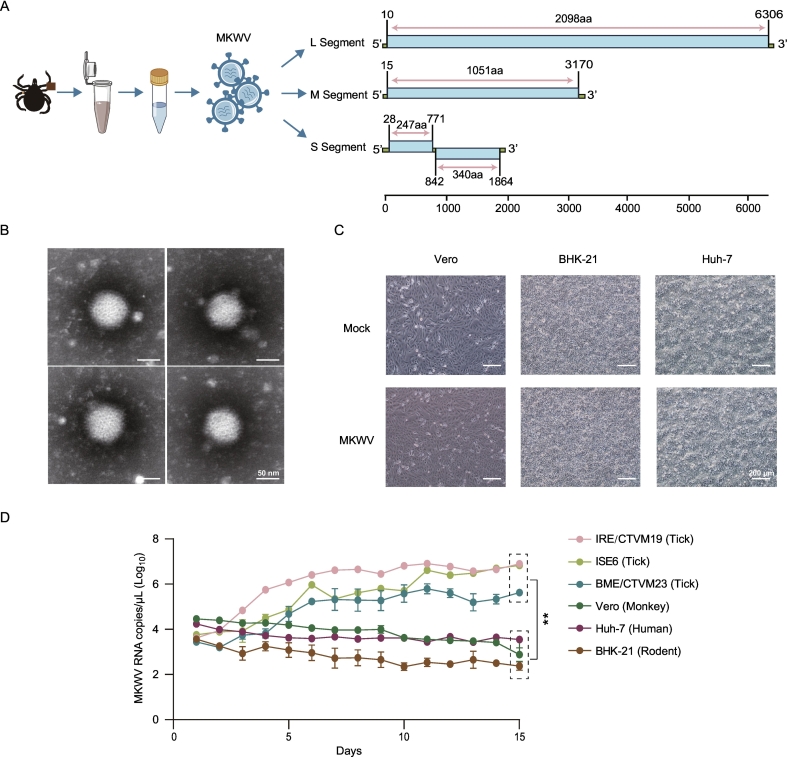 Figure 1
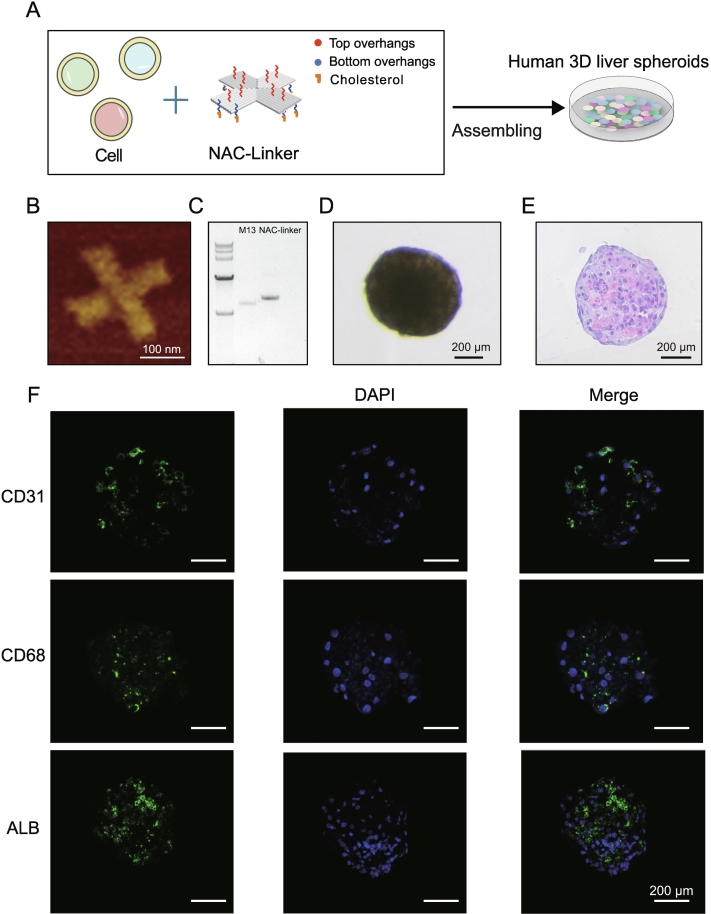 Figure 2
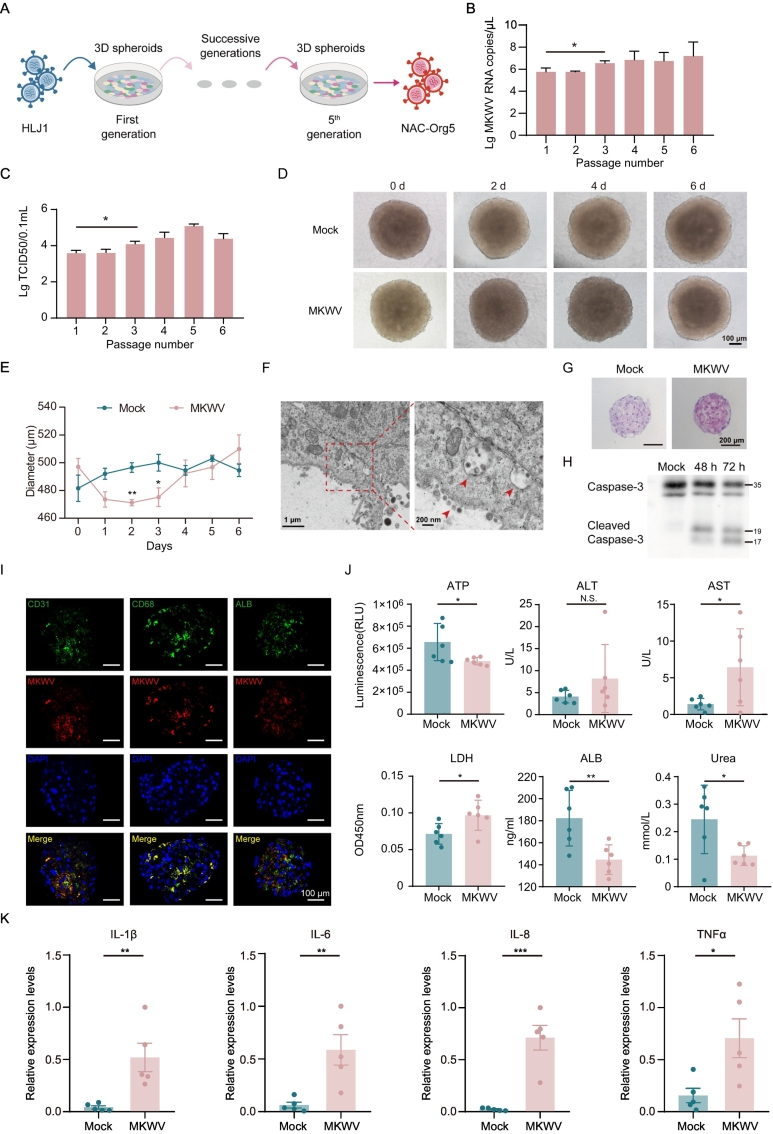 Figure 3
 Figure 4
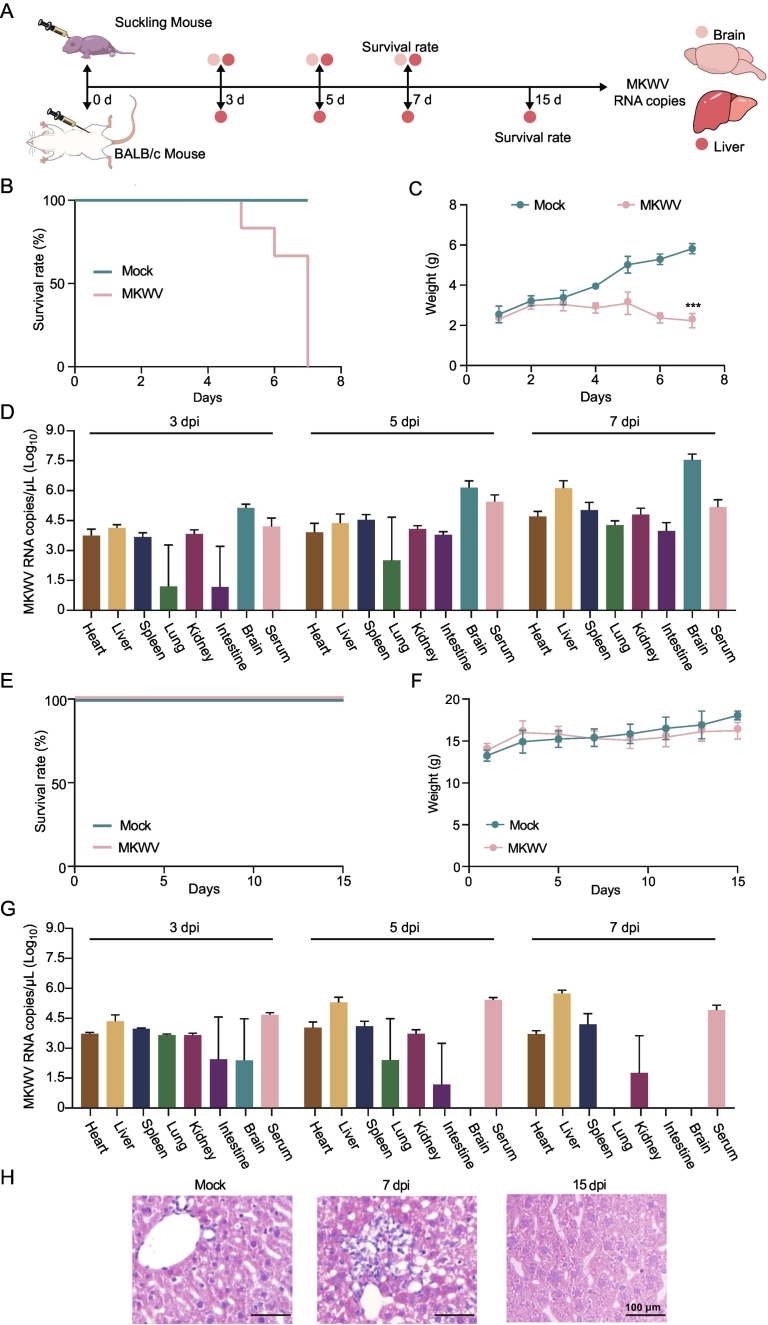 Figure 5
Peer Reviews
No public reviews on file for this paper yet. If you reviewed it on a platform where reviews are public (OpenReview, ICLR, NeurIPS, ICML), you can paste yours below so the community can read it here.
Videos
No videos yet. Explain this paper in a talk, walkthrough, or lecture? Add one.
Taxonomy
TopicsViral Infections and Vectors · Vector-Borne Animal Diseases · Vector-borne infectious diseases