Integration of clinical data with scanned ECGs using deep learning methods for stroke risk prediction in Indian patients with atrial fibrillation: evidence from the KERALA-AF study
Qinkai Yu, Jinbert L. Azariah, Z. Sajan Ahmad, Rajappan Anilkumar, Peter Calvert, Yang Chen, Yalin Zheng, Yanda Meng, Bahuleyan Charantharayil Gopalan, Gregory Y.H. Lip

TL;DR
A new AI model combining clinical data and scanned ECGs improves stroke risk prediction in Indian patients with atrial fibrillation.
Contribution
A multimodal deep learning model integrating clinical data and scanned ECGs is shown to enhance stroke risk prediction in South Asian atrial fibrillation patients.
Findings
The multimodal deep learning model outperformed clinical risk scores and ML models using only clinical data (AUC 0.816 vs. 0.666).
Scanned ECG images contributed 57.1% of the model's predictive signal, significantly improving performance.
Abstract
Stroke risk stratification in patients with atrial fibrillation (AF) is challenging, particularly in under-represented South Asian populations. The use of a multimodal deep-learning artificial intelligence (AI) model, which integrates clinical data with widely available paper electrocardiogram (ECG) images, represents a novel predictive approach that has not previously been validated in this population. This study used data from the prospective KERALA-AF registry, the largest prospective AF study in South Asia. We developed a multimodal deep-learning AI model to predict incident stroke within one year by combining tabular clinical data with scanned paper ECGs. We benchmarked its performance (AUC) against machine learning (ML) models using only clinical data and the CHA2DS2-VASc score. Of 631 patients included (mean age 64.4, SD 12.9; 54.2% female), 25 (4.0%) experienced a stroke…
Genes, proteins, chemicals, diseases, species, mutations and cell lines named across the full text — each resolved to its canonical identifier and authoritative record.
Click any figure to enlarge with its caption.
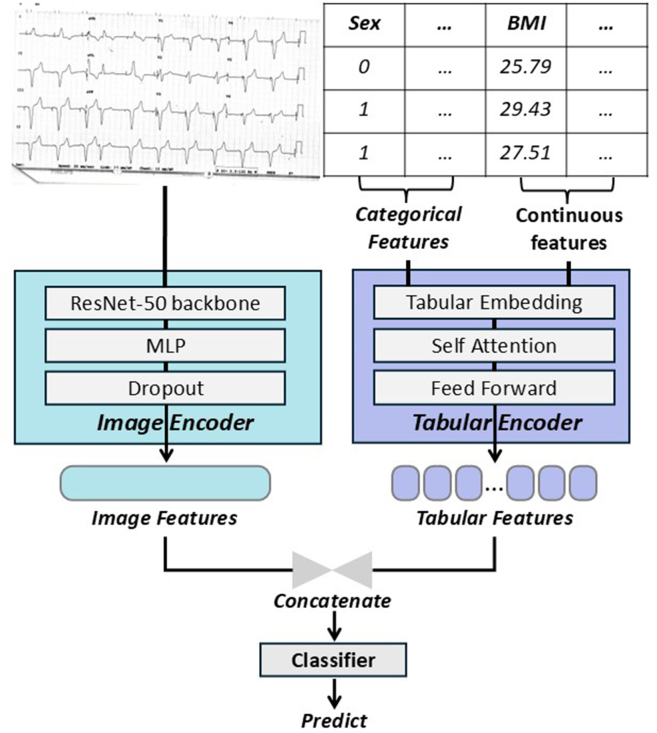 Figure 1
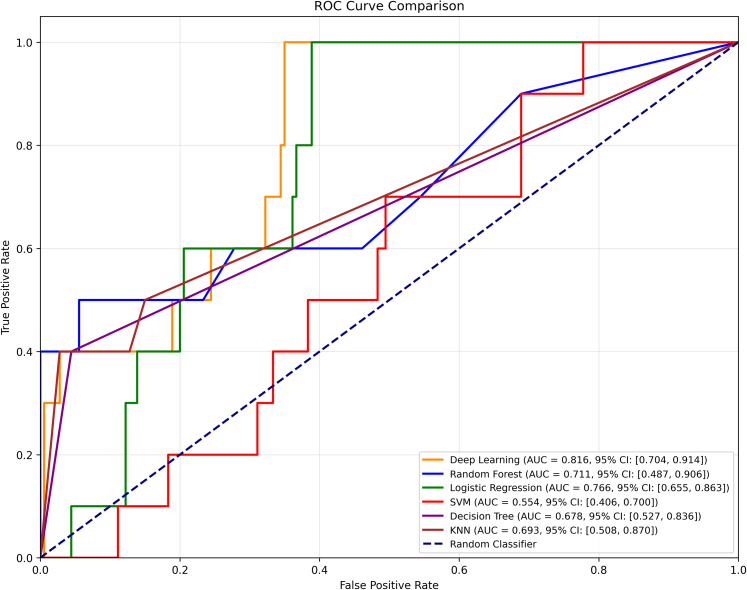 Figure 2
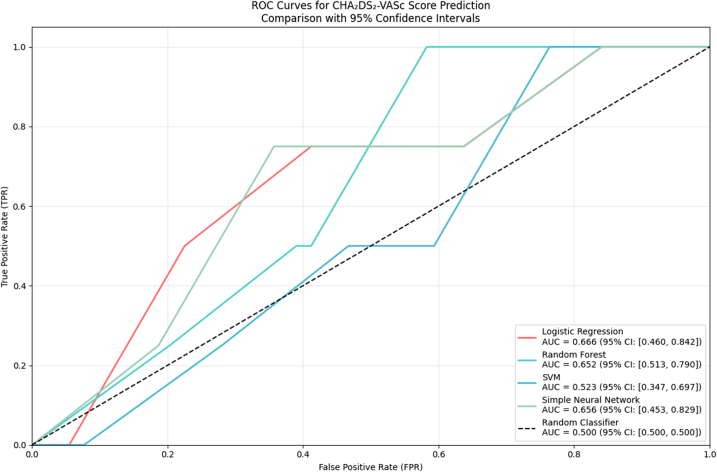 Figure 3
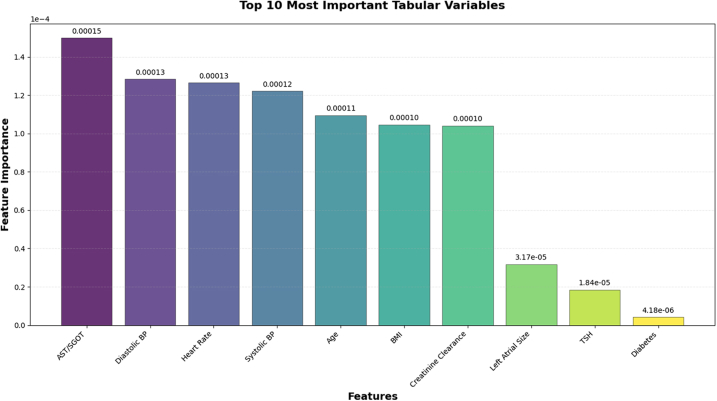 Figure 4
Peer Reviews
No public reviews on file for this paper yet. If you reviewed it on a platform where reviews are public (OpenReview, ICLR, NeurIPS, ICML), you can paste yours below so the community can read it here.
Videos
No videos yet. Explain this paper in a talk, walkthrough, or lecture? Add one.
Taxonomy
TopicsECG Monitoring and Analysis · Artificial Intelligence in Healthcare · Atrial Fibrillation Management and Outcomes