Dysregulated metabolism of ceramides and glycosphingolipids in Parkinson’s disease
Yu-Fong Peng, Szu-Ju Chen, Jeng-Lin Li, Chin-Hsien Lin, Ching-Hua Kuo

TL;DR
This study finds that changes in ceramide and glycosphingolipid metabolism in the blood can help distinguish Parkinson's disease patients from healthy individuals.
Contribution
The study identifies specific sphingolipid profiles and enzyme expression changes in Parkinson's disease using plasma lipidomics and gene expression meta-analysis.
Findings
Plasma sphingolipid species in PD patients showed significant differences, including increased GSLs and decreased dihydroceramides.
Altered lipid ratios, such as monohexosylceramide-to-ceramide, suggest disrupted GSL and ceramide metabolism in PD.
Meta-analysis confirmed reduced expression of lysosomal hydrolases like β-glucocerebrosidase in PD, supporting impaired GSL degradation.
Abstract
Alterations in sphingolipid metabolism have been implicated in the pathogenesis of Parkinson's disease (PD), yet findings regarding peripheral sphingolipid changes remain inconsistent. This study aimed to elucidate the metabolic profiles of plasma ceramides and glycosphingolipids (GSLs) in patients with PD. We recruited 250 patients with PD and 250 age- and sex-matched neurologically healthy controls. Plasma ceramide and GSL species were quantified using liquid chromatography‒tandem mass spectrometry, complemented by a meta-analysis of the gene expression levels of relevant enzymes in the substantia nigra obtained from Gene Expression Omnibus. A total of 119 sphingolipids were analyzed. Significant differences in plasma sphingolipid species were observed, including increased GSLs and decreased dihydroceramides. Incorporation of 35 significantly altered sphingolipid species enabled…
Genes, proteins, chemicals, diseases, species, mutations and cell lines named across the full text — each resolved to its canonical identifier and authoritative record.
Click any figure to enlarge with its caption.
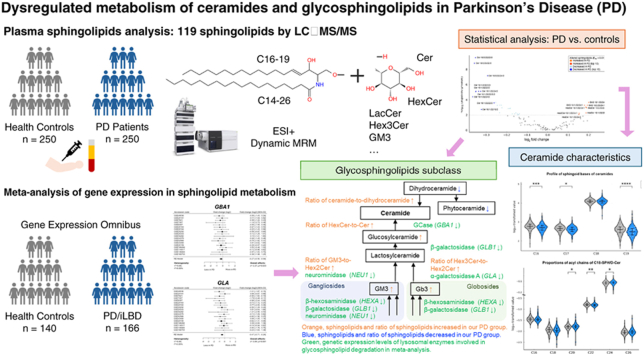 Figure 1
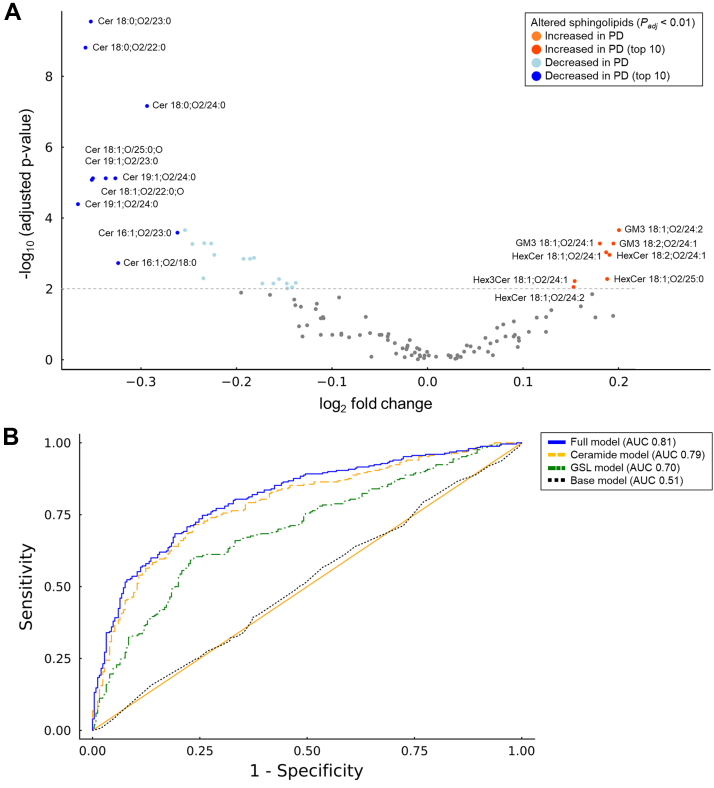 Figure 2
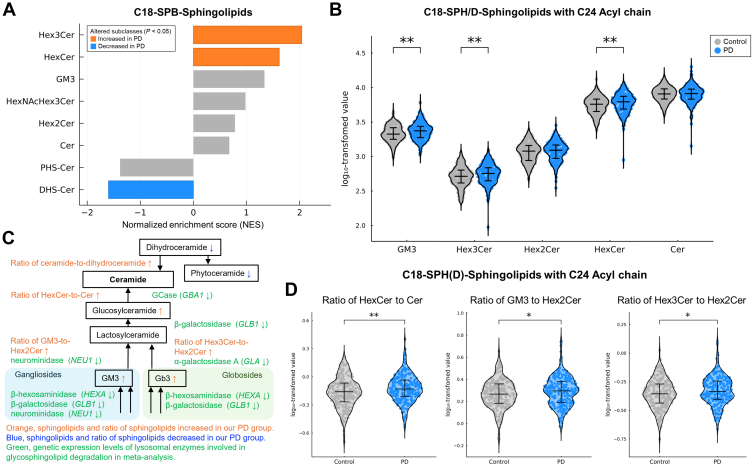 Figure 3
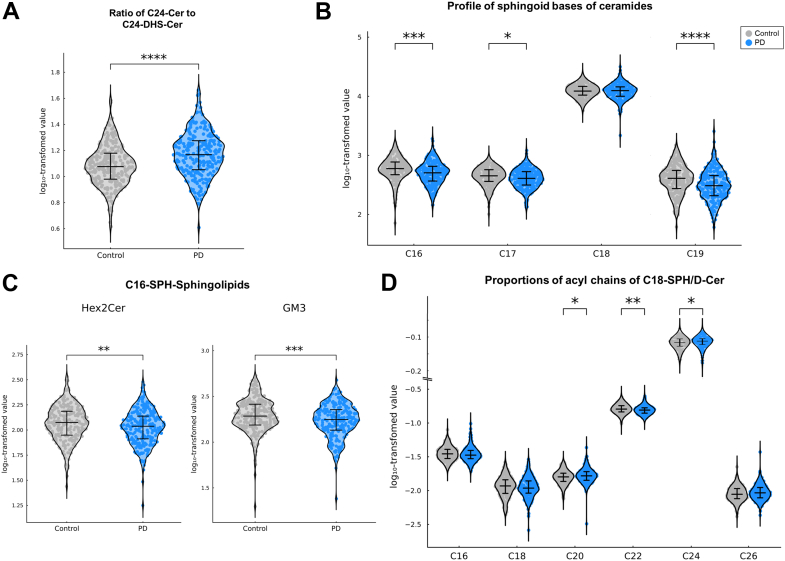 Figure 4
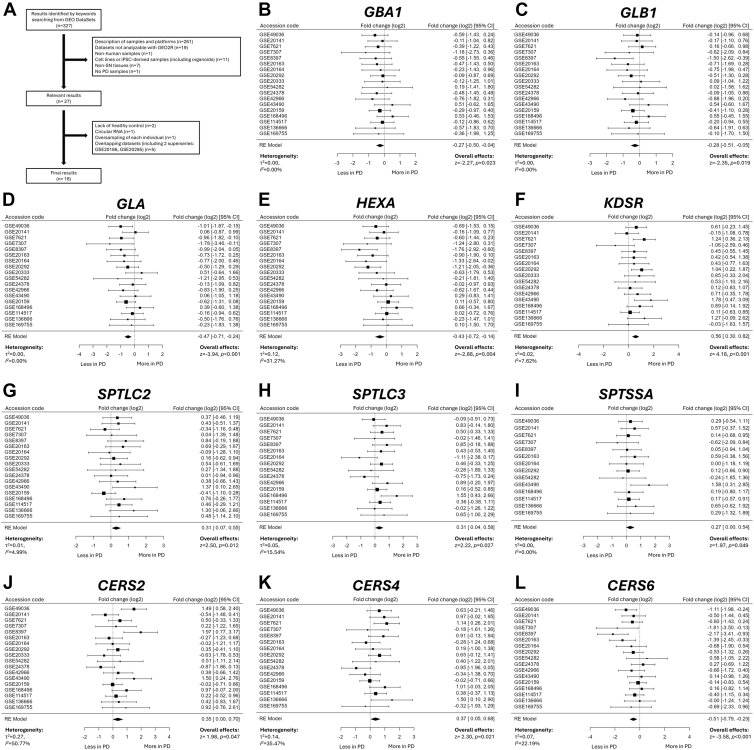 Figure 5
Peer Reviews
No public reviews on file for this paper yet. If you reviewed it on a platform where reviews are public (OpenReview, ICLR, NeurIPS, ICML), you can paste yours below so the community can read it here.
Videos
No videos yet. Explain this paper in a talk, walkthrough, or lecture? Add one.
Taxonomy
TopicsSphingolipid Metabolism and Signaling · Lysosomal Storage Disorders Research · Parkinson's Disease Mechanisms and Treatments