An Ultrasensitive Spatial Tissue Proteomics Workflow Exceeding 100 Proteomes Per Day
Melissa Klingeberg, Christoph Krisp, Sonja Fritzsche, Simon Schallenberg, Daniel Hornburg, Fabian Coscia

TL;DR
A new workflow enables processing over 100 high-quality spatial tissue proteomes per day, using minimal tissue and revealing disease-specific protein patterns.
Contribution
An ultrasensitive workflow for high-throughput spatial tissue proteomics, benchmarking Evosep gradients and DIA-PASEF settings.
Findings
Over 100 high-quality spatial tissue proteomes can be generated daily using the optimized workflow.
Up to 7500 proteins can be quantified from as little as 0.04 nL of formalin-fixed paraffin-embedded tissue.
The workflow revealed regional heterogeneity in oral squamous cell carcinoma proteomes.
Abstract
Achieving high-resolution spatial tissue proteomes requires careful balancing and integration of optimized sample processing, chromatography, and MS acquisition. Here, we present an advanced cellenONE protocol for loss-reduced tissue processing and compare all Evosep ONE Whisper Zoom gradients (20, 40, 80, and 120 samples per day), along with three common data-independent acquisition schemes on a timsUltra athena ion processor mass spectrometer. We found that tissue type was as important as gradient length and sample amount in determining proteome coverage. Moreover, the benefit of increased tissue sampling was gradient- and dynamic range-dependent. Analyzing mouse liver, a high dynamic range tissue, over tenfold more tissue sampling led to only ∼30% gain in protein identification for short gradients (120 samples per day (SPD) and 80 SPD). However, even the lowest tested tissue amount…
Genes, proteins, chemicals, diseases, species, mutations and cell lines named across the full text — each resolved to its canonical identifier and authoritative record.
Click any figure to enlarge with its caption.
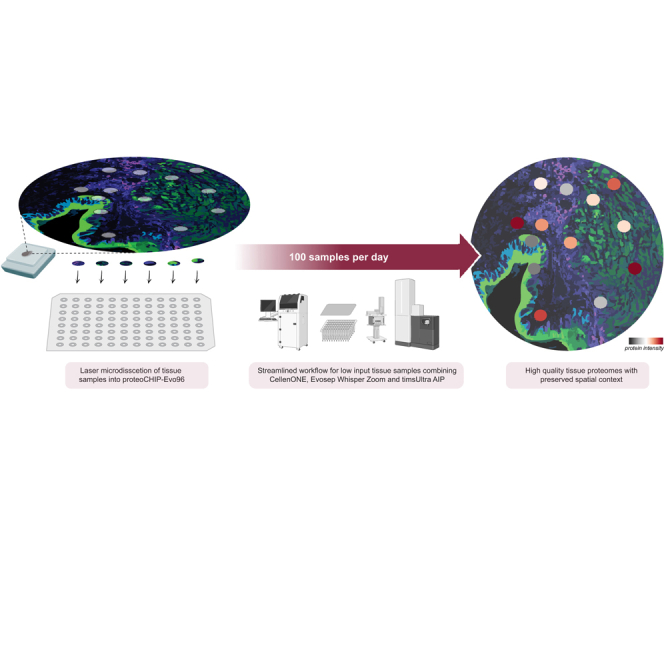 Figure 1
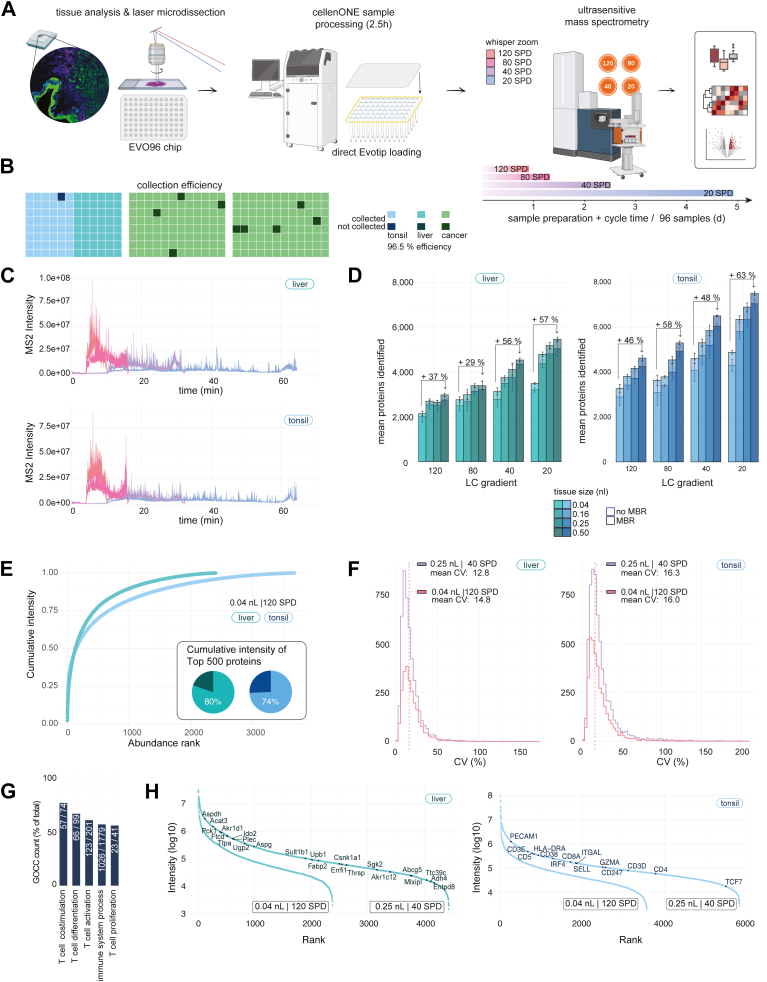 Figure 2
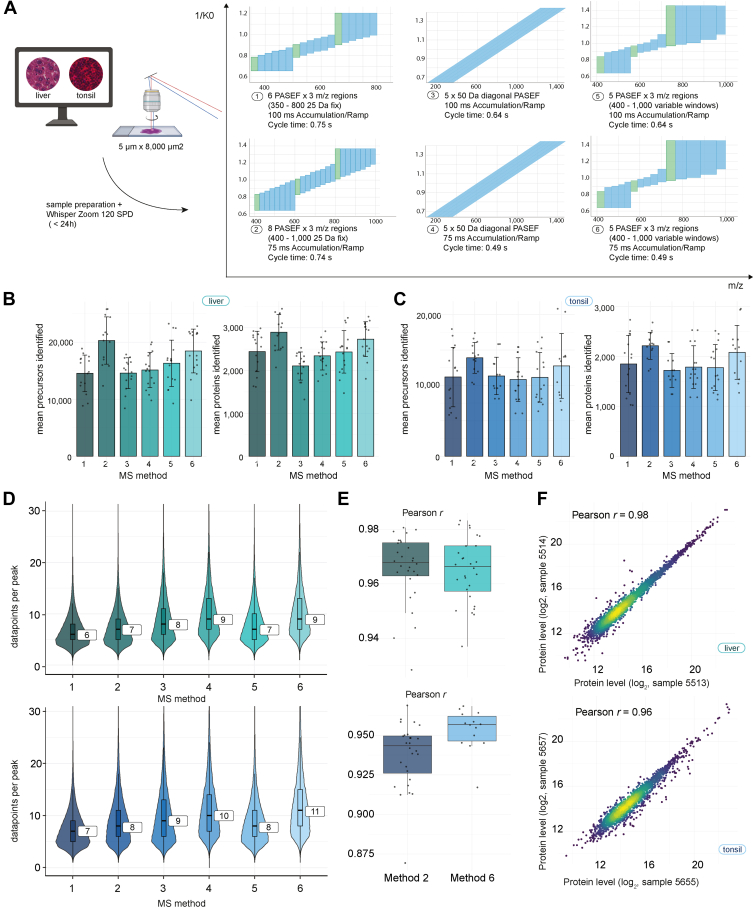 Figure 3
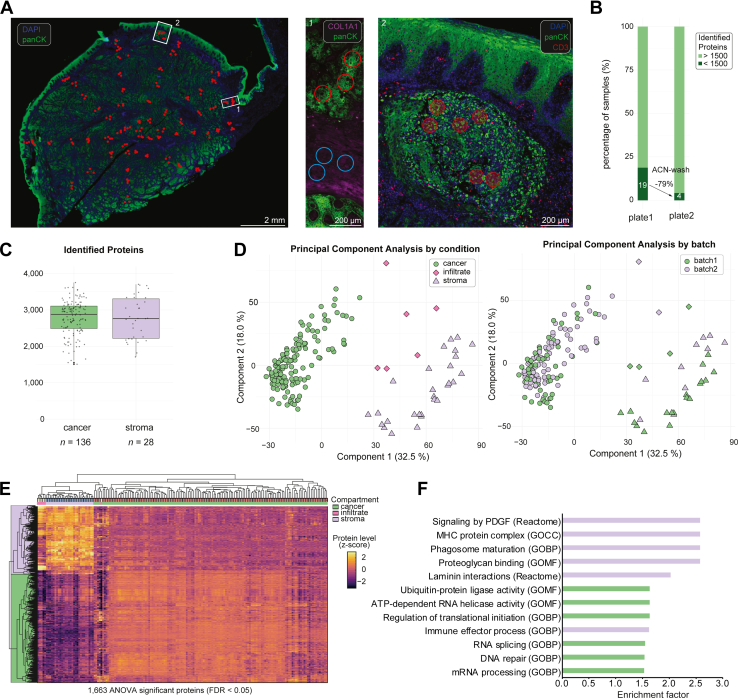 Figure 4
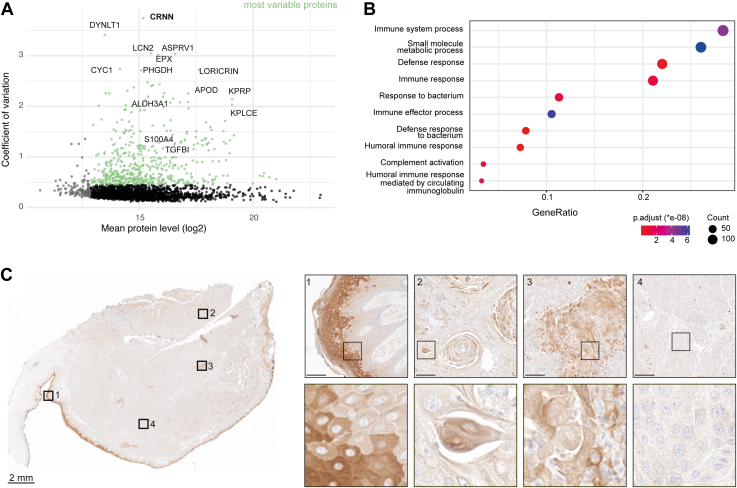 Figure 5
Peer Reviews
No public reviews on file for this paper yet. If you reviewed it on a platform where reviews are public (OpenReview, ICLR, NeurIPS, ICML), you can paste yours below so the community can read it here.
Videos
No videos yet. Explain this paper in a talk, walkthrough, or lecture? Add one.
Taxonomy
TopicsAdvanced Proteomics Techniques and Applications · Single-cell and spatial transcriptomics · Advanced Biosensing Techniques and Applications