Standardized patient coaching improves therapy persistence in patients with hormone receptor–positive, HER2–negative advanced/metastatic breast cancer treated with abemaciclib
Manfred Welslau, Peter A. Fasching, Nicole Semmler-Lins, Lothar Mueller, Erik Belleville, Lorenz Rieger, Sabrina Uhrig, Mark-Oliver Zahn, Benno Lex, Christoph Uleer, Natalija Deuerling, Tobias Hesse, Dagmar Langanke, Lothar Häberle, Hans Tesch

TL;DR
A patient coaching tool improved treatment persistence in breast cancer patients taking abemaciclib.
Contribution
A structured coaching tool improved therapy persistence in metastatic breast cancer patients.
Findings
22% fewer patients discontinued abemaciclib with coaching compared to standard care.
Coaching improved 24-week persistence rates by 12.7 percentage points.
No significant quality of life differences were observed between groups.
Abstract
Therapy adherence is critical, particularly for patients with breast cancer undergoing oral endocrine therapies. The use of combination regimes, such as CDK4/6 inhibitors, has introduced additional side effects, which can affect adherence. A structured patient coaching and communication tool may positively affect therapy adherence. The IMPACT study (NCT04030728) was a randomized trial including patients with advanced breast cancer (aBC) receiving abemaciclib as part of routine clinical care. The study examined the influence of structured coaching on patient adherence. Participants were randomized to receive therapy management incorporating the Multinational Association of Supportive Care in Cancer (MASCC) Oral Agent Teaching Tool (MOATT©) or local standard of care practice (LSOC). The primary endpoint was the persistence rate at week 24 (PR24). Secondary endpoints included time to…
Genes, proteins, chemicals, diseases, species, mutations and cell lines named across the full text — each resolved to its canonical identifier and authoritative record.
Click any figure to enlarge with its caption.
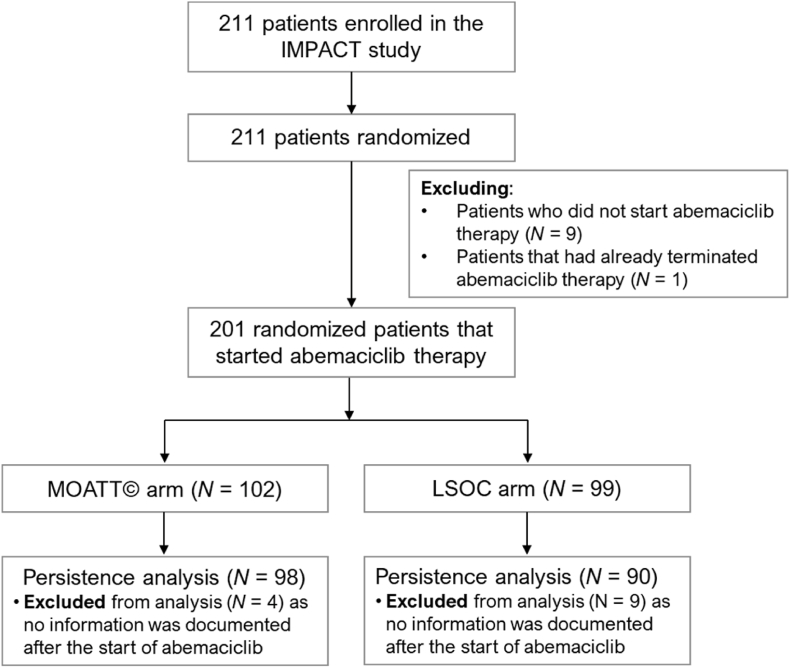 Figure 1
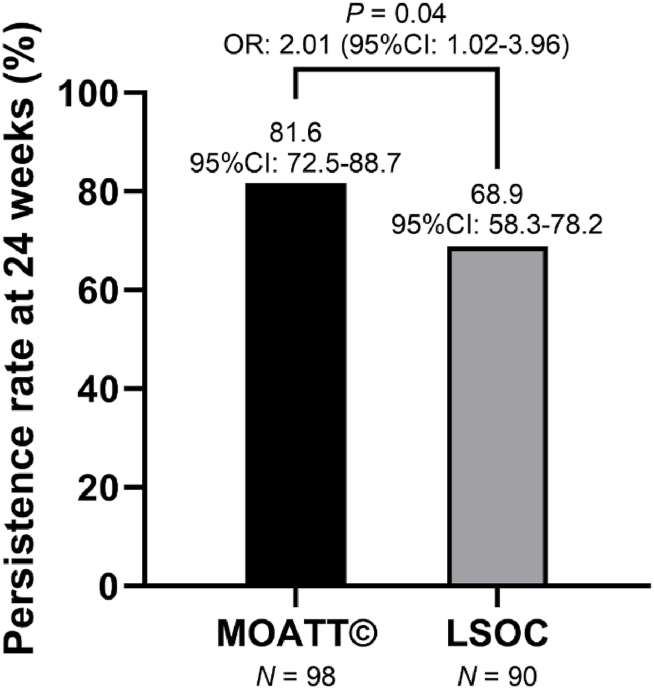 Figure 2
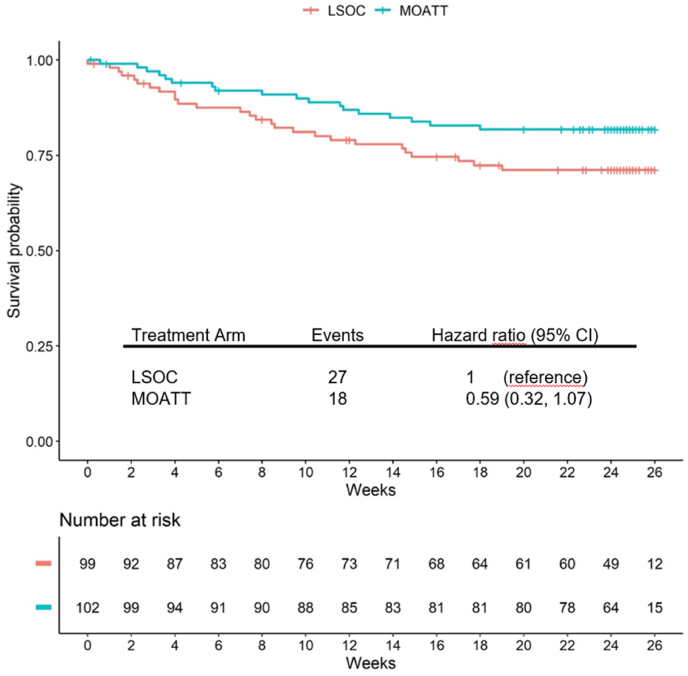 Figure 3
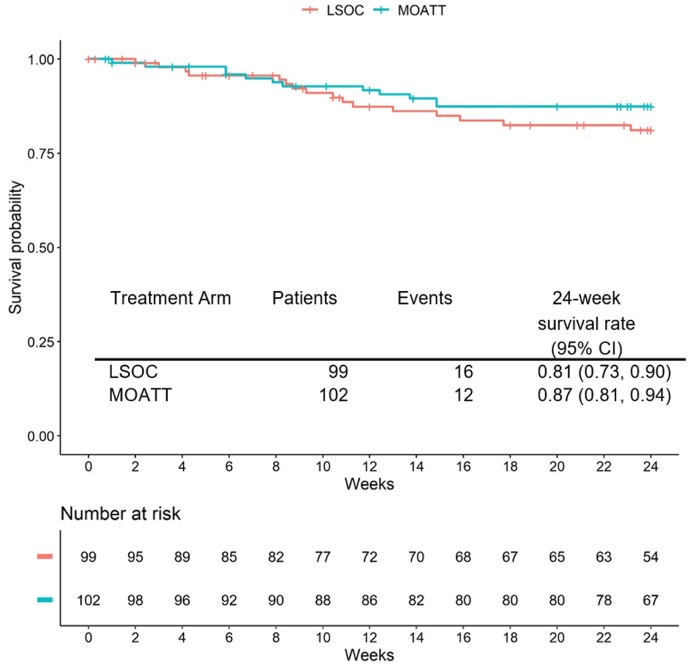 Figure 4
Peer Reviews
No public reviews on file for this paper yet. If you reviewed it on a platform where reviews are public (OpenReview, ICLR, NeurIPS, ICML), you can paste yours below so the community can read it here.
Videos
No videos yet. Explain this paper in a talk, walkthrough, or lecture? Add one.
Taxonomy
TopicsAdvanced Breast Cancer Therapies · HER2/EGFR in Cancer Research · Cancer-related Molecular Pathways