Progression of stenosis severity and aortopathy in adult patients with congenital aortic stenosis
Zoë A. Keuning, Frederike Meccanici, Kevin M. Veen, Bibi Schreurs, Roland R.J. van Kimmenade, Joost P. van Melle, Monique R.M. Jongbloed, Michiel Voskuil, Berto J. Bouma, Famke Sneep, Jeroen F.A. Simons, Alexander Hirsch, Jolien W. Roos-Hesselink, Annemien E. van den Bosch

TL;DR
This study tracks how aortic stenosis and aortic dimensions change over time in adults with congenital heart disease, finding that progression is slow and influenced by age and heart remodeling.
Contribution
The study provides new insights into the progression of congenital aortic stenosis in adults and identifies markers for faster disease progression.
Findings
Peak velocity increased by 0.06 m/s per year, independent of baseline severity.
Older age and concentric left ventricular remodeling were linked to faster stenosis progression.
Aortic dimensions grew by 0.4 mm/year, with younger patients showing faster growth.
Abstract
Congenital aortic stenosis (AS) is a heterogeneous disease. However, repeated data describing disease progression is limited, especially in adults. Therefore, the objective of this study is to investigate progression of peak velocity and aortic dimensions in adult congenital AS patients, identifying markers for fast progression. Adult patients (aged 18–55 years) with a native aortic valve and at least mild AS at baseline registered in the Dutch CONCOR registry between 2001 and 2019 from all six tertiary expert centers for congenital heart disease were included. Patients with severe aortic regurgitation at baseline or no available echocardiograms during follow-up were excluded. Data on ascending aortic dimensions and peak velocity changes over time were analyzed using mixed models until death, aortic valve replacement or March 1, 2023. 402 patients (63 % male) were included with a…
Genes, proteins, chemicals, diseases, species, mutations and cell lines named across the full text — each resolved to its canonical identifier and authoritative record.
Click any figure to enlarge with its caption.
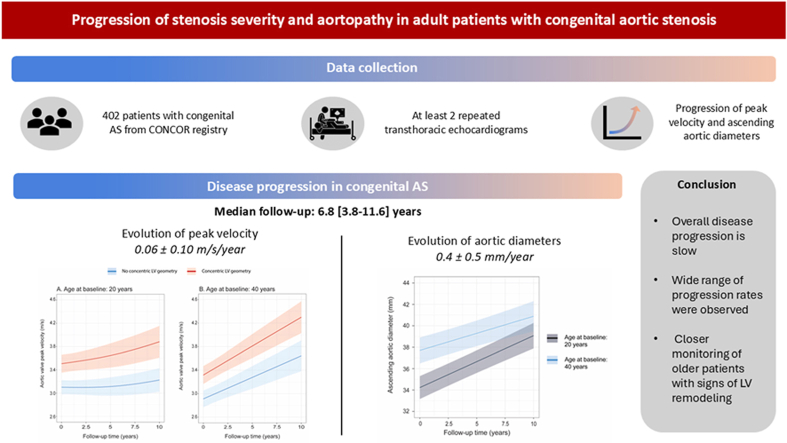 Figure 1
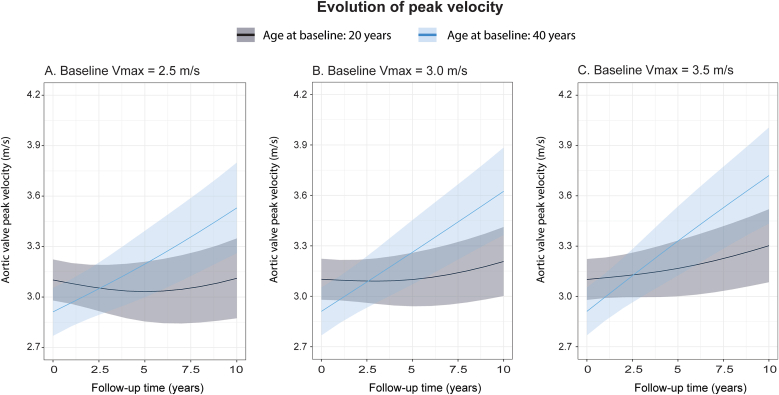 Figure 2
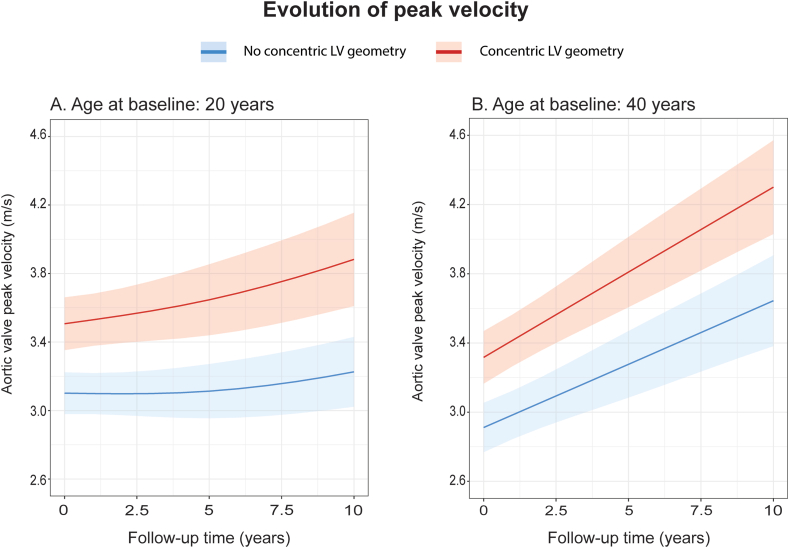 Figure 3
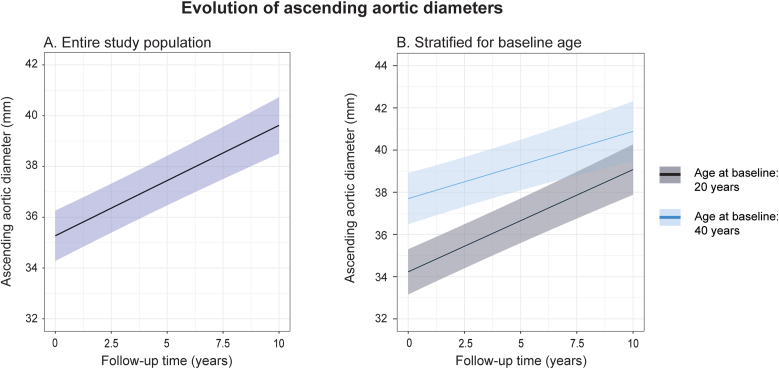 Figure 4
Peer Reviews
No public reviews on file for this paper yet. If you reviewed it on a platform where reviews are public (OpenReview, ICLR, NeurIPS, ICML), you can paste yours below so the community can read it here.
Videos
No videos yet. Explain this paper in a talk, walkthrough, or lecture? Add one.
Taxonomy
TopicsCardiac Valve Diseases and Treatments · Congenital Heart Disease Studies · Williams Syndrome Research