A Diagnostic Procedure for Identifying Isotherm Models in Liquid Chromatography
Konstantinos Katsoulas, Federico Galvanin, Luca Mazzei, Eva Sorensen

TL;DR
This paper introduces a diagnostic method to improve isotherm models in liquid chromatography, enhancing accuracy without sacrificing interpretability.
Contribution
A novel diagnostic procedure using a Lagrange multiplier test to refine isotherm models in chromatography.
Findings
The diagnostic procedure improves model accuracy for complex separations like peptides.
The method avoids black-box models, preserving physical insight and interpretability.
Three in-silico case studies validated the effectiveness of the approach.
Abstract
Liquid chromatography is a pivotal purification process widely used in pharmaceutical development and manufacturing. Efficient optimal design and control of the process rely heavily on mechanistic models such as the lumped pore diffusion model (POR) and the Equilibrium Dispersion Model (EDM), both popular choices owing to their simplicity and good accuracy for a wide range of applications. However, the choice of the functional form of the isotherm models, which describe the component adsorption equilibria, strongly affects the predictions of the chromatography model. While traditional isotherms perform well for simple compounds (e.g., small molecules), they often fall short for more complex separations (e.g., peptides), thus resulting in process-model mismatch, even following rigorous parameter estimation. As a remedy to this, recent advances have introduced hybrid models that integrate…
Click any figure to enlarge with its caption.
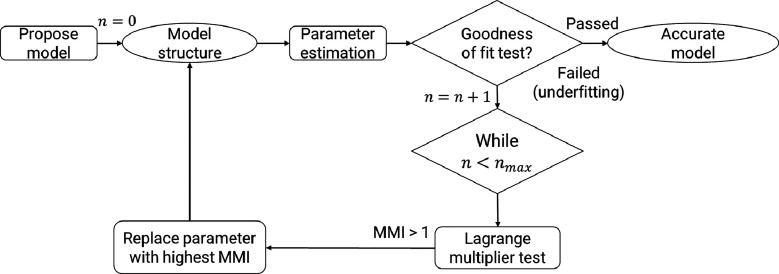 Figure 1
 Figure 2
 Figure 3
 Figure 4
 Figure 5
 Figure 6
 Figure 7
 Figure 8
 Figure 9
 Figure 10
 Figure 11
 Figure 12
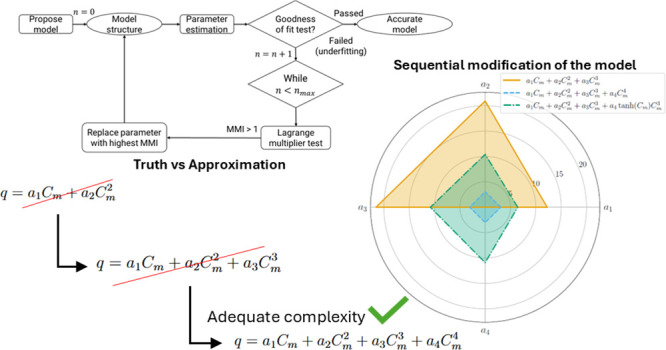 Figure 13
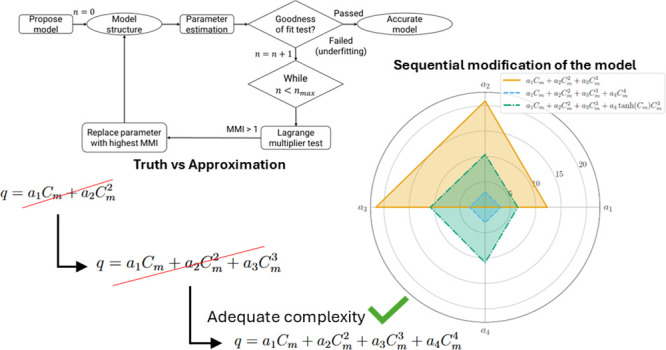 Figure 14
 Figure 15
 Figure 16
 Figure 17
 Figure 18
 Figure 19
 Figure 20
 Figure 21
 Figure 22
 Figure 23
 Figure 24
 Figure 25
 Figure 26
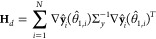 Figure 27
 Figure 28
 Figure 29
 Figure 30
 Figure 31
 Figure 32
 Figure 33
 Figure 34
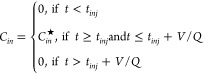 Figure 35
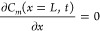 Figure 36
 Figure 37
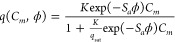 Figure 38
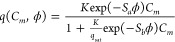 Figure 39
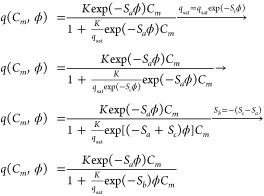 Figure 40
 Figure 41
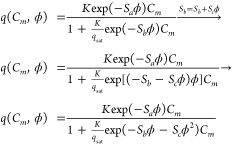 Figure 42
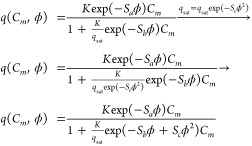 Figure 43
 Figure 44
 Figure 45
 Figure 46
 Figure 47
 Figure 48
 Figure 49
 Figure 50
Peer Reviews
No public reviews on file for this paper yet. If you reviewed it on a platform where reviews are public (OpenReview, ICLR, NeurIPS, ICML), you can paste yours below so the community can read it here.
Videos
No videos yet. Explain this paper in a talk, walkthrough, or lecture? Add one.
Taxonomy
TopicsProtein purification and stability · Analytical Chemistry and Chromatography · Chromatography in Natural Products