Catechol-linker and receptor-mediated site-specific delivery of bortezomib against non-small cell lung cancer
Mohan Indhu, Valappil Sisila, Devandran Jayasurya, Niraikulam Ayyadurai

TL;DR
A new method targets bortezomib to lung cancer cells using a receptor and a special linker, reducing side effects and improving treatment effectiveness.
Contribution
First demonstration of site-specific delivery of bortezomib to non-small cell lung cancer via ACE2 receptor and bio-orthogonal chemistry.
Findings
Bortezomib was site-specifically delivered to NSCLC cells via ACE2 receptor-mediated endocytosis.
The method showed significant tumor growth inhibition in mice with reduced toxicity to normal organs.
The approach enables controlled release of bortezomib in subcellular endosomes, inhibiting proteasome function.
Abstract
Angiotensin-converting enzyme-2 (ACE2) receptor-targeting bio-orthogonally conjugated bortezomib (BTZ) was site-specifically delivered against non-small cell lung cancer (NSCLC). Through rational screening, three ACE2 receptor-binding domain (RBD) variants (mutant RBD1, mutant RBD2, and mutant RBD3) were identified to introduce the genetic linker DOPA (3,4-dihydroxyphenyl-L-alanine) to bio-orthogonally load BTZ through a catechol-boronate ester with enhanced receptor binding. Extensive biophysical characterization, such as UV-Vis spectroscopy, B11-NMR spectroscopy, RP-HPLC, microscale thermophoresis, and X-ray photoelectron spectroscopy, confirms the homogeneous preparation and controlled release of BTZ. In vitro analysis, including 2D monolayer and 3D spheroid models, revealed the site-specific and controlled release of BTZ through ACE2 receptor-mediated endocytosis in subcellular…
Genes, proteins, chemicals, diseases, species, mutations and cell lines named across the full text — each resolved to its canonical identifier and authoritative record.
Click any figure to enlarge with its caption.
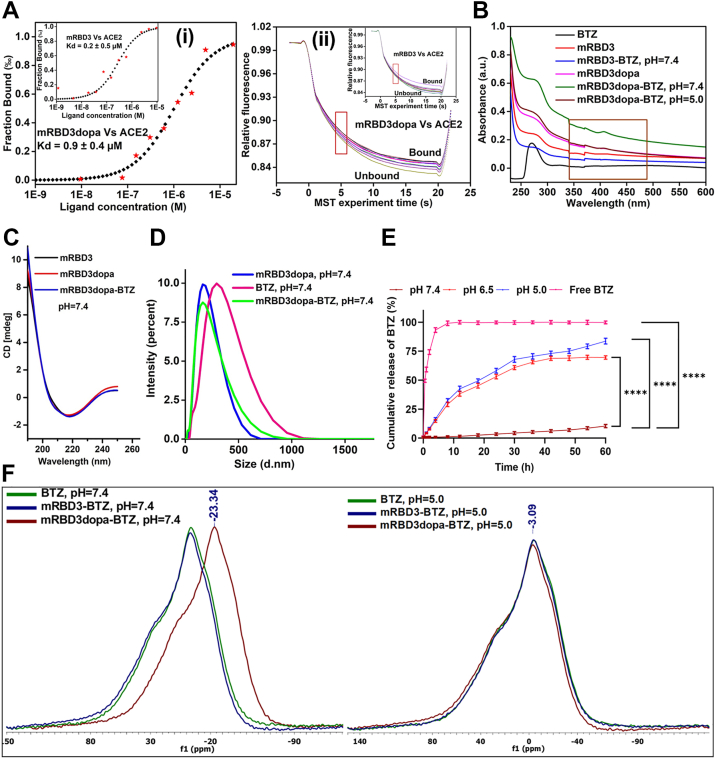 Figure 1
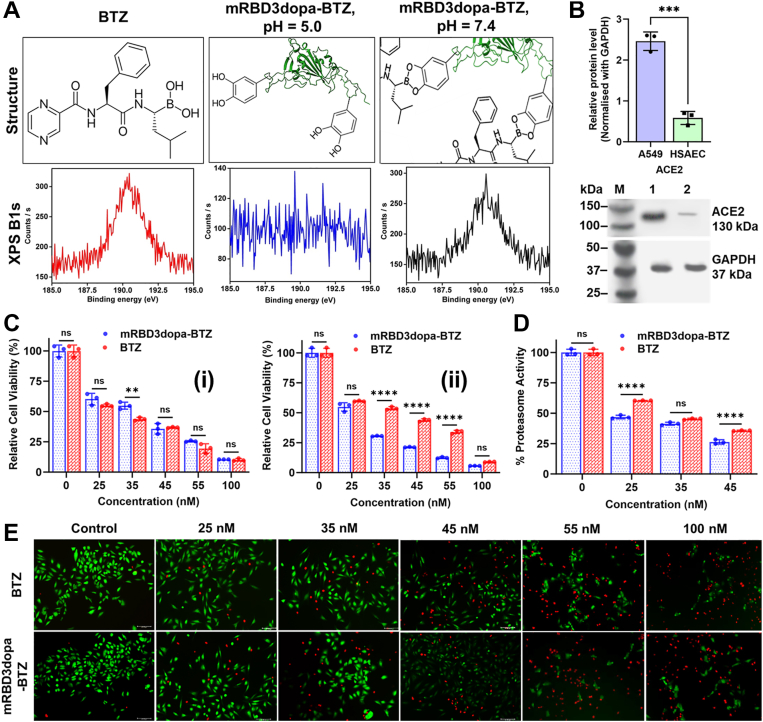 Figure 2
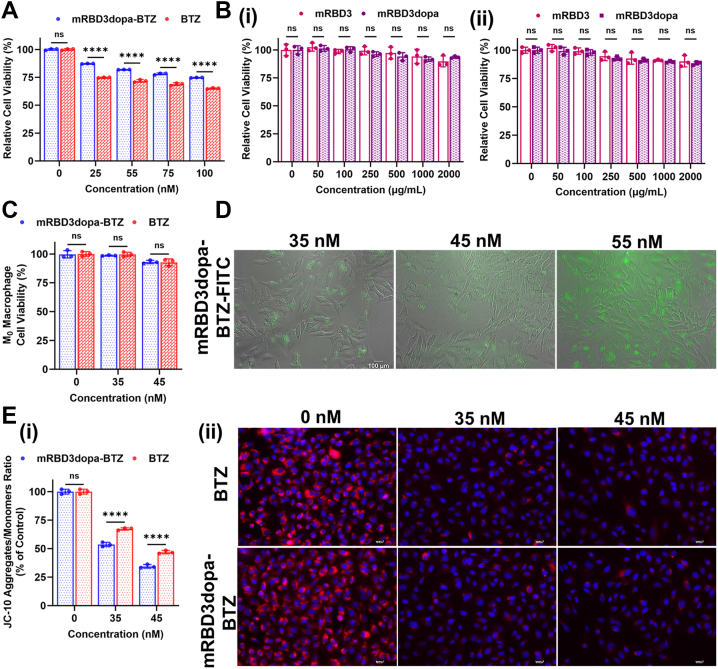 Figure 3
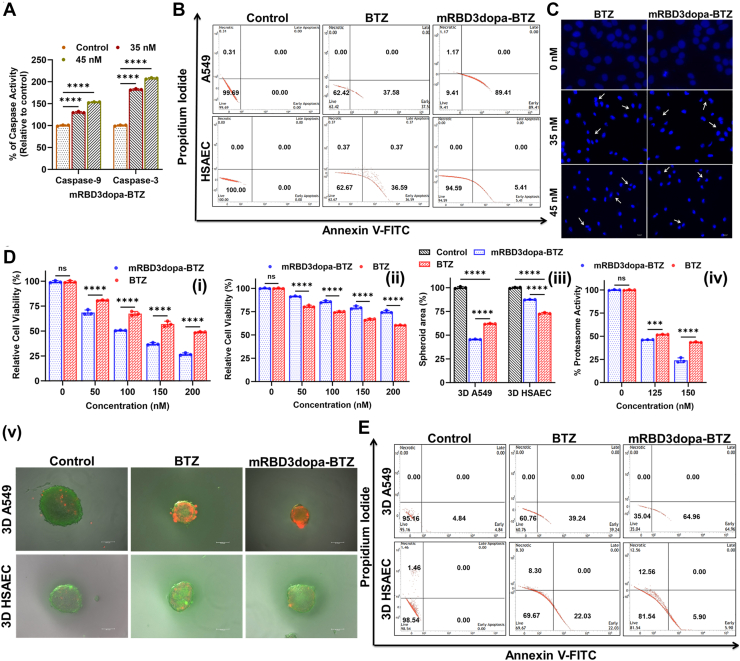 Figure 4
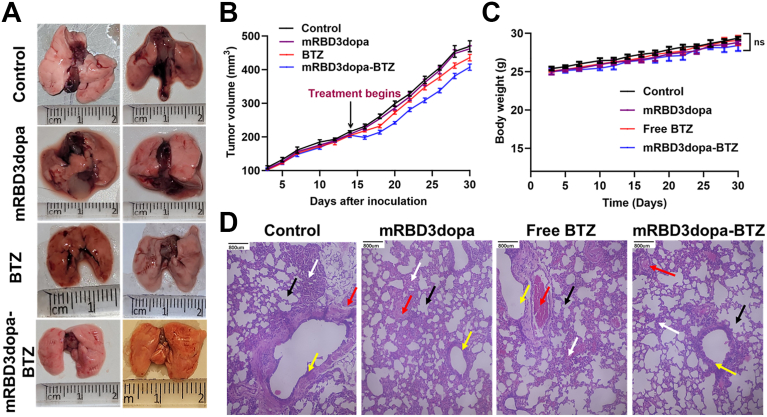 Figure 5
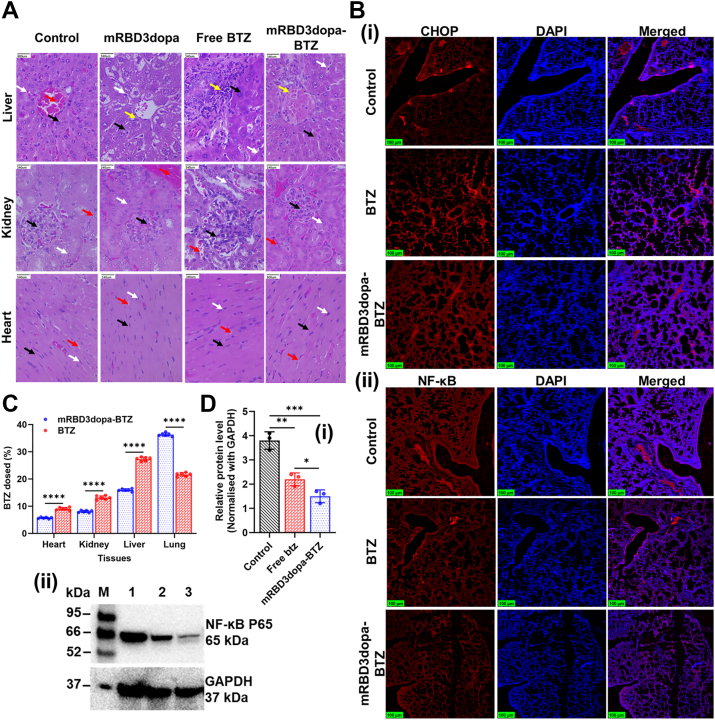 Figure 6
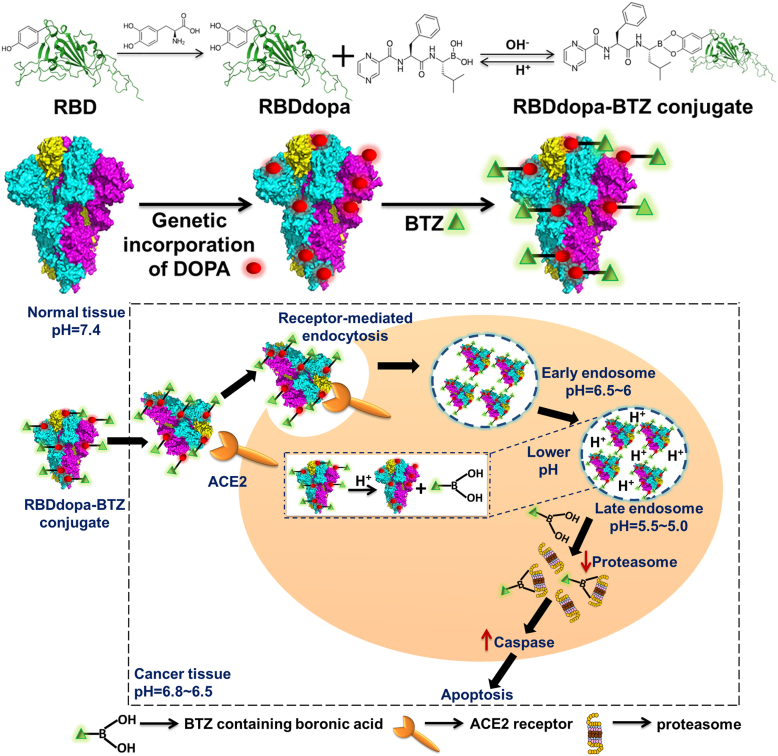 Figure 7
Peer Reviews
No public reviews on file for this paper yet. If you reviewed it on a platform where reviews are public (OpenReview, ICLR, NeurIPS, ICML), you can paste yours below so the community can read it here.
Videos
No videos yet. Explain this paper in a talk, walkthrough, or lecture? Add one.
Taxonomy
TopicsCancer, Lipids, and Metabolism · Renin-Angiotensin System Studies · Protein Degradation and Inhibitors