Nanobodies against Clostridioides difficile CDTb provide a toolkit for potent toxin neutralization and highly sensitive quantitation
Kateryna Nabukhotna, Heather K. Kroh, David M. Anderson, Rubén Cano Rodríguez, John A. Shupe, Maria McGresham, Carla V.T. O’Neale, Rebecca A. Shrem, Brian E. Wadzinski, Kevin L. Schey, Benjamin W. Spiller, D. Borden Lacy

TL;DR
Researchers developed nanobodies that neutralize a toxin from Clostridioides difficile and can detect it with high sensitivity, offering new tools for studying and combating this bacterial infection.
Contribution
The study introduces nanobodies that neutralize CDT toxin and detect CDTb with high sensitivity, offering new tools for toxin research.
Findings
Five nanobodies with high-affinity binding to CDTb were identified and purified.
The nanobodies neutralize CDT by inhibiting heptamer formation and cell surface binding.
A sandwich ELISA using these nanobodies detected CDTb levels in infected mice with high sensitivity.
Abstract
Clostridioides difficile is a pathogenic bacterium and a leading cause of antibiotic-associated diarrhea. Symptoms of the infection arise because of the production of large clostridial toxins that disrupt the intestinal barrier and cause an acute host inflammatory response. Epidemic C. difficile strains also produce the C. difficile transferase toxin (CDT), a binary toxin consisting of separate enzymatically active (CDTa) and cell-binding (CDTb) components. However, the role of CDT during C. difficile pathogenesis remains poorly understood. We created a CDTb nanobody (Nb) clone library and identified and purified five clones with promising CDTb-binding properties. Studies using the Carterra LSAXT platform revealed high-affinity binding interactions between the Nbs and three distinct CDTb epitopes. Functionally, these Nbs potently neutralize cellular cytopathic effects of CDT at…
Genes, proteins, chemicals, diseases, species, mutations and cell lines named across the full text — each resolved to its canonical identifier and authoritative record.
Click any figure to enlarge with its caption.
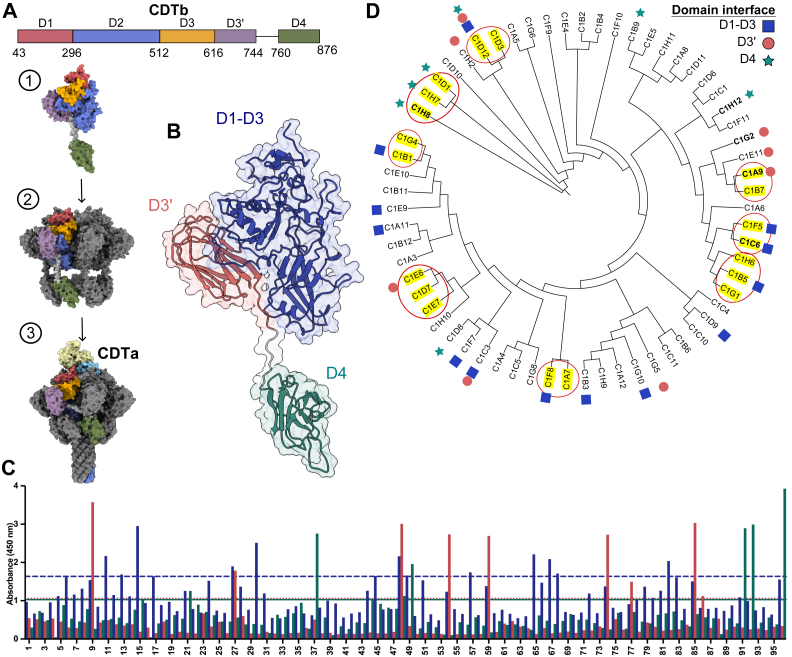 Figure 1
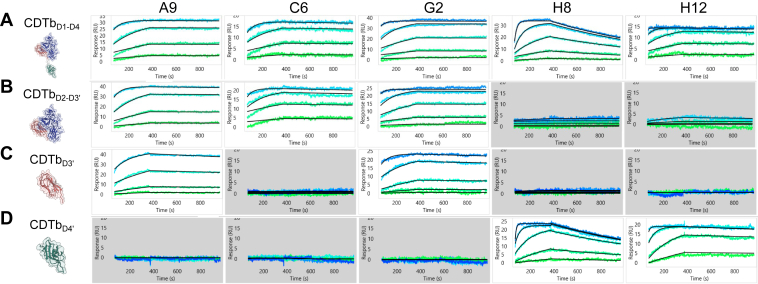 Figure 2
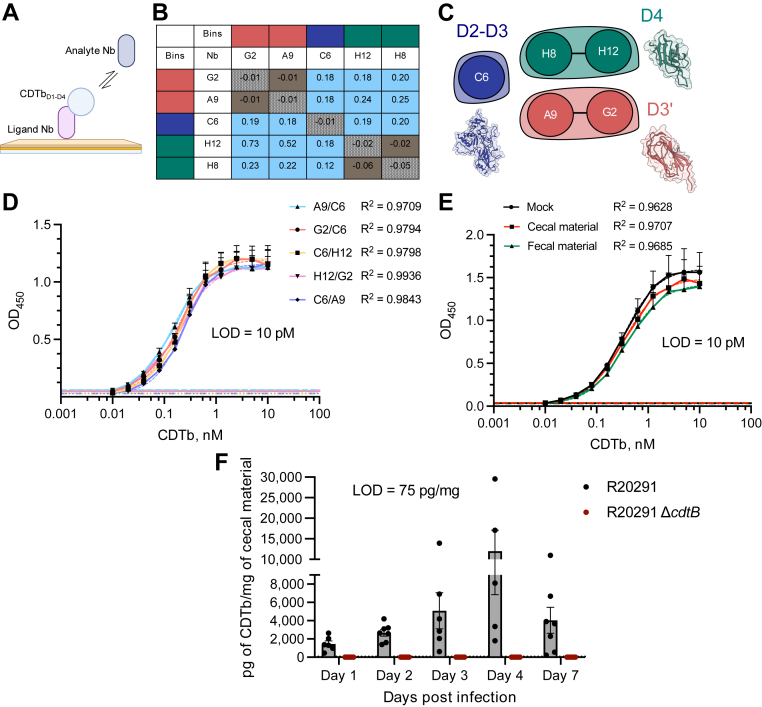 Figure 3
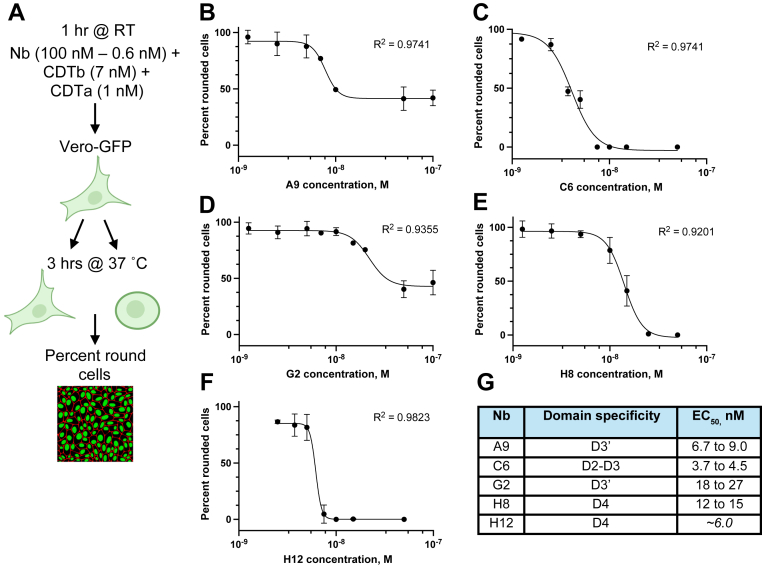 Figure 4
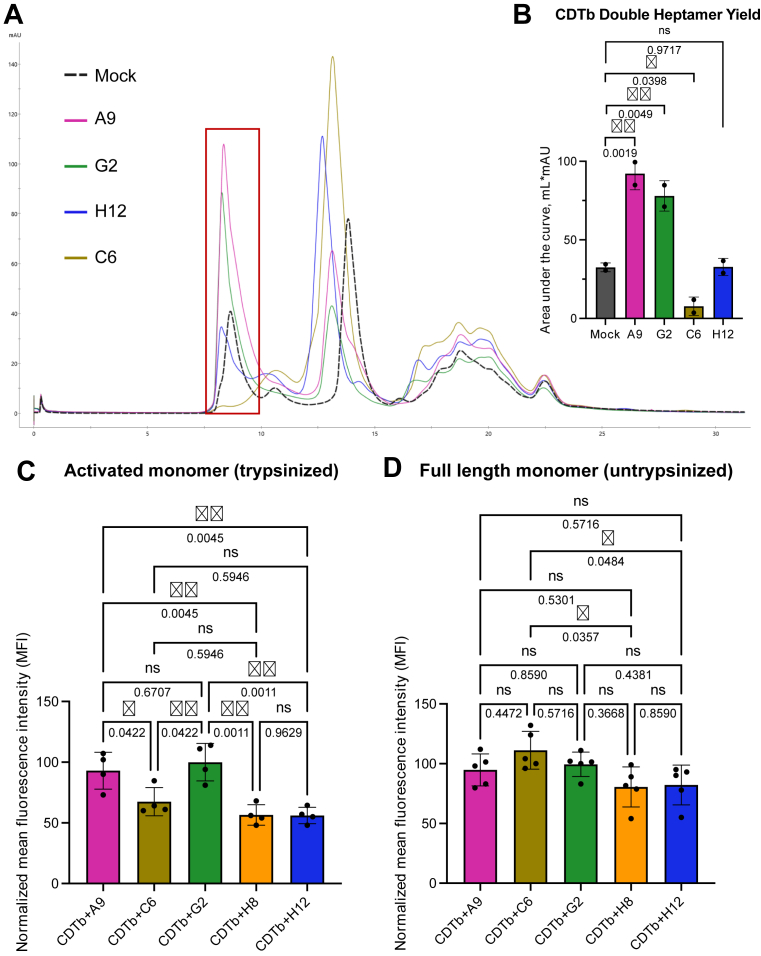 Figure 5
Peer Reviews
No public reviews on file for this paper yet. If you reviewed it on a platform where reviews are public (OpenReview, ICLR, NeurIPS, ICML), you can paste yours below so the community can read it here.
Videos
No videos yet. Explain this paper in a talk, walkthrough, or lecture? Add one.
Taxonomy
TopicsClostridium difficile and Clostridium perfringens research · Monoclonal and Polyclonal Antibodies Research · Bacillus and Francisella bacterial research