Synergistic effect of tea epigallocatechin gallate and tea flower-derived oligosaccharides on frozen storage cycles inducing oxidation and microstructural alterations of snakehead surimi proteins
Noman Walayat, Shufan Ren, Piotr Kulawik, Asad Nawaz, Isam A. Mohamed Ahmed, Moneera O. Aljobair, Ibraheim Khalifa, Zhucheng Su, Ran Wei, Suleiman A. Althawab

TL;DR
This study shows that a combination of tea compounds can protect snakehead fish proteins during freezing, reducing oxidation and preserving structure.
Contribution
The novel finding is that a 3% EGCG-TFO mixture effectively preserves snakehead surimi proteins during frozen storage cycles.
Findings
EGCG-TFO (3%) reduced carbonyl increases and preserved Ca2+ ATPase activity during freezing.
The mixture maintained Amide I and II structural features by promoting hydrogen and ionic interactions.
EGCG-TFO (3%) protected microstructural attributes by inhibiting protein coagulation.
Abstract
The synergistic effect of epigallocatechin gallate (EGCG) and tea flower oligosaccharides (TFO) was analyzed in snakehead during different 8 frozen storage cycles (FCY). Four different protein groups were prepared: C (no additives), K (conventional combination (4% sucrose+4% sorbitol)), EGCG-TFO (1%), and EGCG-TFO (3%). FCY accelerated the oxidation, especially C, where decreases in total sulfhydryl (54.68 to 34.70 mmol/kg) and Ca2+ATPase (0.518 to 0.304 mmol/g) were observed, as well as an increase in surface hydrophobicity. The K samples showed better stability against FCY-induced oxidative modifications than EGCG-TFO (1%). Meanwhile, EGCG-TFO (3%) restricted the FCY accelerated increase in carbonyls from 1.56 to 5.17 nmol/mg. Moreover, the Amide I and II regions were preserved by promoting hydrogen and ionic interactions, as well as securing the α-helix in the myosin region, as…
Genes, proteins, chemicals, diseases, species, mutations and cell lines named across the full text — each resolved to its canonical identifier and authoritative record.
Click any figure to enlarge with its caption.
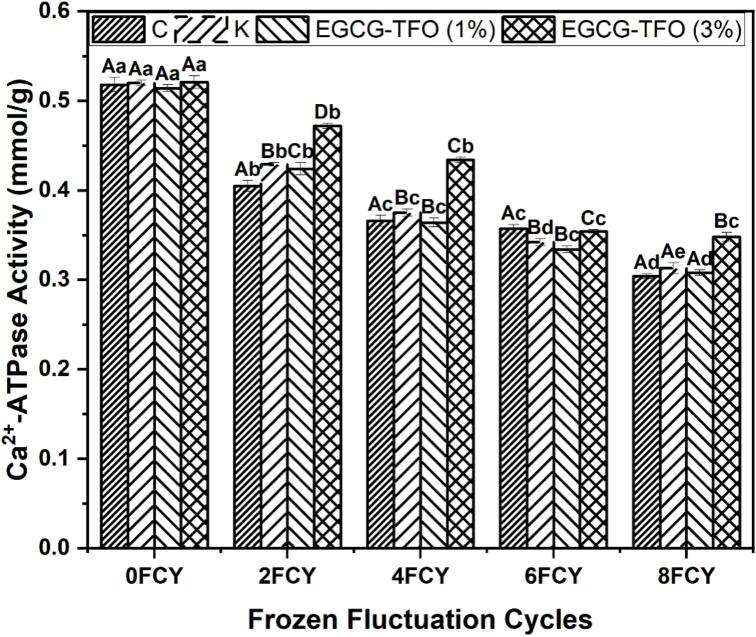 Figure 1
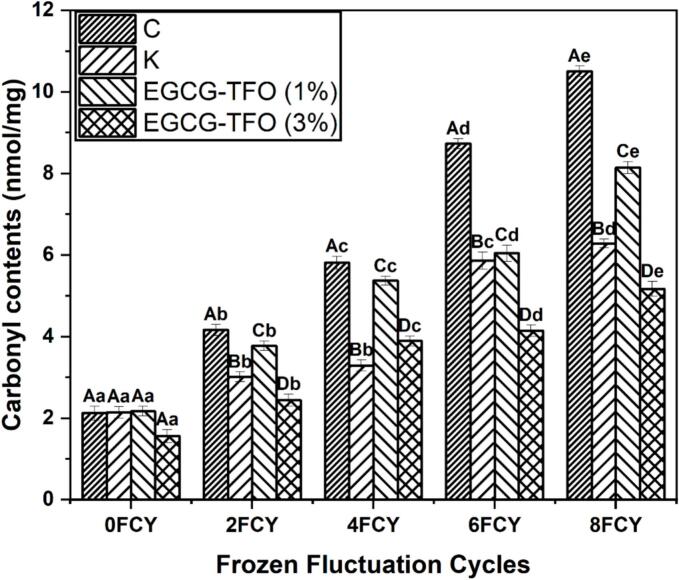 Figure 2
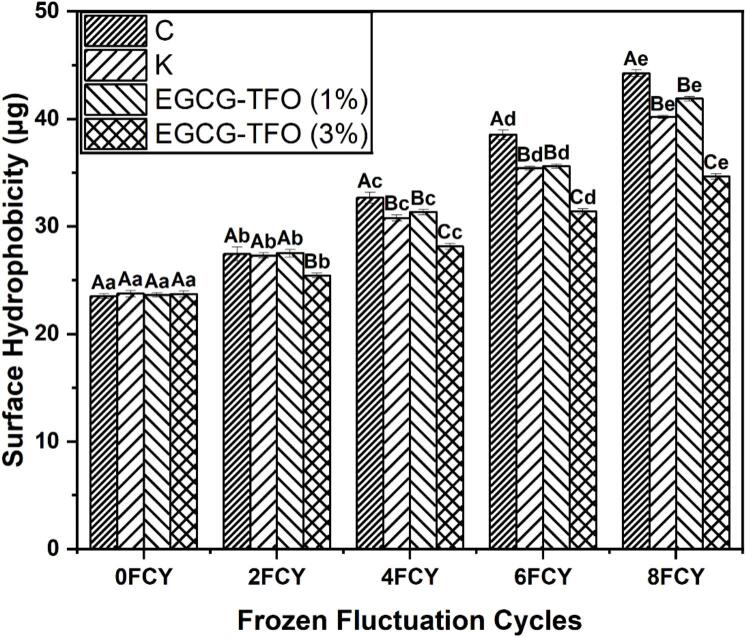 Figure 3
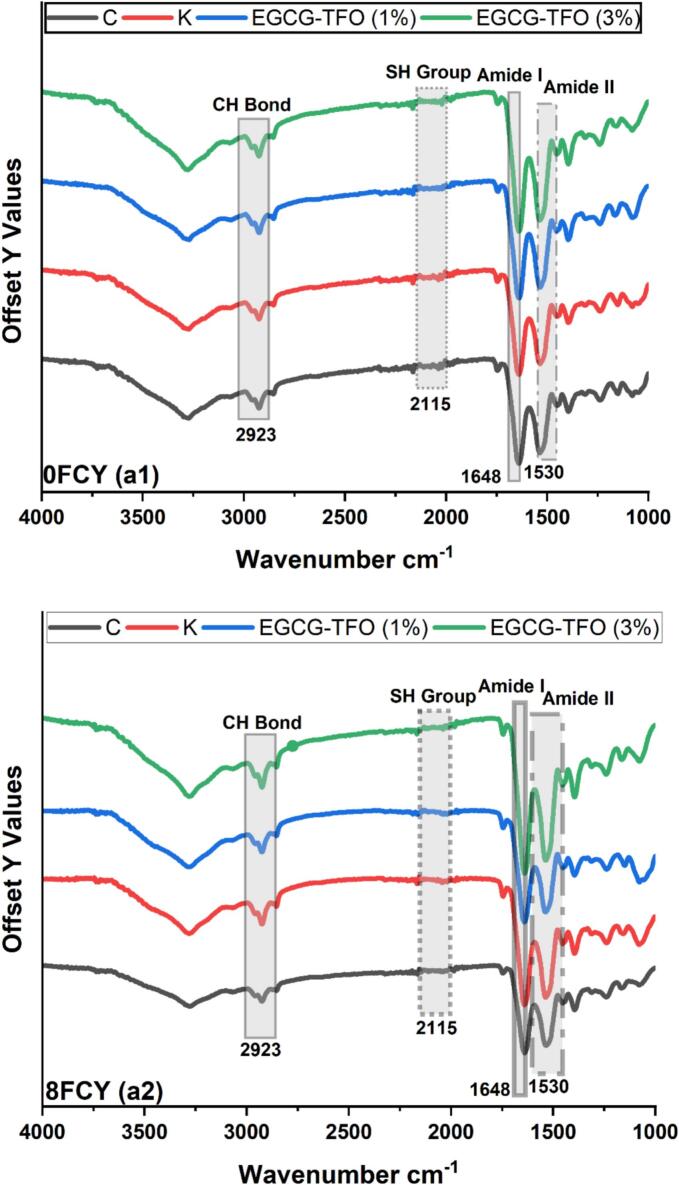 Figure 4
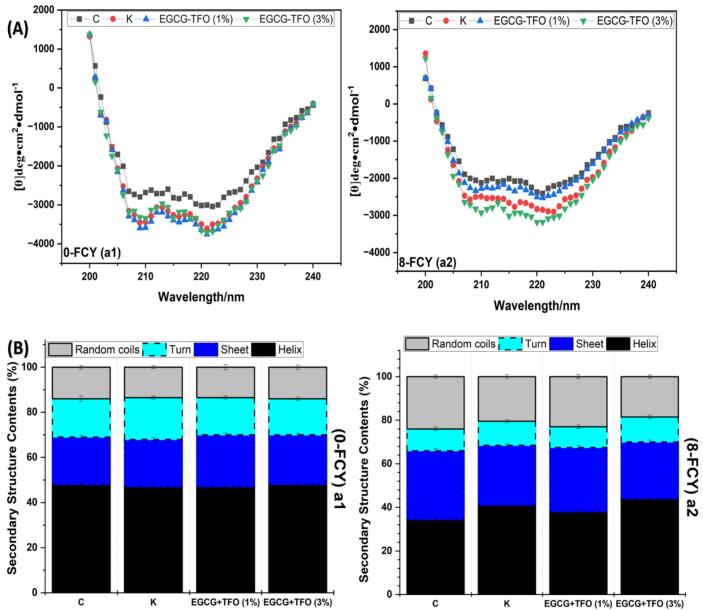 Figure 5
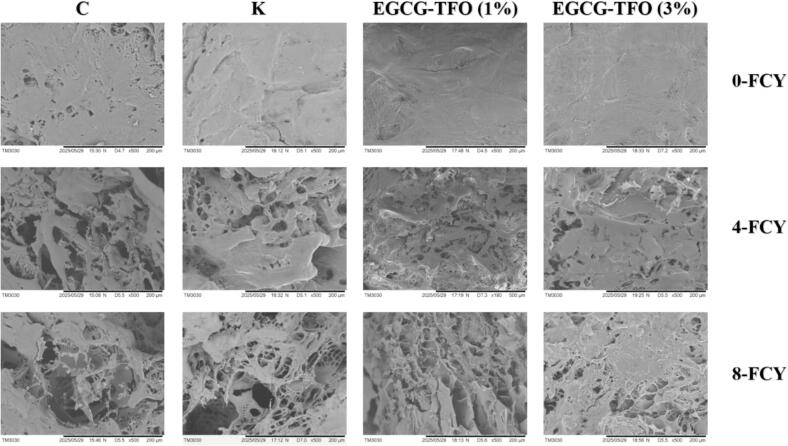 Figure 6
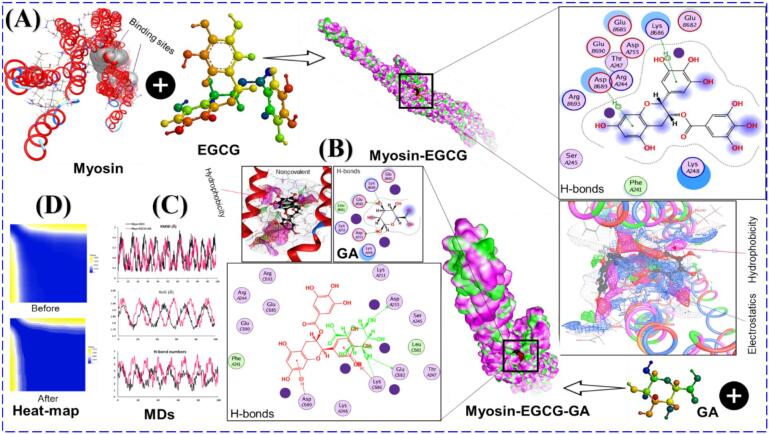 Figure 7
Peer Reviews
No public reviews on file for this paper yet. If you reviewed it on a platform where reviews are public (OpenReview, ICLR, NeurIPS, ICML), you can paste yours below so the community can read it here.
Videos
No videos yet. Explain this paper in a talk, walkthrough, or lecture? Add one.
Taxonomy
TopicsProteins in Food Systems · Meat and Animal Product Quality · Protein Hydrolysis and Bioactive Peptides